

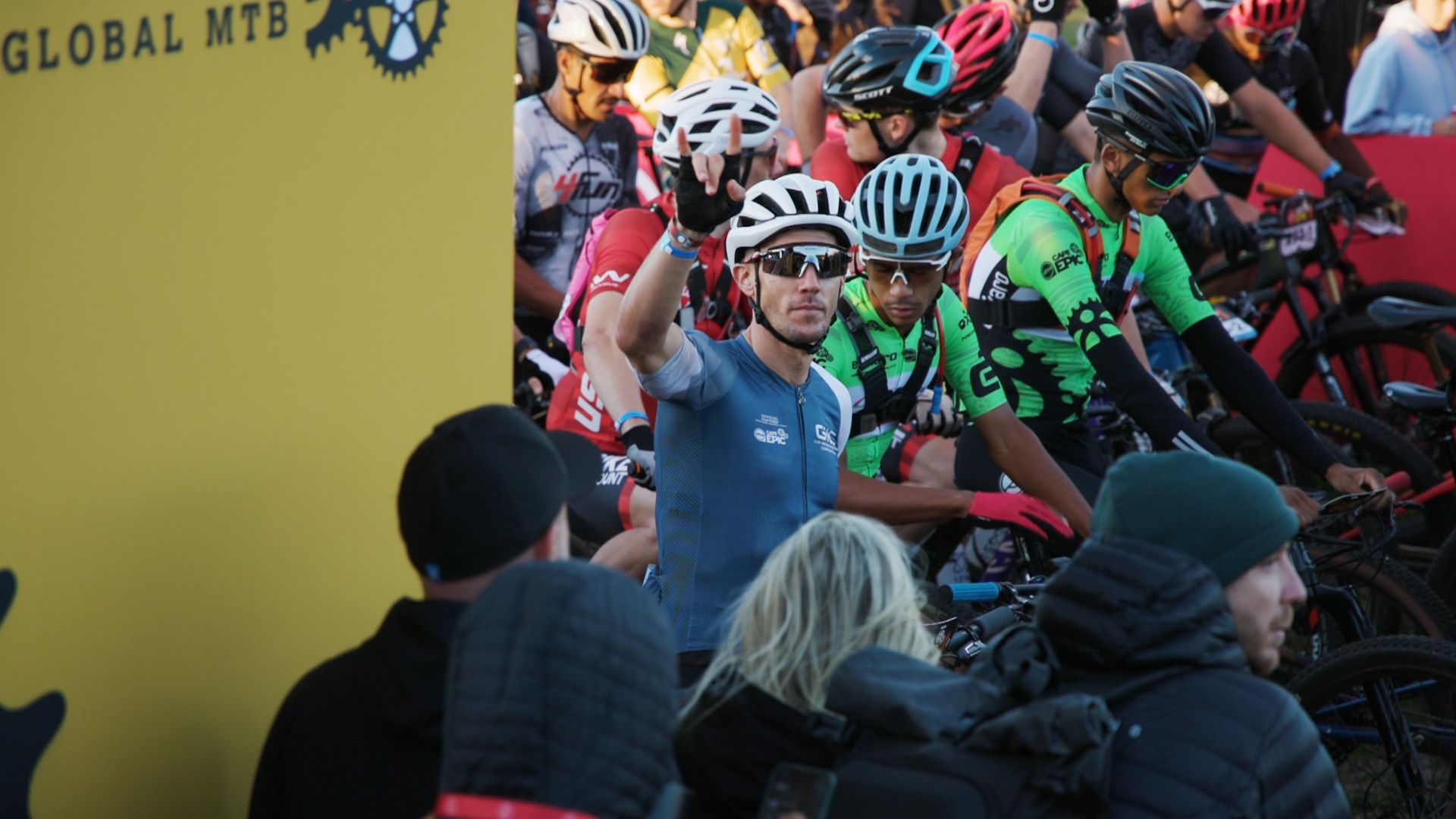
When I entered my first Absa Cape Epic, I’d only been riding a bike for three months. Friends gave me a look that said “Really?” at best and “Are you crazy?” at worst when I told them I had entered. That was 12 years ago, and to this day, the reasons why I survived (barely) remain cornerstones of every Epic I’ve ridden since:
By Craig Uria
- Prepare and have a plan
- Discipline
- Train your mindset
In a way, the lessons I learned and applied at that first Epic have bled into the rest of my life as I juggle professional and personal responsibilities amid the time I spend on the bike.
Among Epic’s greatest lessons is that preparation creates confidence. And preparation is about a lot more than training hours. It’s the daily, deliberate habits – nutrition, sleep, strength work, mobility, mental reset – that form the backbone of an eight-day race.
You can’t fake these things. They show up in how you climb, how you recover, how you handle setbacks, and how you stand on the start line each morning.
Early in my racing career, I made the same mistakes many riders make: chasing the scale, under-fuelling, and arriving at the race lighter but weaker and less healthy. You can’t ride the Cape Epic on discipline alone. If you show up under-recovered or under-nourished, the race will expose you, quickly.
Today, my process is built around consistency. I know exactly what I eat for breakfast before a stage. I know my post-race routine. I know when I switch off, when I sleep, when I fuel, and how I approach recovery. That structure sounds rigid, but actually it frees you. Routine eliminates decision fatigue and gives you a sense of calm in an event where so much is unpredictable.
Because make no mistake – the mental game is just as important as physical preparation.
Managing the mind to get the best out your body
There will always be moments in a stage race where you question everything. Days when you feel invincible, and days when the pedals feel square. You can’t look at the entire mountain pass – you pick a point, a wheel, a rhythm. You break it into pieces. And you keep going.
Mantras help. Perspective helps. Reminding myself that it’s just a bike race helps. My family, my work, my life outside cycling – those things ground me. They quiet the noise on route.
But mindset isn’t built in the race; it’s built in the months leading up to it. It comes from knowing that you’ve done the work, controlled the controllables, and respected the process. You’ve practiced your race-day nutrition. You’ve trained your gut. You’ve looked after your bike. You’ve done your mobility. You haven’t cut corners.
Life will still throw curveballs. A few years ago, I lost my father shortly before Epic. Emotionally it was an incredibly tough time, but because my preparation was so consistent and embedded, I was able to channel that energy and still race well.
That’s the value of a well-established routine – it anchors you amid the push and pull of unpredictability.
If I had to give one piece of advice to any rider taking on an Epic-style event, it’s this:
Control what you can. Let go of what you can’t. And trust the process.
The Epic rewards consistency, humility, and resilience. It teaches you to prepare with intention, race with heart, and handle whatever comes your way.
That’s why I keep going back.
Every year, the race teaches me something new – about riding, about myself, and about what’s possible when preparation meets purpose.
Dr. Craig Uria is a spinal care and sports medicine specialist based in Johannesburg, South Africa. You can follow Craig on Instagram.

