

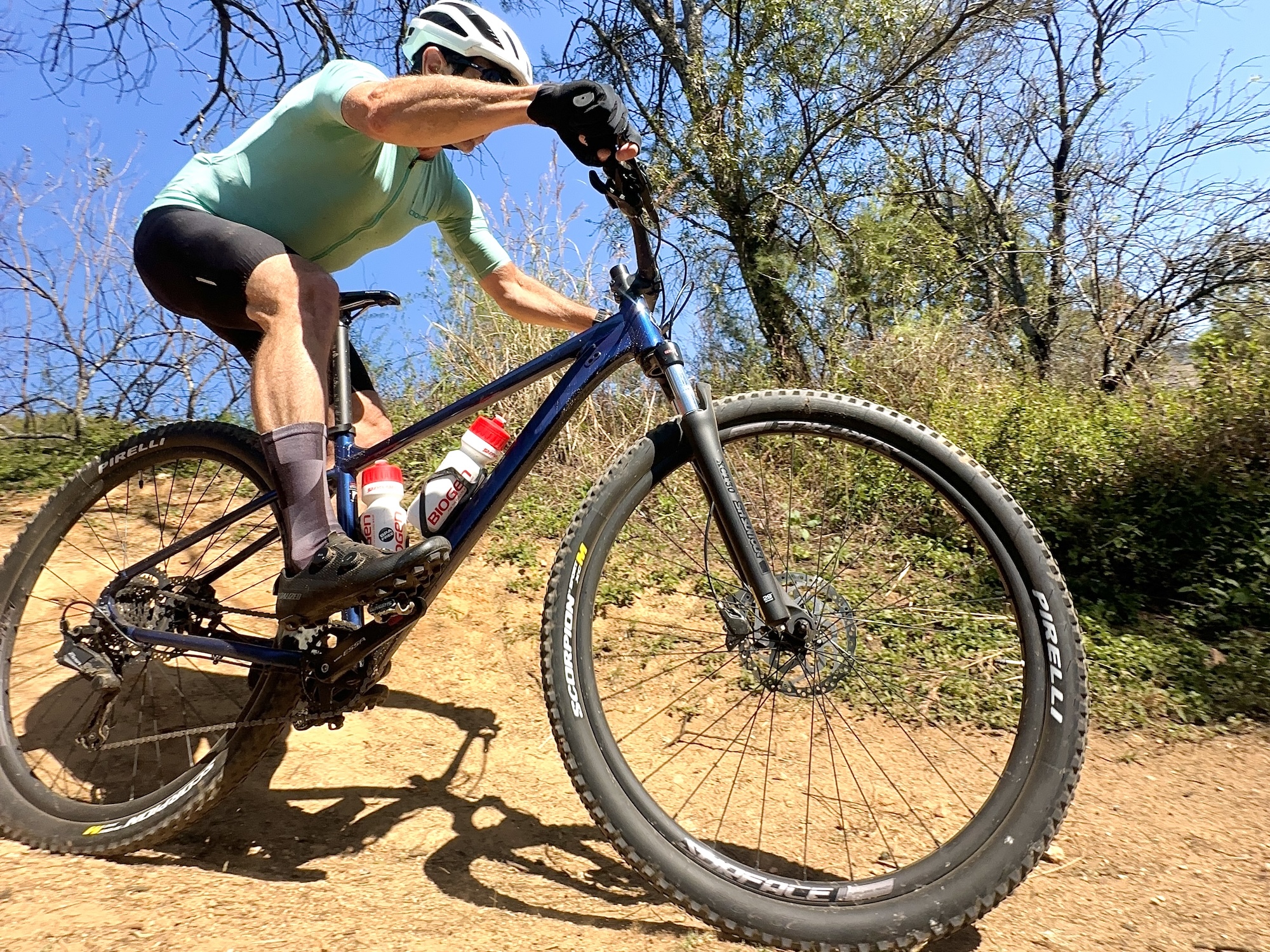
I’ve been on a mission this year to determine what makes an ideal entry-level mountain bike. Instead of only test-riding high-end machines, I’ve spent a lot of time on base-range mountain bikes. Here’s what I believe a mountain bike should offer to be safe, controllable, reasonably efficient and relatively comfortable.
By Sean Badenhorst
The contrast wasn’t lost on me. Earlier this year I went from test-riding a R185 000 bike to a sub-R11 000 bike, then from a R190 000 bike back to a sub-R13 000 bike.
You know what that’s really good for? Developing perspective. Not just general perspective, but modern mountain bike perspective. It was a highly educational period and I feel I learned enough to pass on my opinion.
As you may have guessed, the two cheaper bikes were aluminium hardtails and the two expensive bikes were carbon-fibre full-suspension bikes. Those are significant differences, but they’re all still mountain bikes, and riding them all was a privilege.
The two high-end bikes are designed to be light, responsive, robust and fast over almost any mountain bike trail terrain (except pure gravity terrain). And that they most certainly were. One of them was specced with RockShox Flight Attendant intuitive suspension.
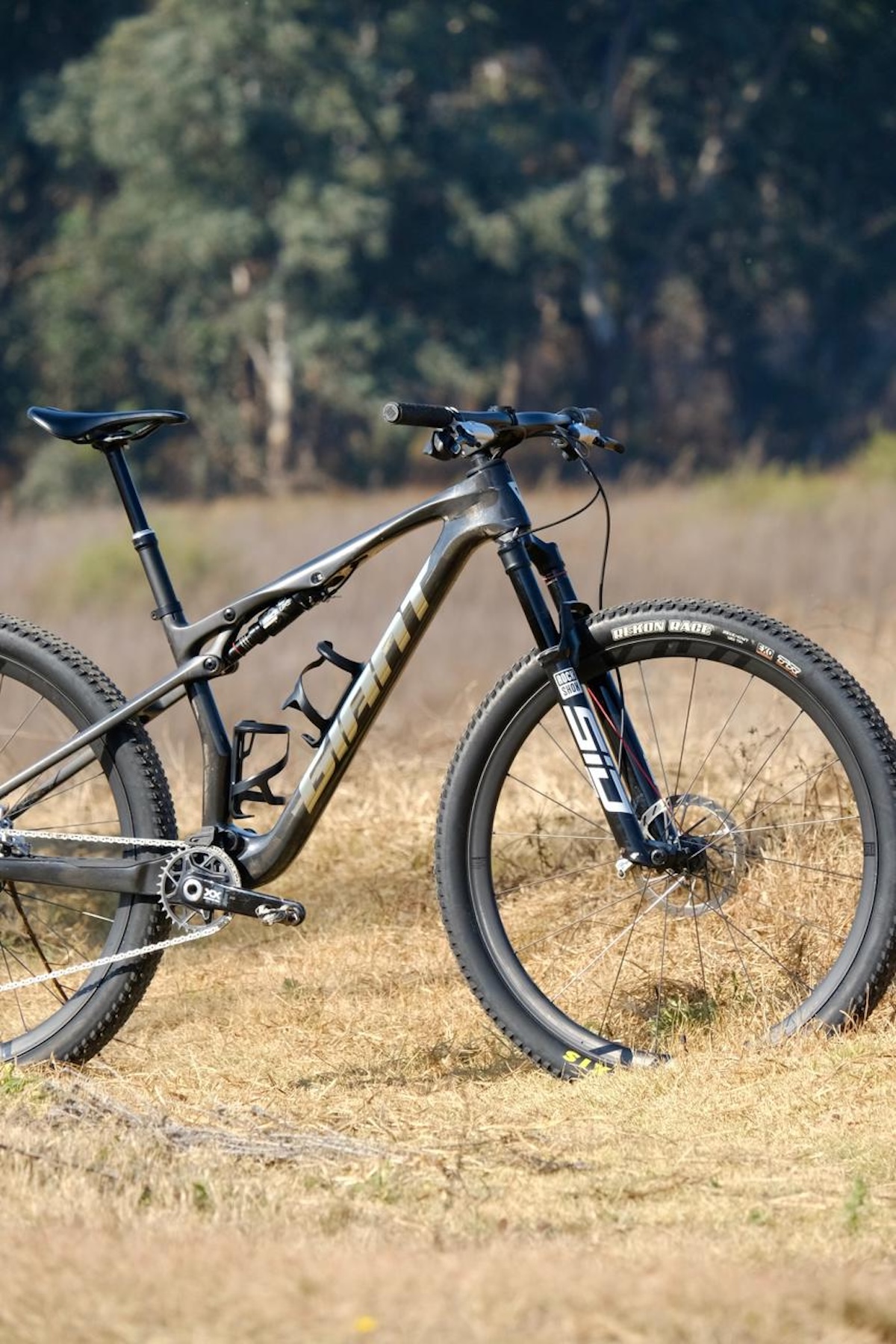
I have a regular 51 km route that I ride at a local trail park. It’s mostly smooth, predictable singletrack with rolling gradient (590 m of ascent). It includes long sections of winding singletrack, which I love because I thoroughly enjoy cornering on mountain bikes.
I take all test bikes on this route and also hammer a few Strava segments on each to find their limits. I was at a similar level of fitness for all four bikes and, in Johannesburg in winter, the weather is very stable, so conditions were comparable. Some of the test bikes I was able to ride this particular loop a handful of times; others only twice. But it was enough to draw meaningful comparisons.
The main and obvious difference is overall speed. On the two expensive bikes I averaged 17.9 km/h, whereas on the cheaper bikes I averaged 16.9 km/h. A 1 km/h speed difference over 51km equates to roughly a 10-minute difference (2 hrs 51 min vs 3 hrs 01 min). It’s not a scientific test, but it’s a real-world comparison worth noting.
None of these rides were meant to cover the 51 km route as fast as possible. Just a steady pace throughout with some faster bursts on certain Strava segments. It’s also worth noting that all the bikes had different tyres.
While the numbers show a 10-minute difference in speed, there’s an unmeasured difference in body effort. Although the surface is relatively smooth overall, there are sections with roots and small rocks. On a hardtail you stand to pedal more and unweight the saddle more frequently. For a conditioned, experienced rider like me this doesn’t require too much effort, but it is a bit more. For a new mountain biker this isn’t intuitive and requires constant, conscious effort.
All the bikes handled cornering well. One of the hardtails had exceptional geometry (ideal for me) and was notably stable through the twisting sections. This same bike also rolled really well – its relatively cheap hubs surprised me.
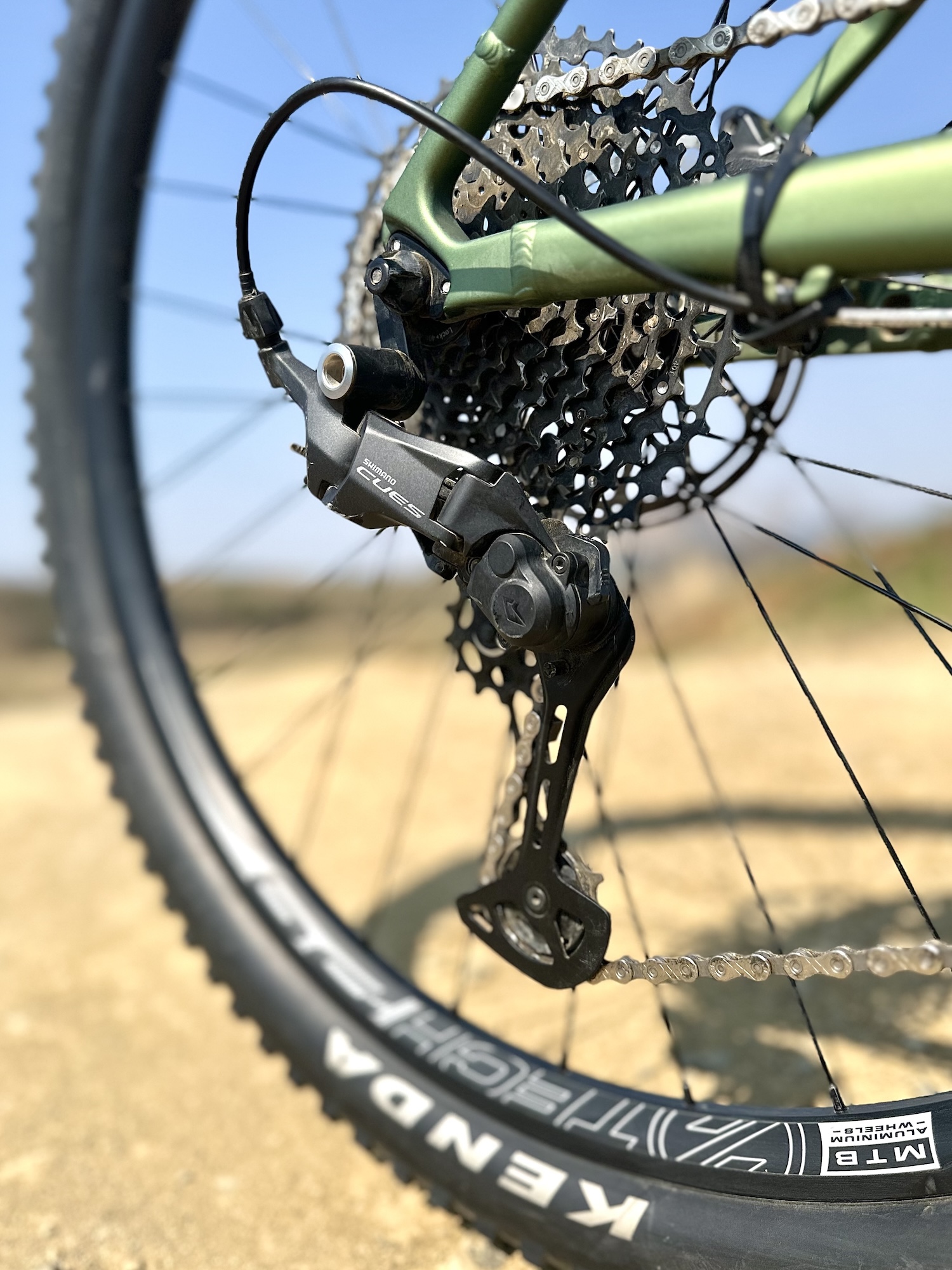
From a gearing perspective, one of the hardtails had a Shimano Essa/Altus 1×8 (32×11-45) drivetrain and the other a Shimano Cues 1×10 (34×11-46). The two full-suspension bikes were both 1×12 drivetrains, as you’d expect in that price range. I definitely found the 1×8 had too few gears, even on this undulating trail. Not necessarily at the top and bottom, but in between. I had to make constant cadence compromises. The hardtail with the 1×10 drivetrain was clearly better. It had sufficient range for most of the trails I rode and only occasionally did I feel I was missing an ideal gear in between.
I did a 70 km marathon race on the better-specced hardtail with 1×10 drivetrain and had to dig deep to climb a long, technical ascent that was rocky in places and had some steep pitches of up to 34%. It’s not the kind of climb most newer riders would tackle, but it is one you might find in an XCO race for young racers.
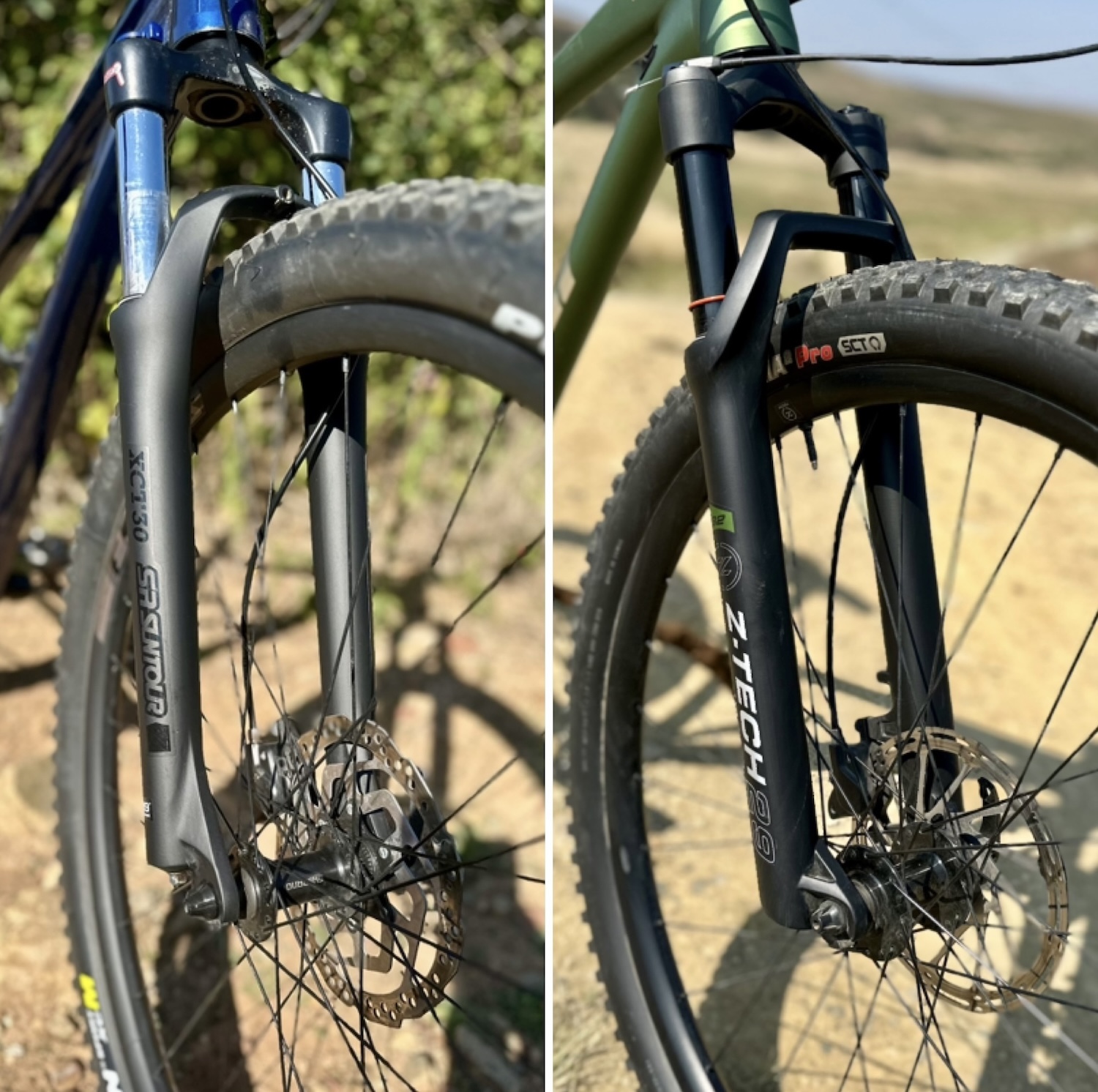
In terms of suspension, the cheaper hardtail had a coil-spring fork and the other had a house-brand air suspension fork. Regardless of how I tried to set it, the coil fork wasn’t great. It lacked any kind of sensitivity. If there is one component the industry could work at improving, it is the coil suspension fork. The air fork wasn’t actually too bad. It wasn’t adjustable, but you could add and remove air as needed. It felt fairly smooth, which is more important than you might expect.
In terms of brakes, both hardtails had Shimano MT200 two-piston hydraulic disc brakes. They worked well in most scenarios and were adequate (but not fantastic) on steep, fast, more technical descents. But generally, they’re ideal for the majority of buyers of this level of bike.
So after many weeks of switching between base-level and top-level mountain bikes, and hundreds of kilometres on those two hardtails, here’s what I believe a basic mountain bike should have in order to deliver a decent enough riding experience:
FRAME: Hydroformed aluminium with a tapered headtube and replaceable dropouts. Ideally dropper-post compatible.
GEOMETRY: Headtube angle – 66-68° | Seattube angle – 74-76° | Reach (size Medium) – 420-460mm | Chainstay length – 430-450mm
FORK: 100–120 mm air suspension. Lockout is not essential but useful.
DRIVETRAIN: 1×10 minimum. Ideally Shimano Cues or similar.
BOTTOM BRACKET: Sealed and threaded type.
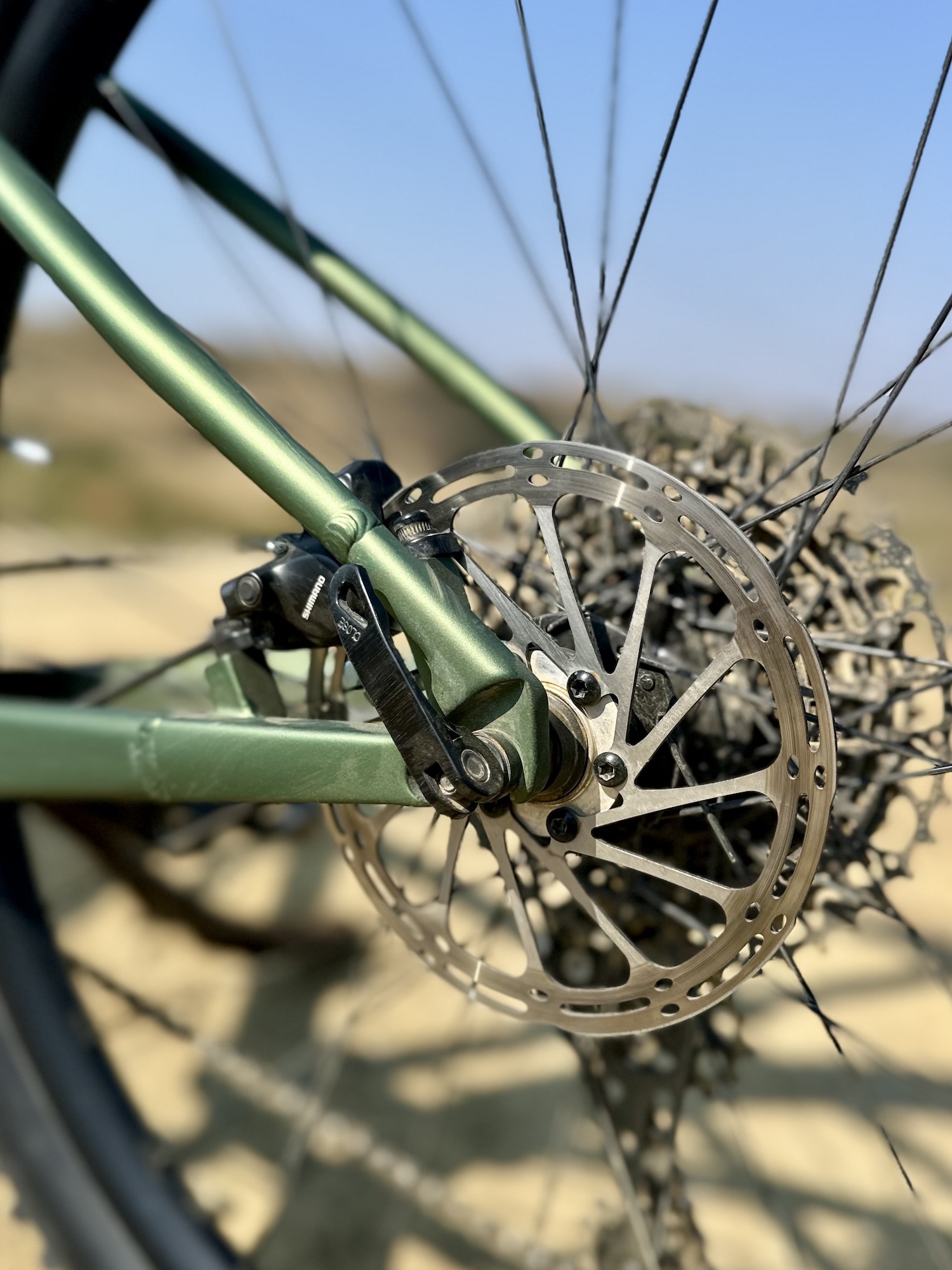
WHEELS: Tubeless-compatible aluminium rims and well-known brand tyres that are tubeless-ready. Quick-release hubs.
BRAKES: Two-piston hydraulic disc brakes, ideally Shimano or Tektro. 180mm front rotor is a bonus.
COCKPIT: Aluminium handlebars, stem and seatpost. Must be adjustable so that you can get your set-up just right.
GRIPS: Lock-on style. This seems minor, but isn’t. You don’t want your grips moving.
SADDLE: Will likely need an upgrade. Most bikes in this range come with too-soft saddles. Women will likely need a women-specific saddle.
This level of bike is ideal for someone who wants to get into mountain biking without dealing with bike-related drama. It’s also suitable for a school-level racer who wants a bike capable of tackling most schools-race courses.
For more serious riders, I recommend fitting a dropper seatpost. South African brand Lyne Components is the most popular option, with reliable models starting from around R3 500. But if you’re reaching that level, it may be better to upgrade to a different bike – potentially second-hand – that already has a dropper seatpost.
From a maintenance perspective, I noticed that the broader chain on a 1×10 is likely to last longer than the thinner 1×12 chain. Shimano Cues is designed for durability, so the derailleur pulley wheels are also likely to last well if you keep the drivetrain clean and lubricated.
Here are some examples of bikes that I recommend as base-level options:
Titan Racing Rogue Cruz: R13 000 See it here.
Zini Z29 Trail: R12 995 See it here.
Avalanche Reflex Team: R14 590 See it here.
Signal S940: R11 000 See it here.
Silverback SE: Series 10: R15 999 See it here.
All of the above are South African brands. Of the global first-tier brands, only Specialized has a model currently available in South Africa that fits my basic bike description for under R20 000 – Specialized Rockhopper Comp R17 000. The other first-tier brands have bikes under R20 000 but they have coil forks and to me, that’s not negotiable. An air fork, even a basic one, is far superior to a coil fork.
Do you have anything to add to my recommendation of what makes a decent entry-level mountain bike? Email me at sean@treadmtb.co.za

