
I’ve had some kind of front-row seat to every edition of the Absa Cape Epic. But it’s been nine years since I last covered the whole thing in person. And, as you’d expect, a lot has changed. Some of it I really enjoyed. Some of it… not so much. Here’s how this year felt from my side of the fence.
By Sean Badenhorst | Images: the iPhones of Sean and Joanne
I’ve been around this race a long time. First as editor of Bicycling Magazine, then TREAD Magazine, and now TREAD Media – because, well, print isn’t quite the powerhouse it used to be. Between all of that, I’ve written about every single one of the 22 editions.
Sometimes I’ve followed the race from start to finish on the ground. Other times I’ve dipped in for a few days. More recently, Joanne – our TREAD Femme editor – has been the one out there full-time, while I’ve tracked things from Johannesburg. And when I say “tracked,” I mean properly tracked: every minute of the livestream, digging for the South African angles, turning those into stories while the race unfolds.
I’ve also ridden it. Twice – 2005 and 2015. And that changes everything. Once you’ve been in it, you understand what it really takes just to get to the start line… never mind the finish.
In the early days, print ruled. Magazines were king. We wrote – lots – and we had access to the race’s incredible image library, which made storytelling that much richer.
Then around 2015, things shifted. Fast internet, smartphones… suddenly everything changed. Not overnight, but decisively. Print didn’t quite die, but it became expensive, slower, harder to justify. Digital took over.
By 2016, after 40 editions, we pulled the plug on TREAD Magazine and went fully digital. The following year, Joanne and I were back on the ground for the full race. I wrote daily diaries – behind-the-scenes bits, stats, the kind of stuff you don’t get in official reports – and shot everything on my iPhone for social.
That was the year the race bit back early on. Excessive heat, a savage climb, and a brutal day out on Stage 1 in Hermanus. Eighty teams didn’t make it (still a record). I still have photos of ambulances leaving with bikes strapped on. It was chaos – and people read every word. Our traffic spiked massively.
I did shorter visits in 2018 and 2019. Then 2020 didn’t happen. COVID shut it all down.
From 2021 through to 2025, Joanne handled things on-site again, working closely with Absa around the #SheUntamed campaign, while I stayed back and covered it remotely. It worked. She fed me insights and behind-the-scenes content; I turned that into stories. Between us, we produced some of the strongest coverage out there – locally and beyond.
A few pieces really landed.
In 2022, after a particularly tough edition, I compared it to the brutal 2008 race – 34 000-plus views.
In 2023, Amy Wakefield’s arm ripped by a tree branch blew up – 170 000-plus views.
That same year, the Lourensford stage – wind, rain, carnage – led to an historic restrospective time extension Another attractive read at over 31 000 views.
Last year, I called out route design issues not being compatible with the increased entry numbers – 78 000-plus views.
And the Stage 3 shutdown in Paarl, because of the heat? Over 74 000 views.
On top of that, we’ve consistently published every stage report – those official daily summaries with top-tier imagery.
The thing is, the Absa Cape Epic isn’t just another race. It’s the race. The biggest, most prestigious mountain bike stage race in the world, right here in South Africa – arguably one of the best mountain biking destinations on the planet. We’re a South African MTB media brand. Of course we’re going to go all in.
It would be like French cycling media half-covering the Tour de France. It just doesn’t make sense.
And, to be fair, we’ve consistently outperformed other local media when it comes to Epic coverage. Back in the day – before the Ironman Group took over – we also had access to detailed rider, bike, and gear stats. Those drew serious interest. These days, those numbers aren’t shared publicly anymore.
Still, thanks to Epic coverage, March and April have become our biggest months. We regularly push past 76 000 unique users during that period, with a yearly monthly average sitting just over 54 000.
But this year, something became clear very quickly: the website is no longer the main event – at least not during the race. It’s all about immediacy now.
The racing is live. Anyone, anywhere in the world, can watch it unfold in real time, which is still something I find pretty remarkable. A South African mountain bike race, broadcast live globally!
So the game has changed. Now it’s about grabbing rider reactions the moment they cross the line and getting that content onto social media as fast as possible.
One thing that did catch us out this year was the new, separate Elite women’s race stage starts.
Joanne managed to get to two of the six remote starts, which, all things considered, wasn’t bad – but it wasn’t ideal either. Stage starts might not seem like a big deal from the outside, but they matter.
That’s where the real conversations happen. It’s where you catch riders or team staff before the chaos of the day kicks in. You get those small but important insights – who’s carrying an injury, who’s feeling ill, what the plan is – that shape how you understand the racing as it unfolds.
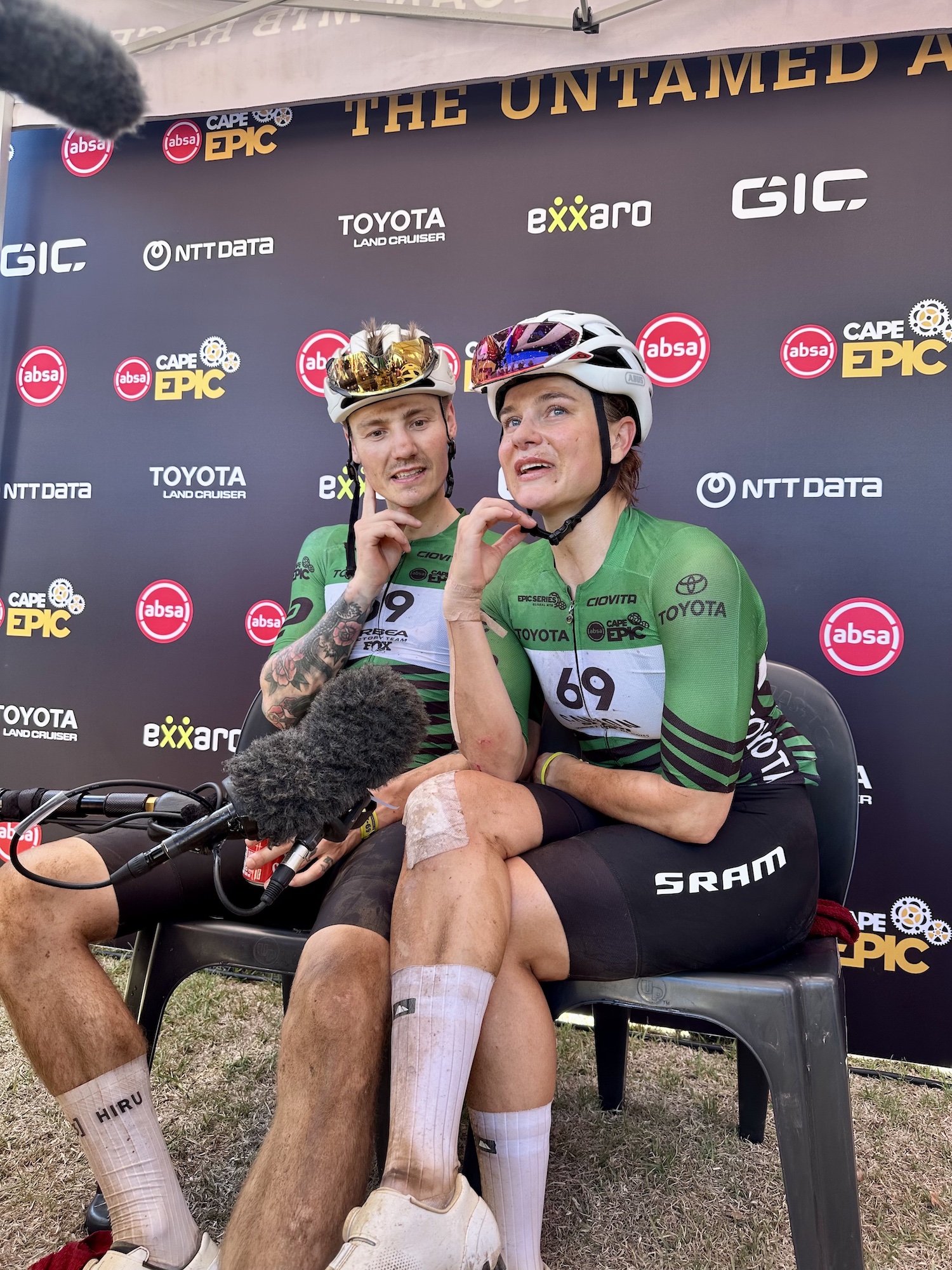
If you’re serious about covering the women’s race properly, those moments are gold. And when the starts are spread out and harder to access, you feel it in the depth of your storytelling.
But whether you’re chasing insight at the start or reaction at the finish, one thing is constant, you have to be there, in the moment, ready to grab it.
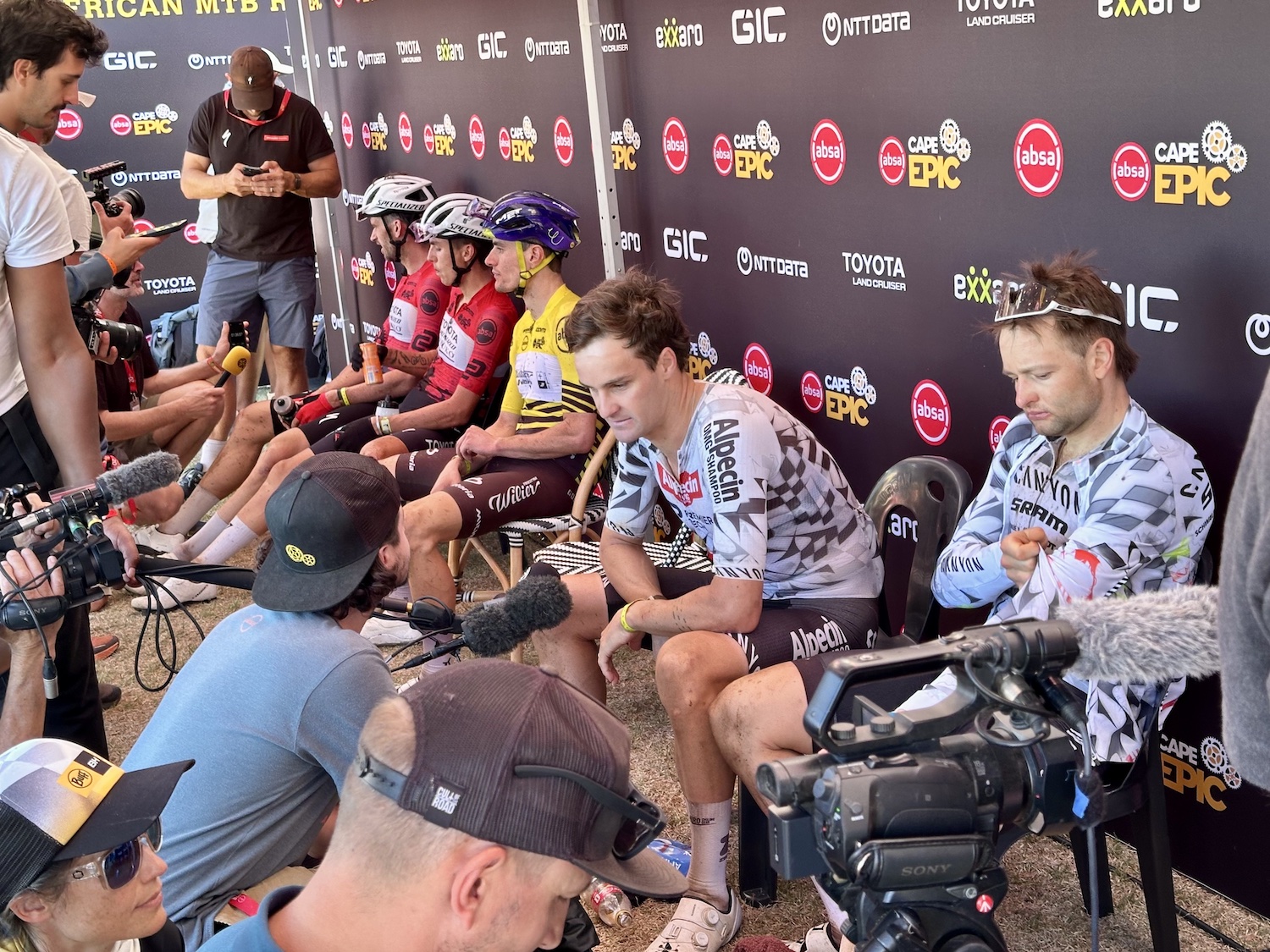
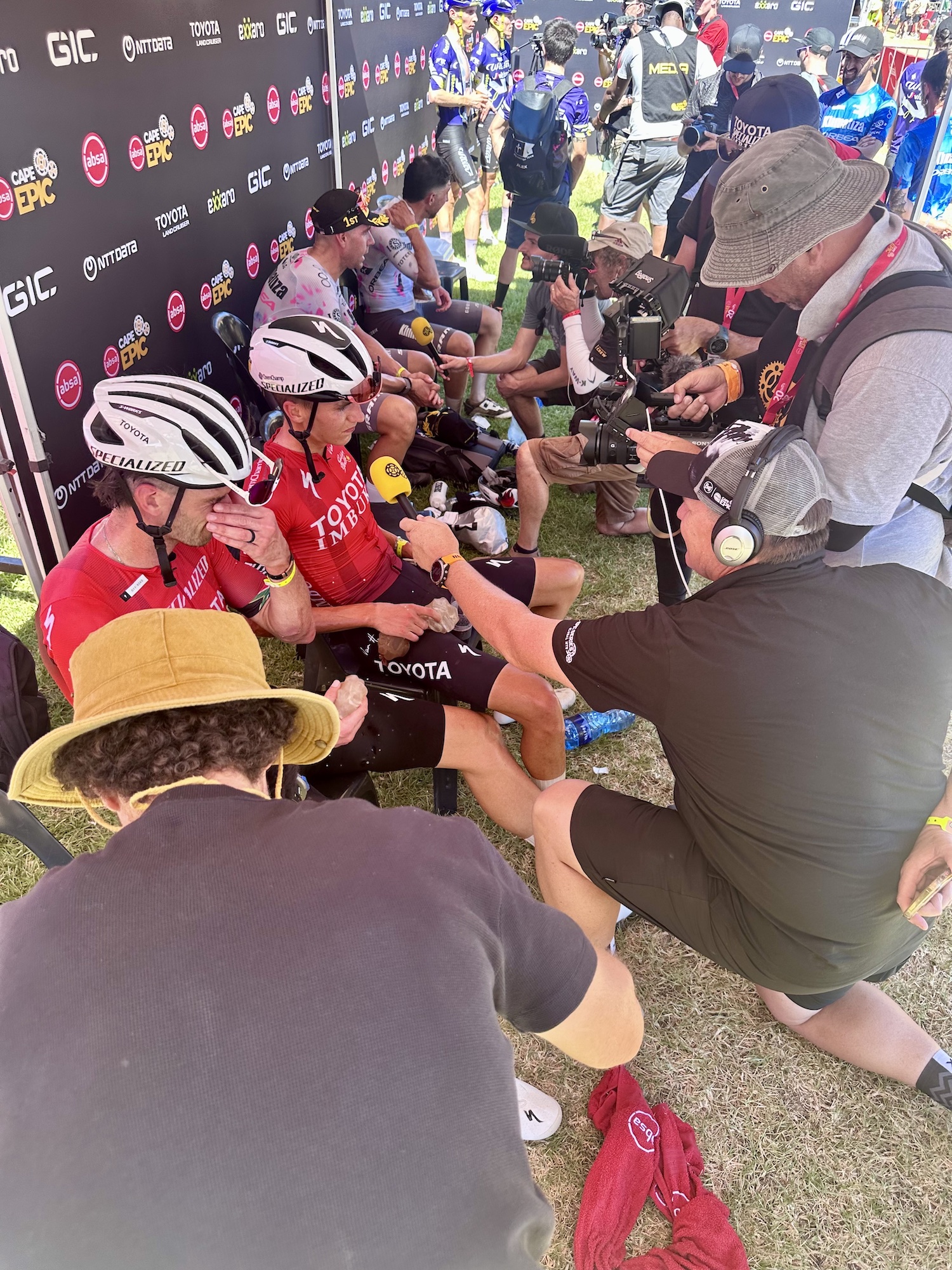
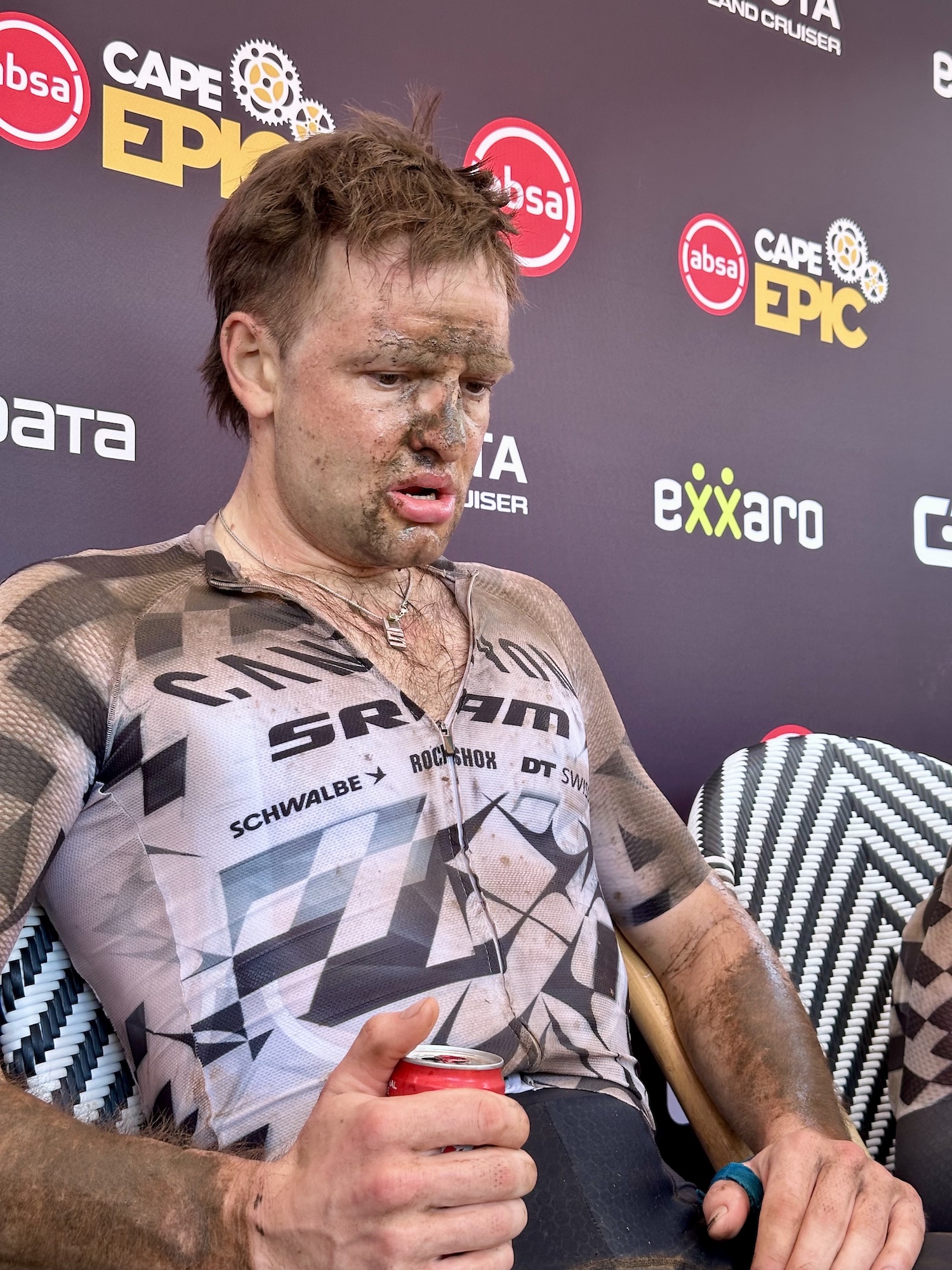
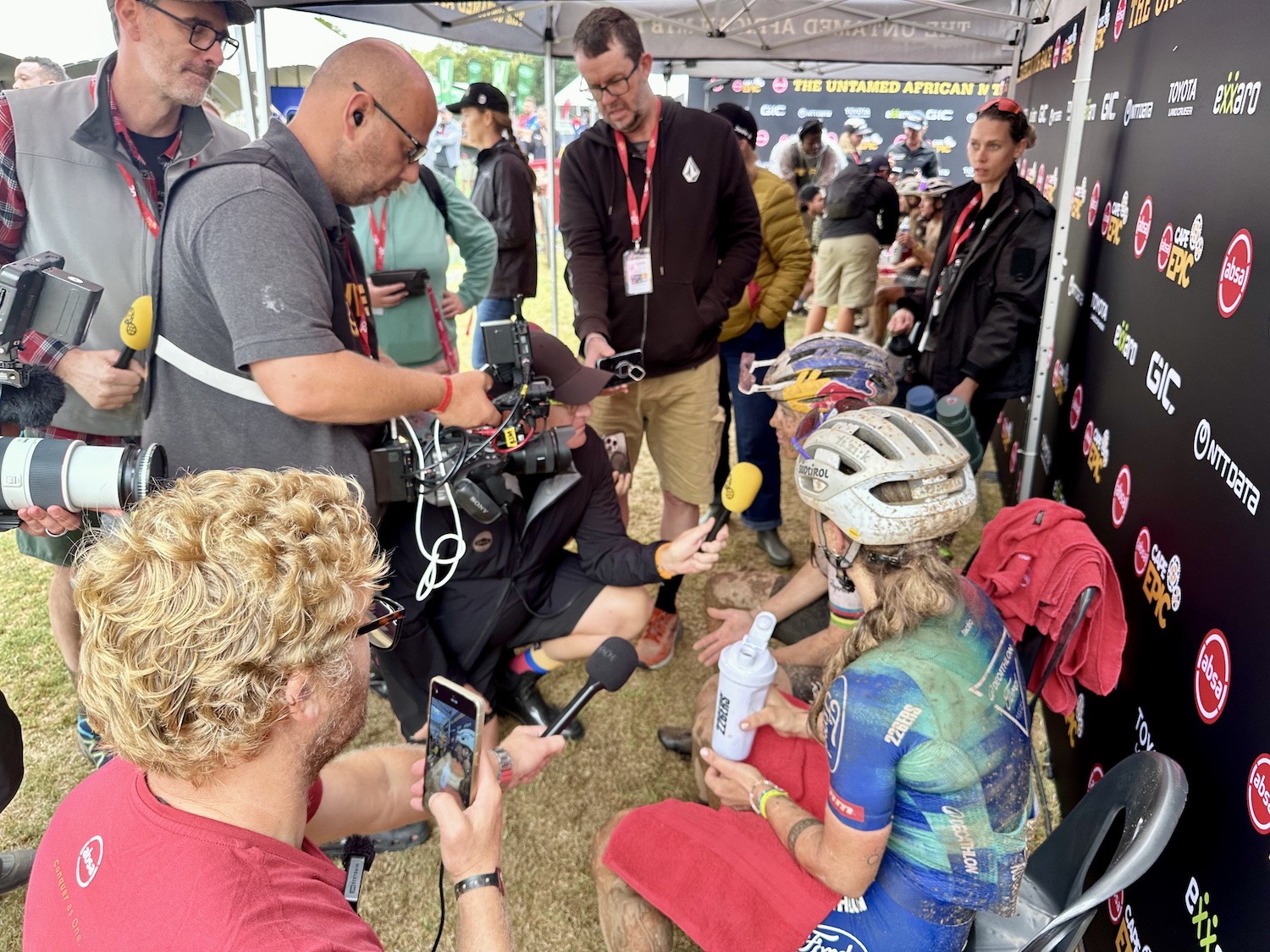
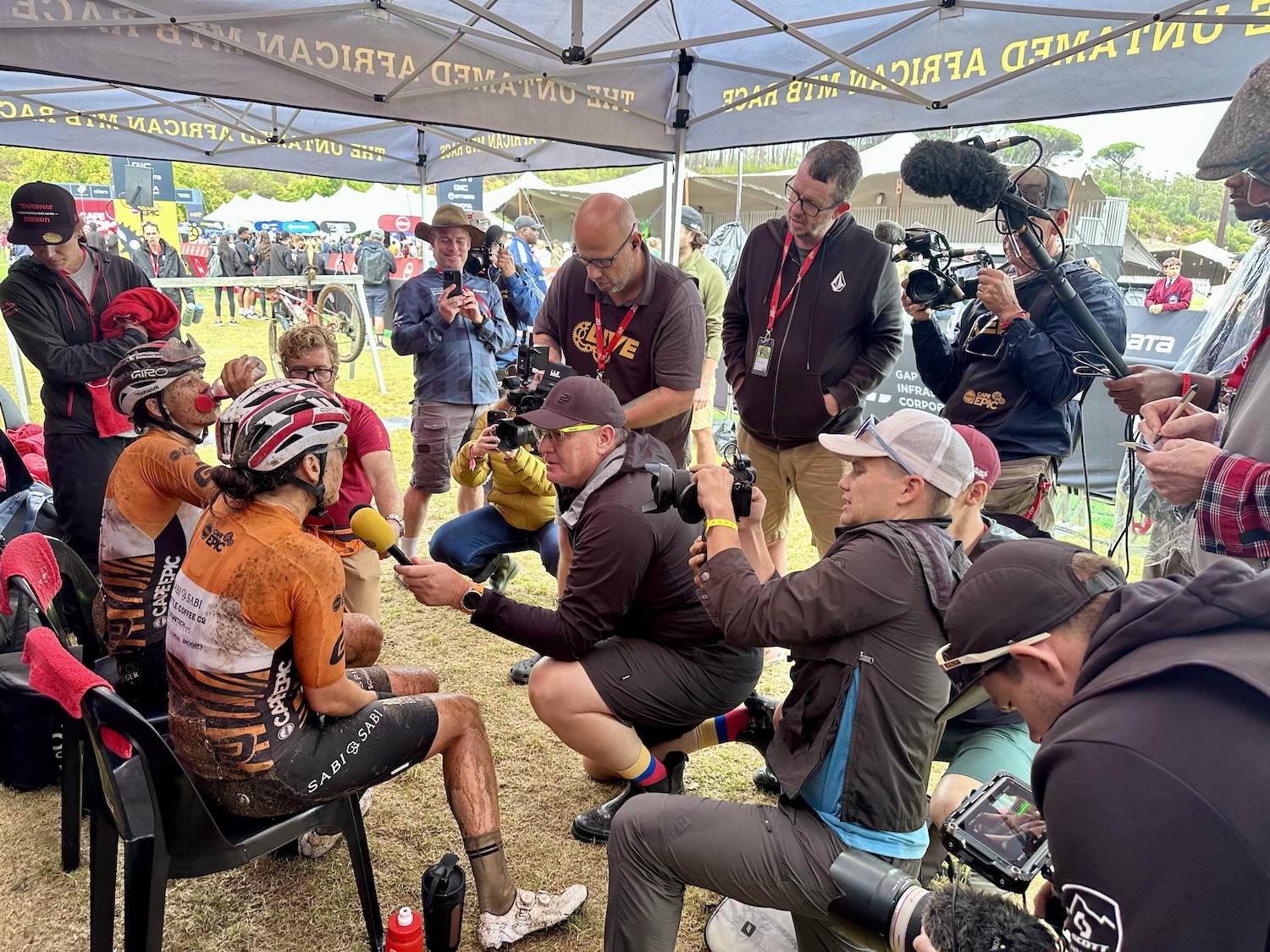
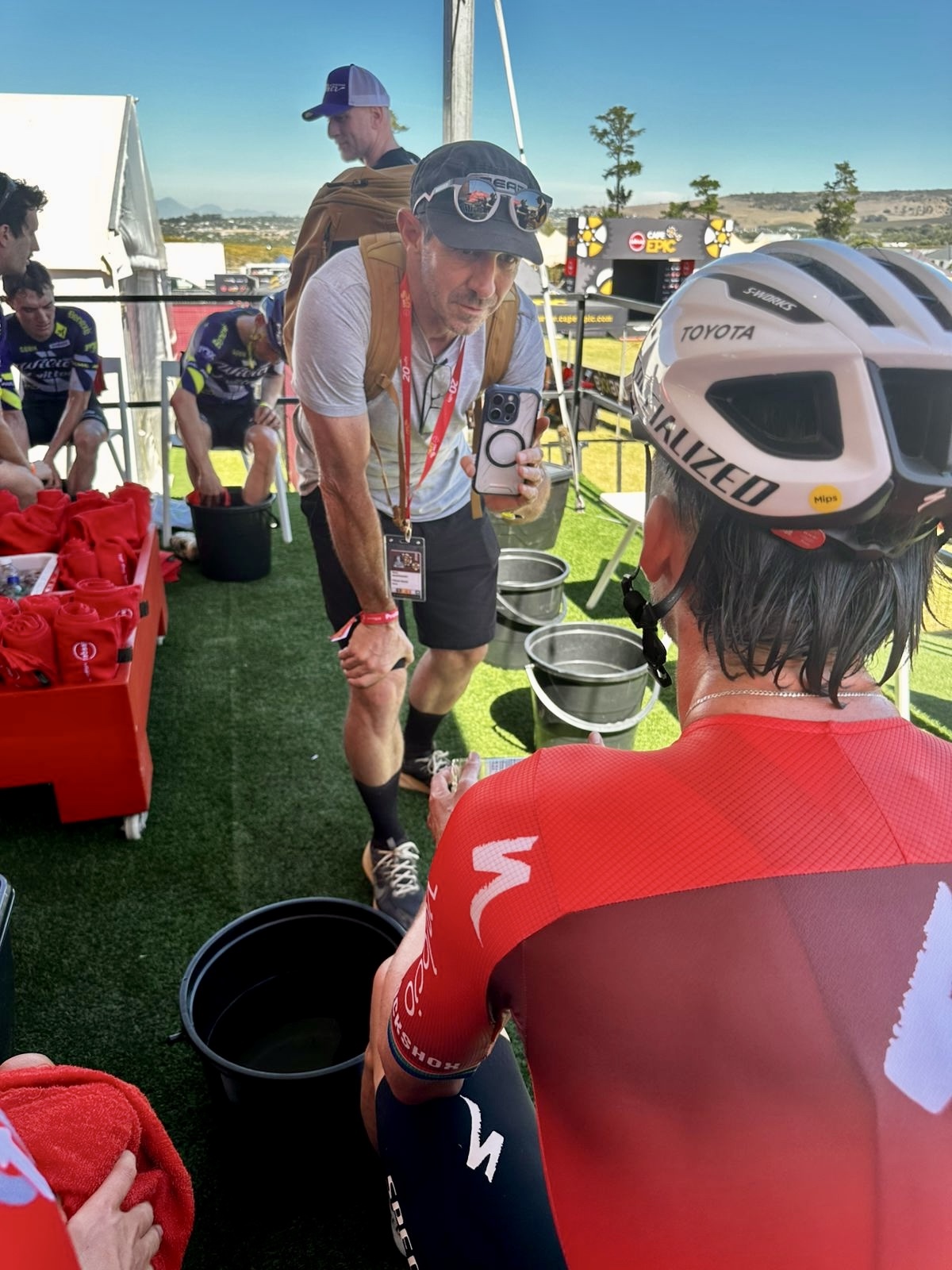
Which means waiting. Hovering, really. In the Mixed Zone, just past the finish line, like a pack of vultures waiting for the riders to roll in. They arrive completely shattered – and we’re right there, phones and cameras up, asking questions. Some crews have big cameras and proper audio setups. The rest of us? iPhones.
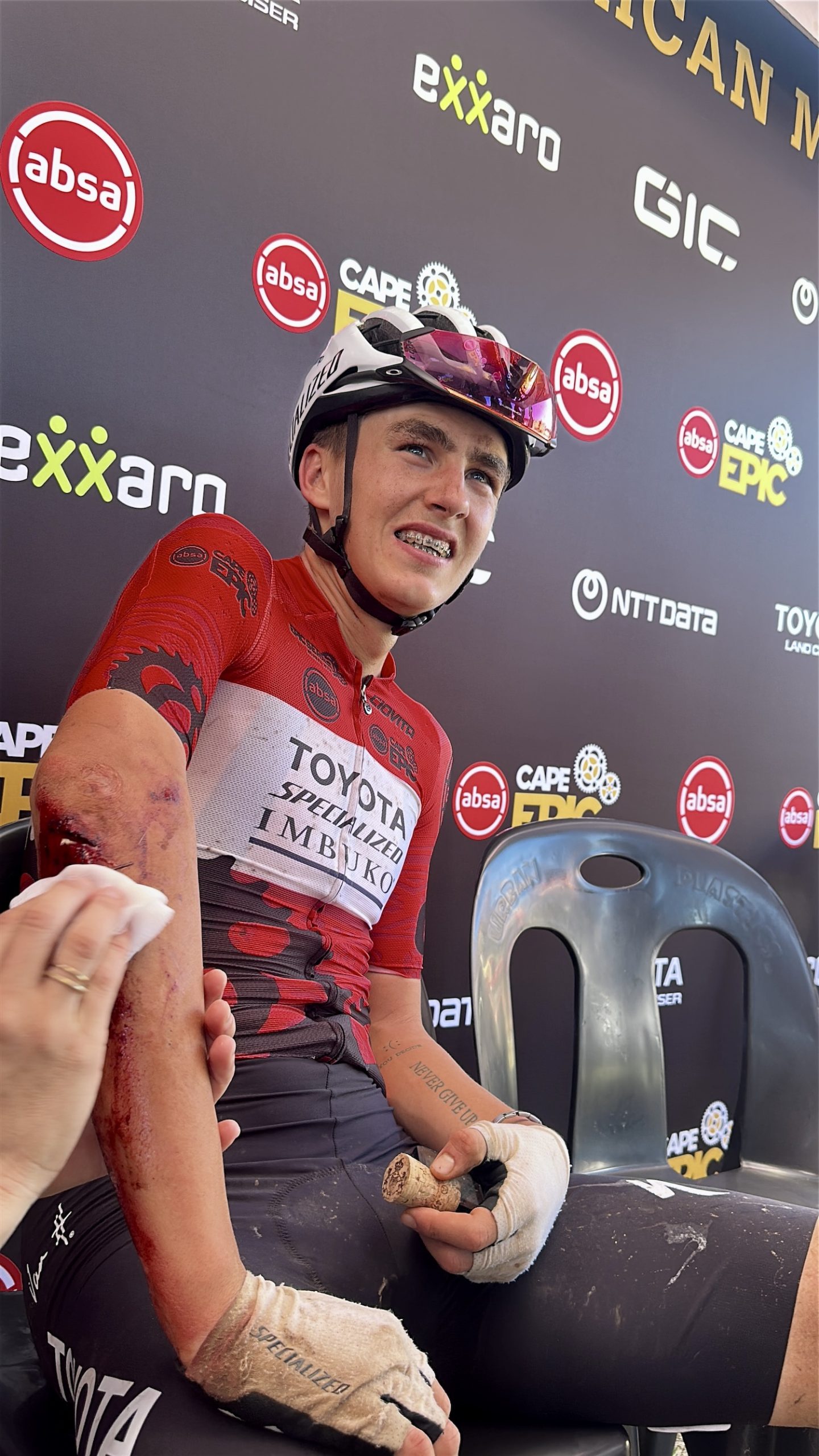
It’s chaotic. Riders can barely stand, let alone string sentences together, and yet they’re expected to start answering questions almost immediately.
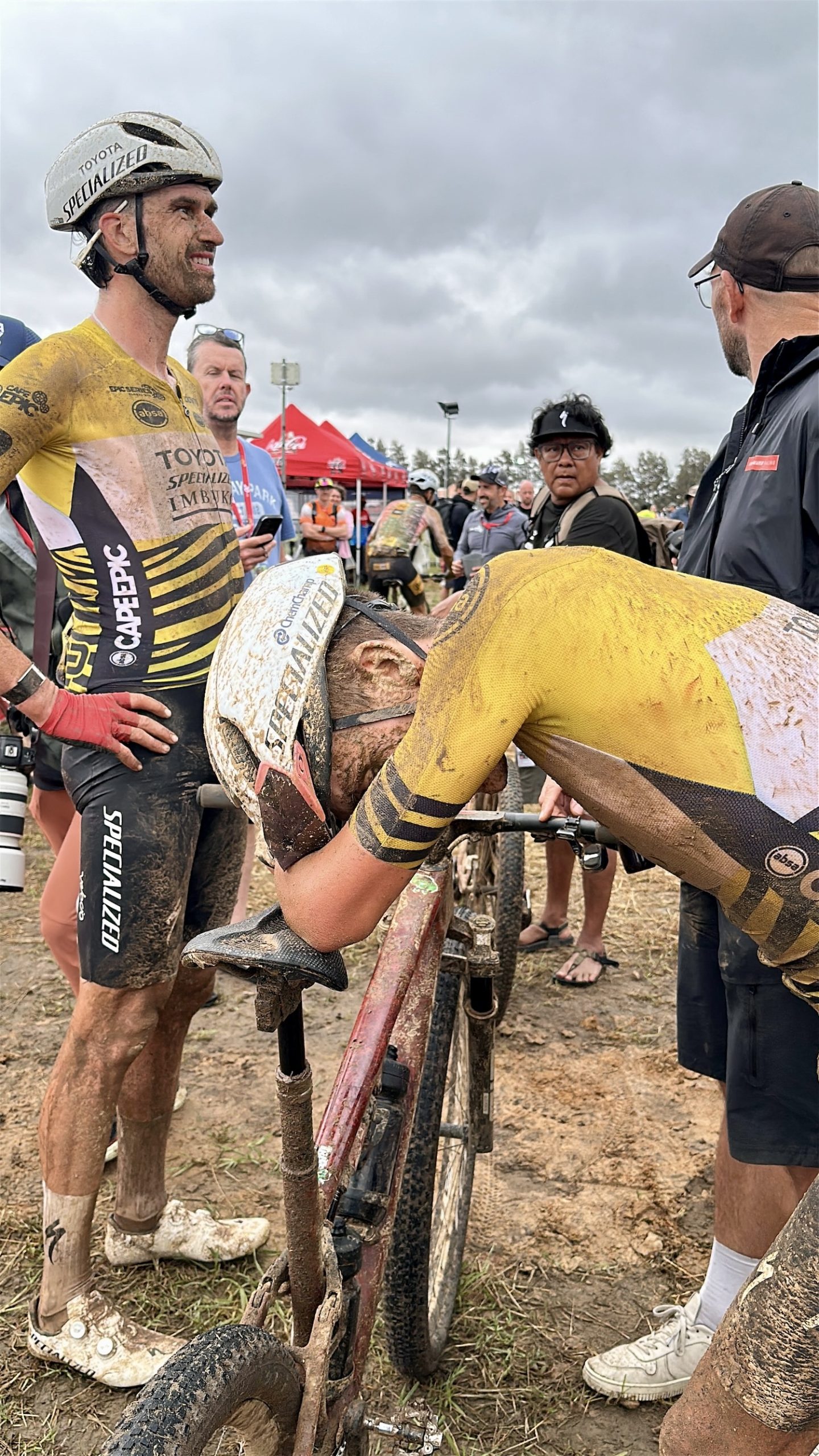
There is something powerful about that rawness, though. The sweat, the dust, the mud, the blood – it tells the story of the day better than words ever could. It shows how deeply this sport is tied to the elements and how far the riders are prepared to push themselves.
But sometimes it’s a bit much. Snot, spit, thousand-yard stares… and cameras a few centimetres from your face. A bit of dignity wouldn’t go amiss – just a minute to clean up, catch your breath.
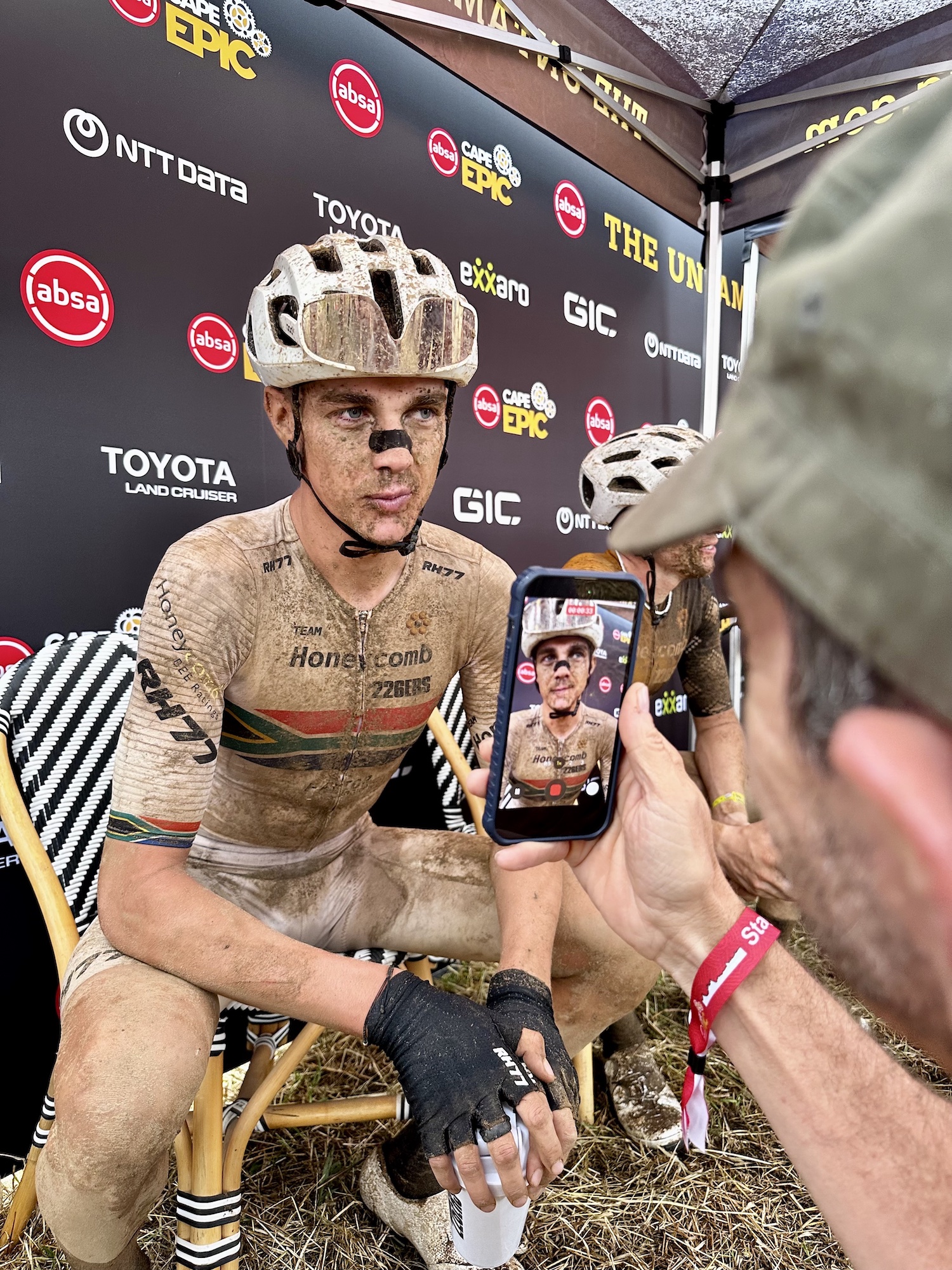
The Mixed Zone runs on a strict protocol. Live broadcast media first, then event media, then general media like us, and finally team media.
The problem? By the time we get a turn, riders have already been answering questions for several minutes – sometimes up to 10 minutes. They’re done. Physically and mentally.
And then there’s the noise. The MC system is loud. Really loud. Loud enough that, to get usable audio, we have to push our phones uncomfortably close to riders’ faces. It’s invasive. I hate it. It’s not how I like to work.
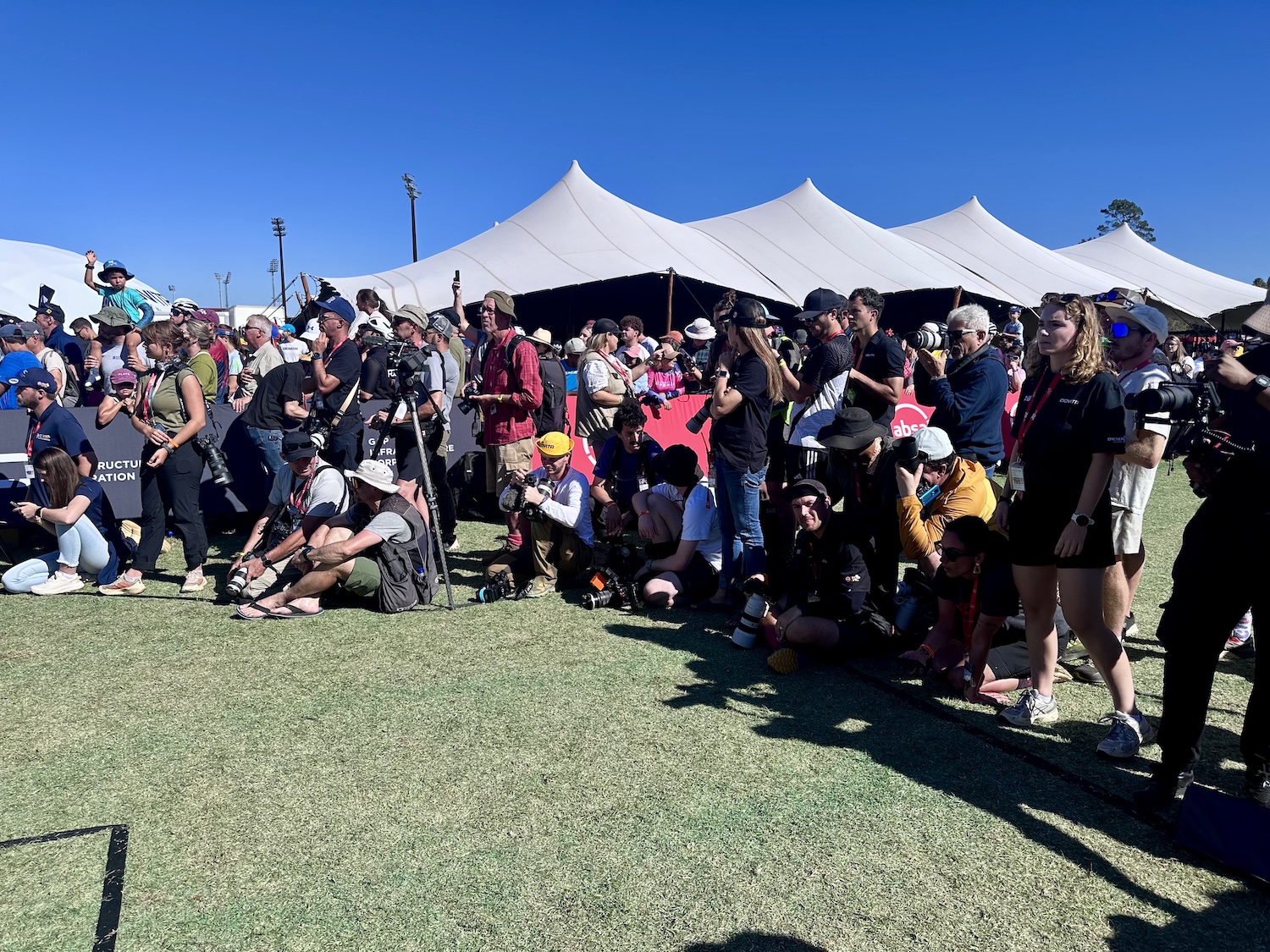
It actually reminds me why I walked away from newspaper journalism back in the ’90s. That whole “predatory media” approach just isn’t me.
TV crews don’t have the same issue – they’ve got proper microphones. But for the rest of us, it’s a scramble.
I ended up following a few riders toward the Rider Lounge, trying to grab a quieter moment. Some were happy to chat. Others just shook their heads. Fair enough. I missed a few key interviews because of it. But honestly, I don’t blame the riders. It’s a tough ask – too tough, in some cases.
To the organisers’ credit, they did briefly turn down the MC volume to help with interviews. But it was inconsistent and didn’t last long enough to really solve the problem. It’s something I’ll definitely raise with them.
And next time, I’ll come prepared. Proper mic, bright and obvious, so I can do this the right way. Respectfully.
From a numbers perspective, our website still saw the usual March spike – but not quite to previous highs. Social media, though? That’s where things exploded.
Instagram: 1.5 million views in 30 days.
Facebook: 2.86 million views in 28 days.
That tells its own story. But how valuable is it really? Like a lot of media people from my era, I’m still figuring out what the “right” format is now. Print was simple, but limited. Digital is wide open, flexible, immediate, sometimes chaotic.
Maybe the trick is not to overthink it. Just stay in it. Keep telling the stories. And ride the wave…
We will publish some insightful post-race content over the next couple of weeks here. To see our well-received in-race video coverage, check out the following social media accounts:

