
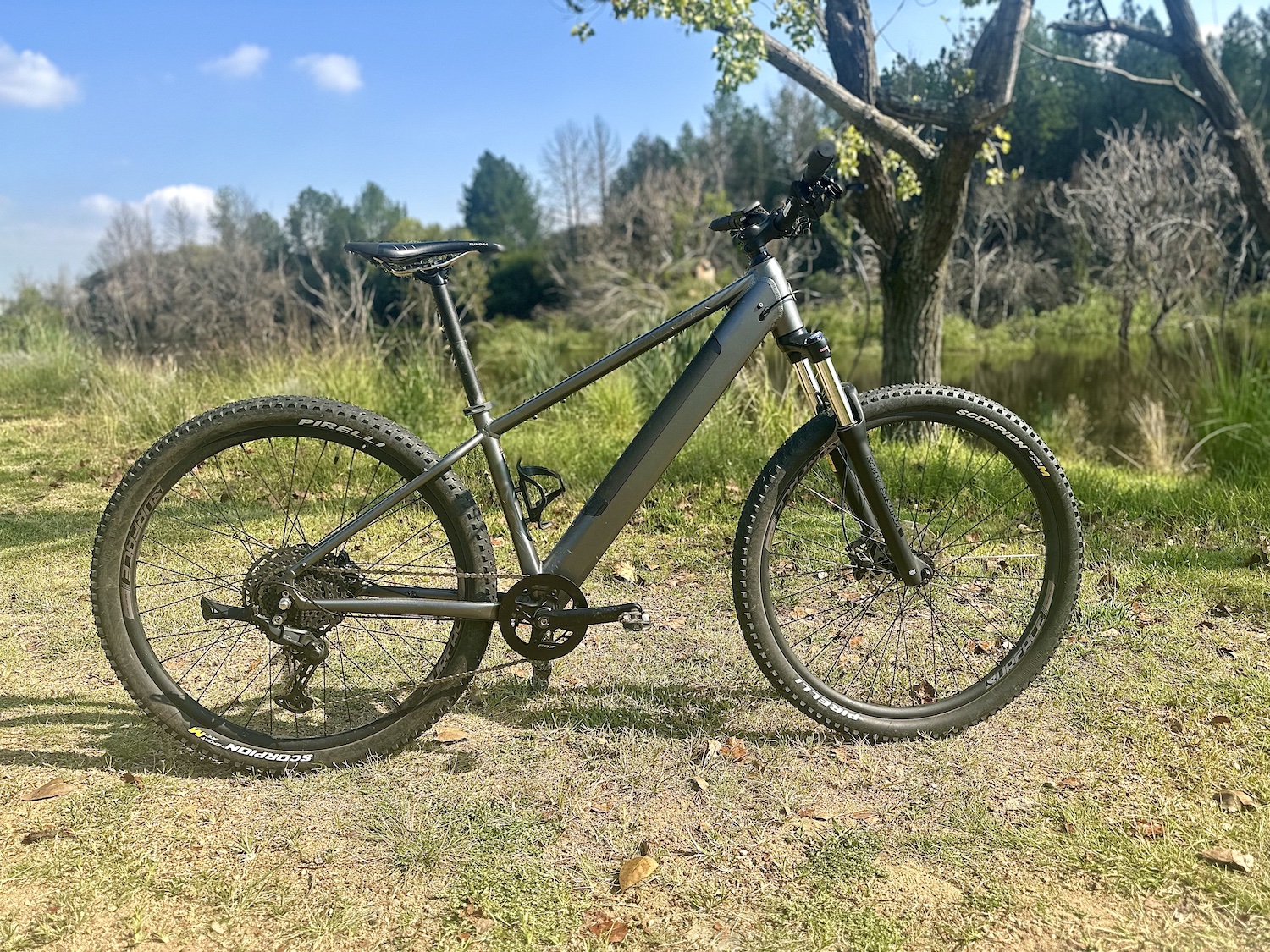
You may think eBikes cost a packet and you wouldn’t be wrong. But, as we discovered while testing the Silverback S-Electro, there is indeed a genuine budget eBike category. The big question is: what do you sacrifice, and how does it actually ride? We spent six weeks aboard the sub-R30 000 S-Electro to find out.
When scanning the spec sheet online, a few potential red flags immediately stood out: a coil suspension fork, a hub-drive motor, a kickstand and a power-assist limit listed at 25kph. We’ve ridden numerous eBikes over the years – most of them mid-range or flagship machines costing north of R150000 – so we had to consciously leave our eBike prejudice at the garage door before rolling out on the S-Electro.
It’s worth noting that the S-Electro is Silverback’s base-level eMTB. Above it sit three models featuring more traditional frame-mounted mid-drive motors, competing in higher price brackets and more performance-focused categories.
THE BIKE
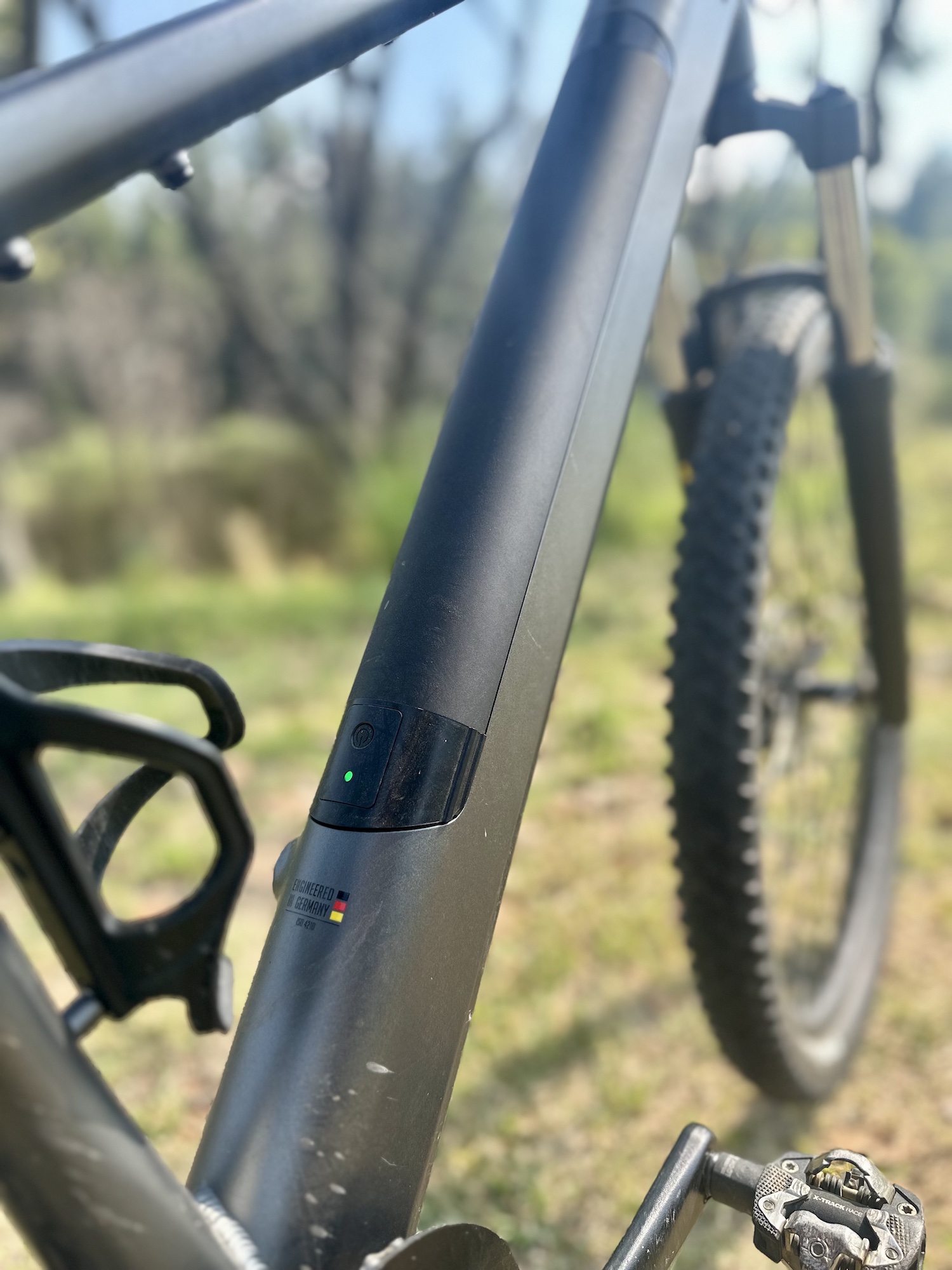
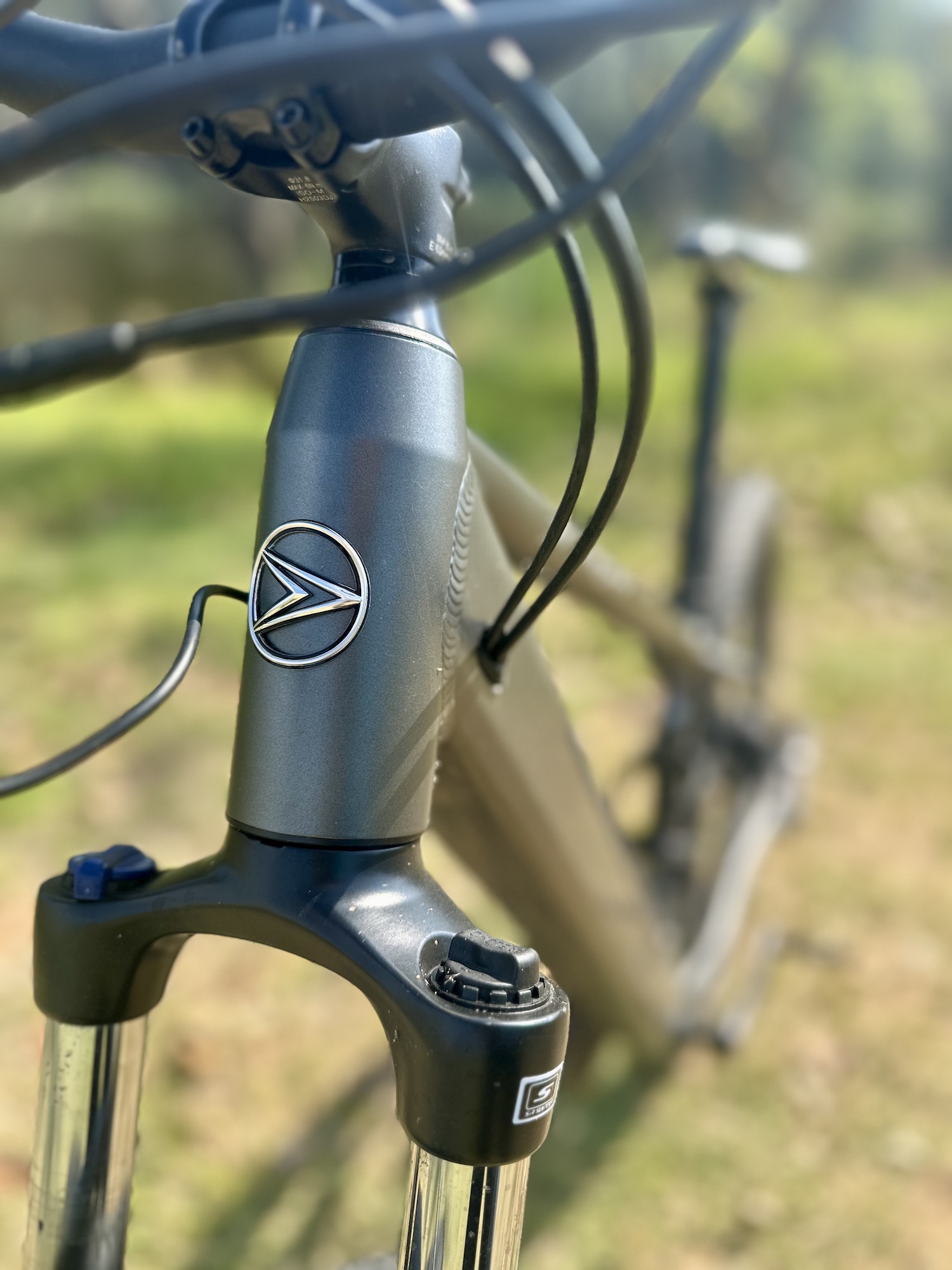
The S-Electro is an aluminium-framed hardtail mountain bike with a non-removable (but replaceable) battery neatly integrated into its burly downtube. The battery delivers 504Wh of capacity, with a claimed range of 50–100km or 2–4.8 hours, depending on terrain and power mode.
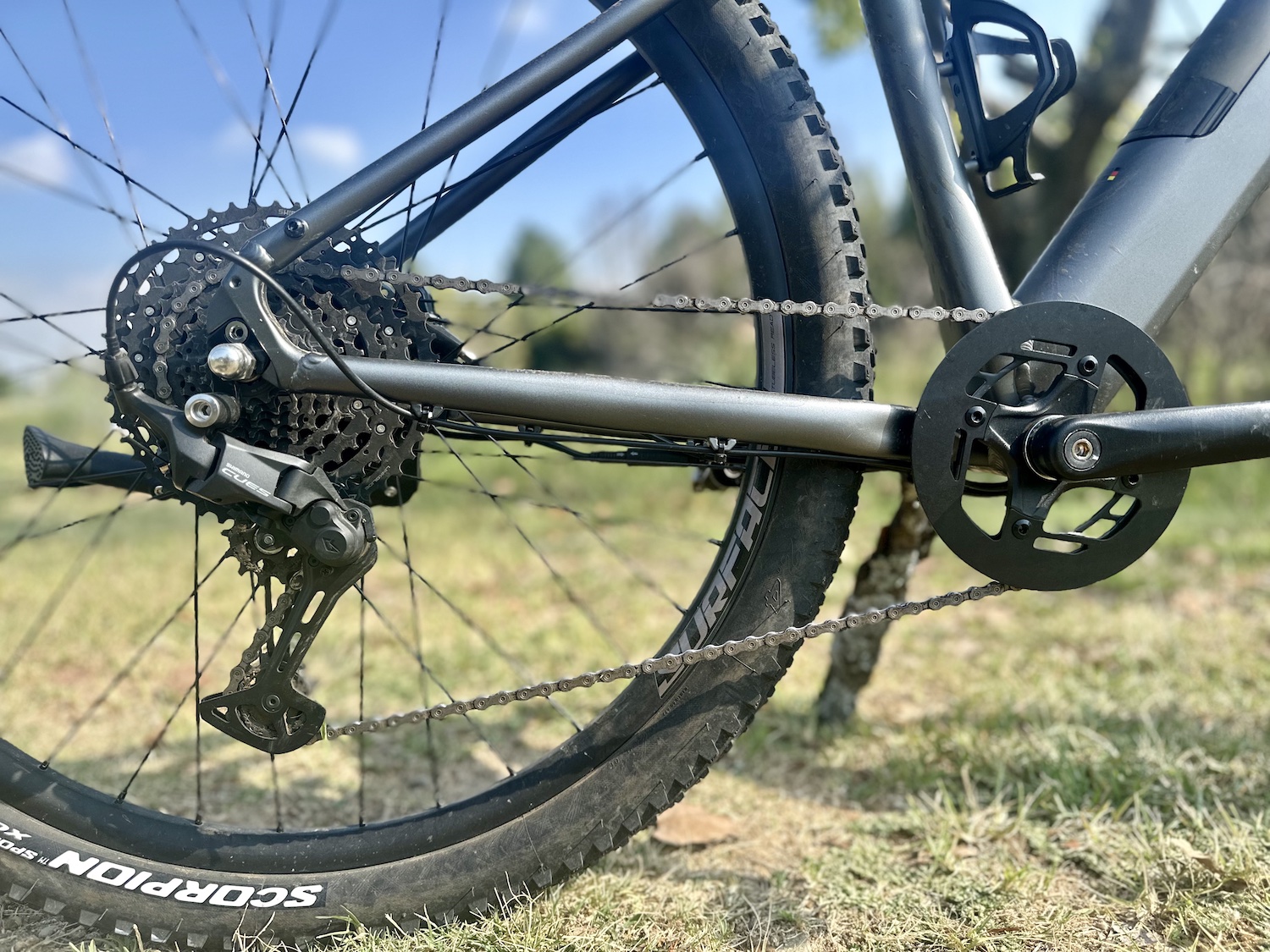
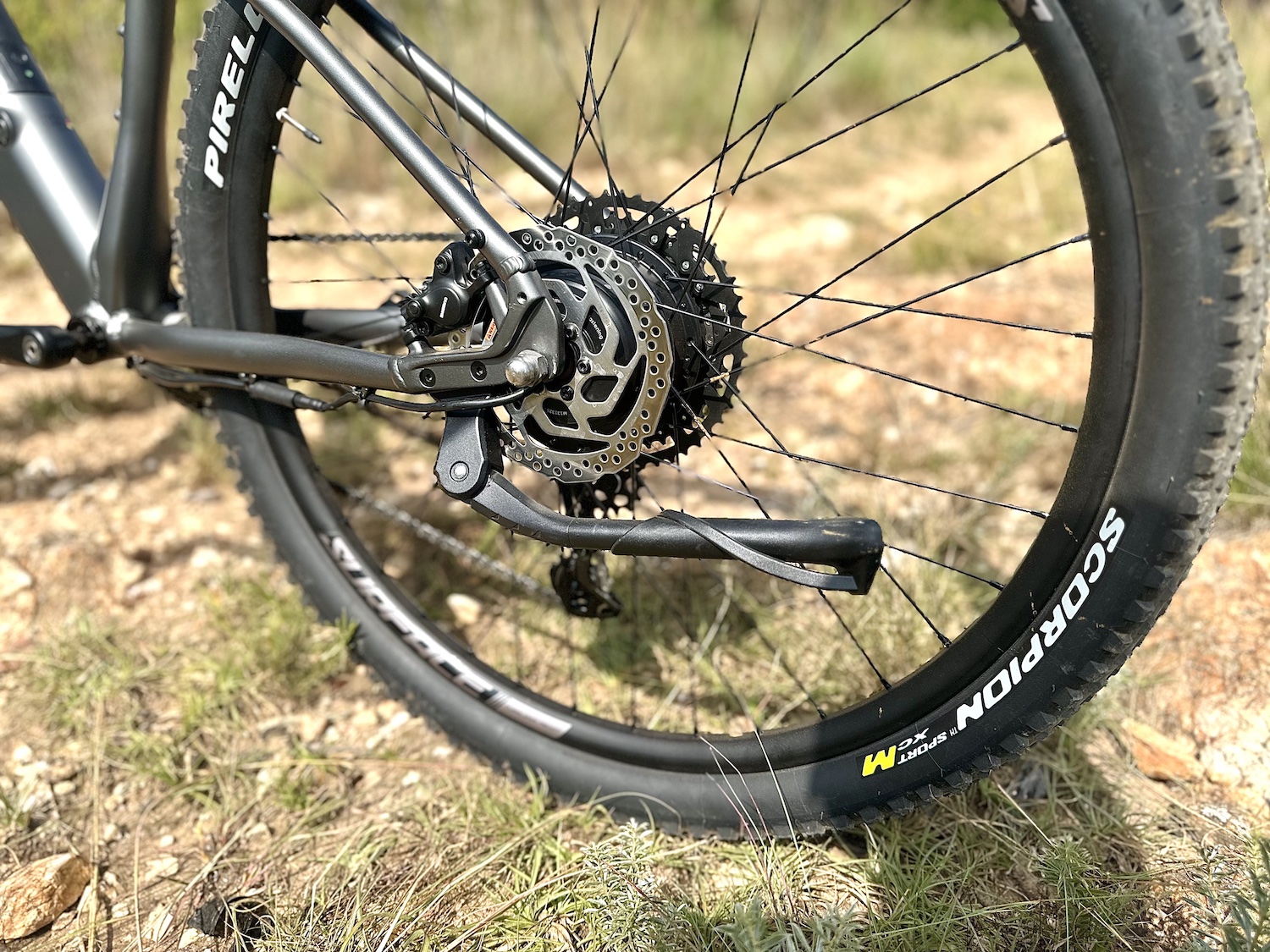
Drive comes courtesy of an Ananda rear hub motor producing 250 Watts peak power and 50Nm of torque. In practical terms, it behaves similarly to what many brands market as an “SL” system, roughly doubling rider input, whereas full-power eMTBs typically multiply rider output by four times or more.
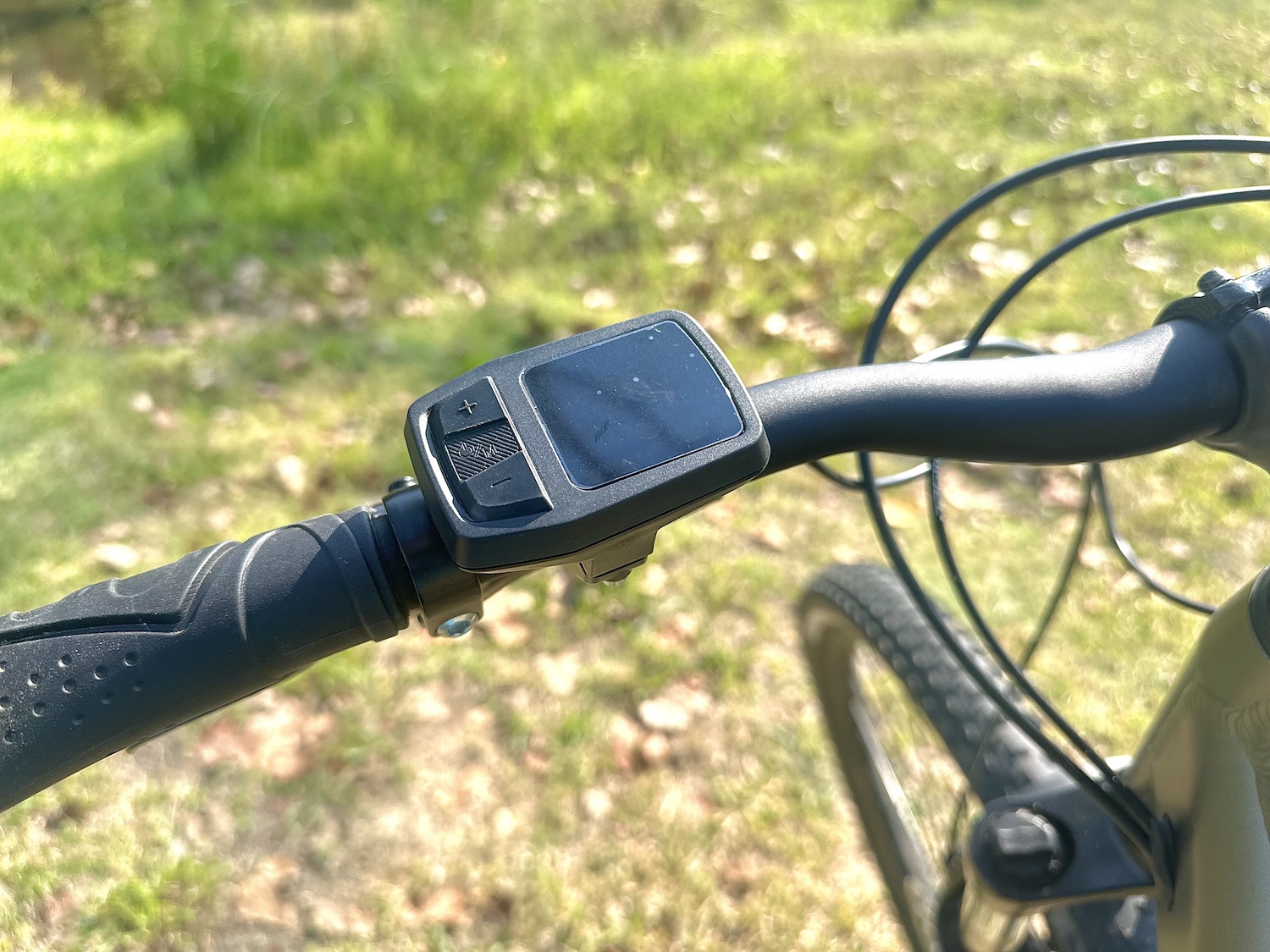
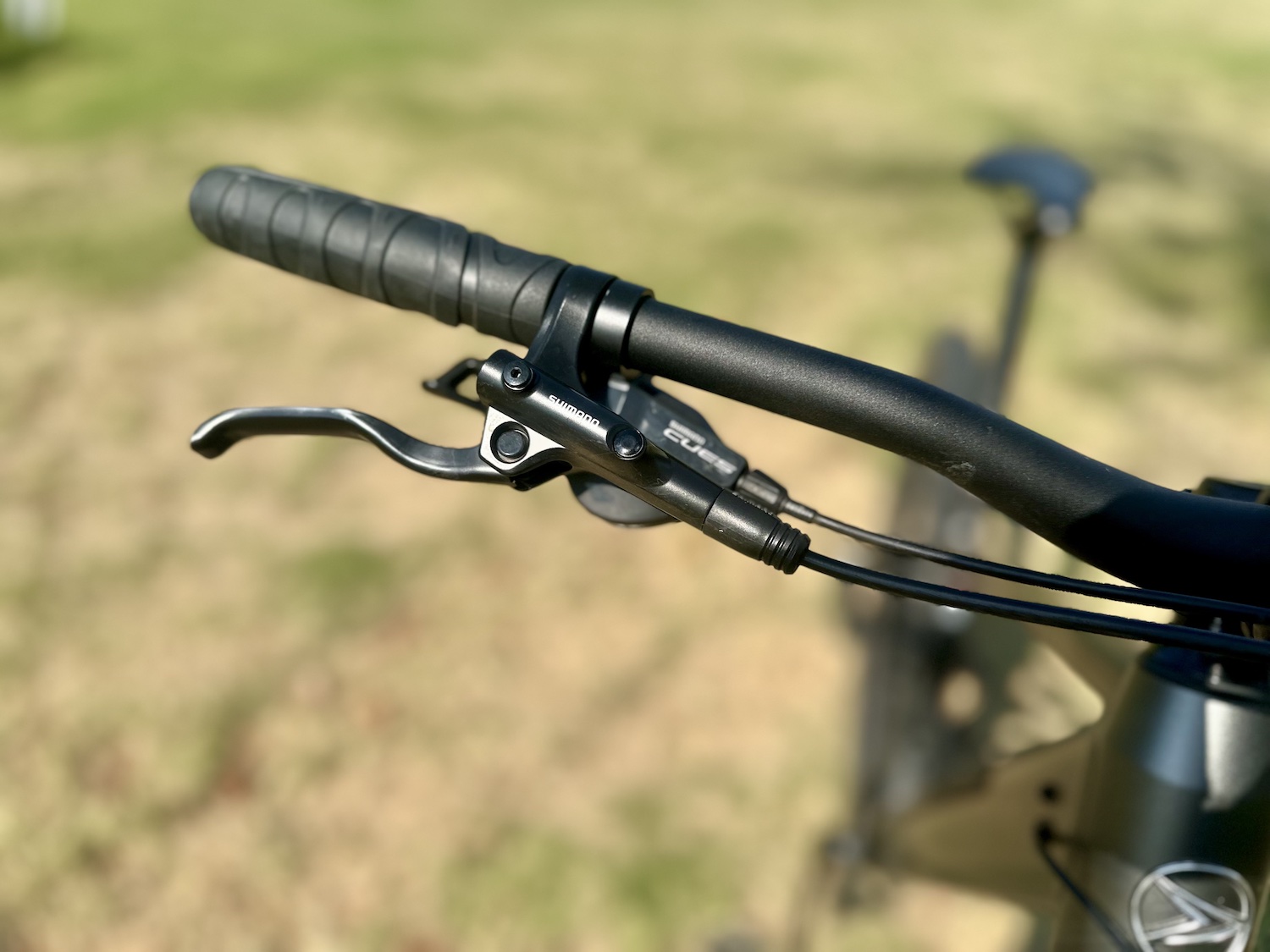
The system is managed via a handlebar-mounted LCD display. It’s simple and functional rather than flashy: a monochrome screen with three buttons (power mode down, power mode up and scroll). The display shows battery percentage, trip distance and total odometer – everything you need, without excess.
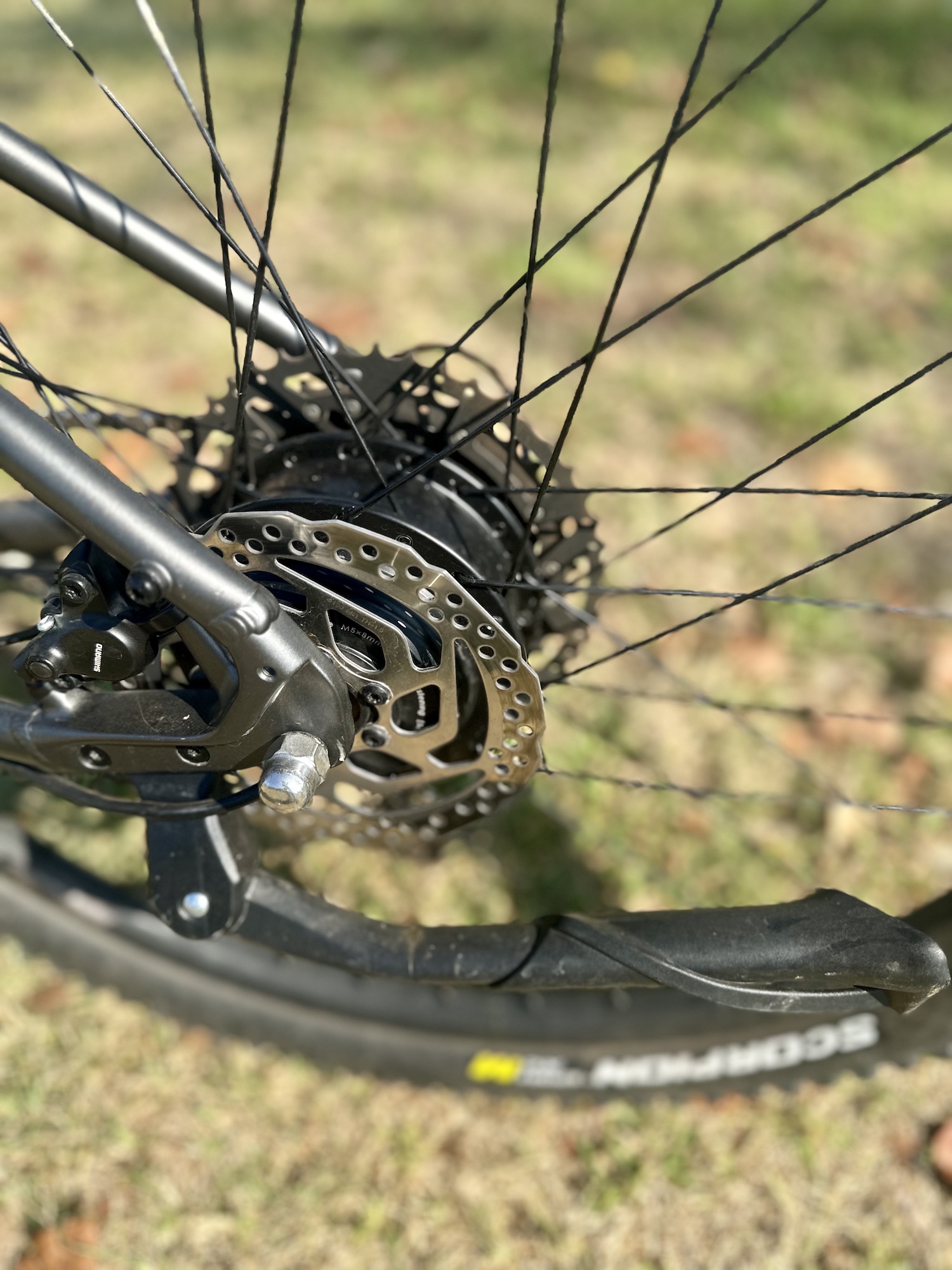
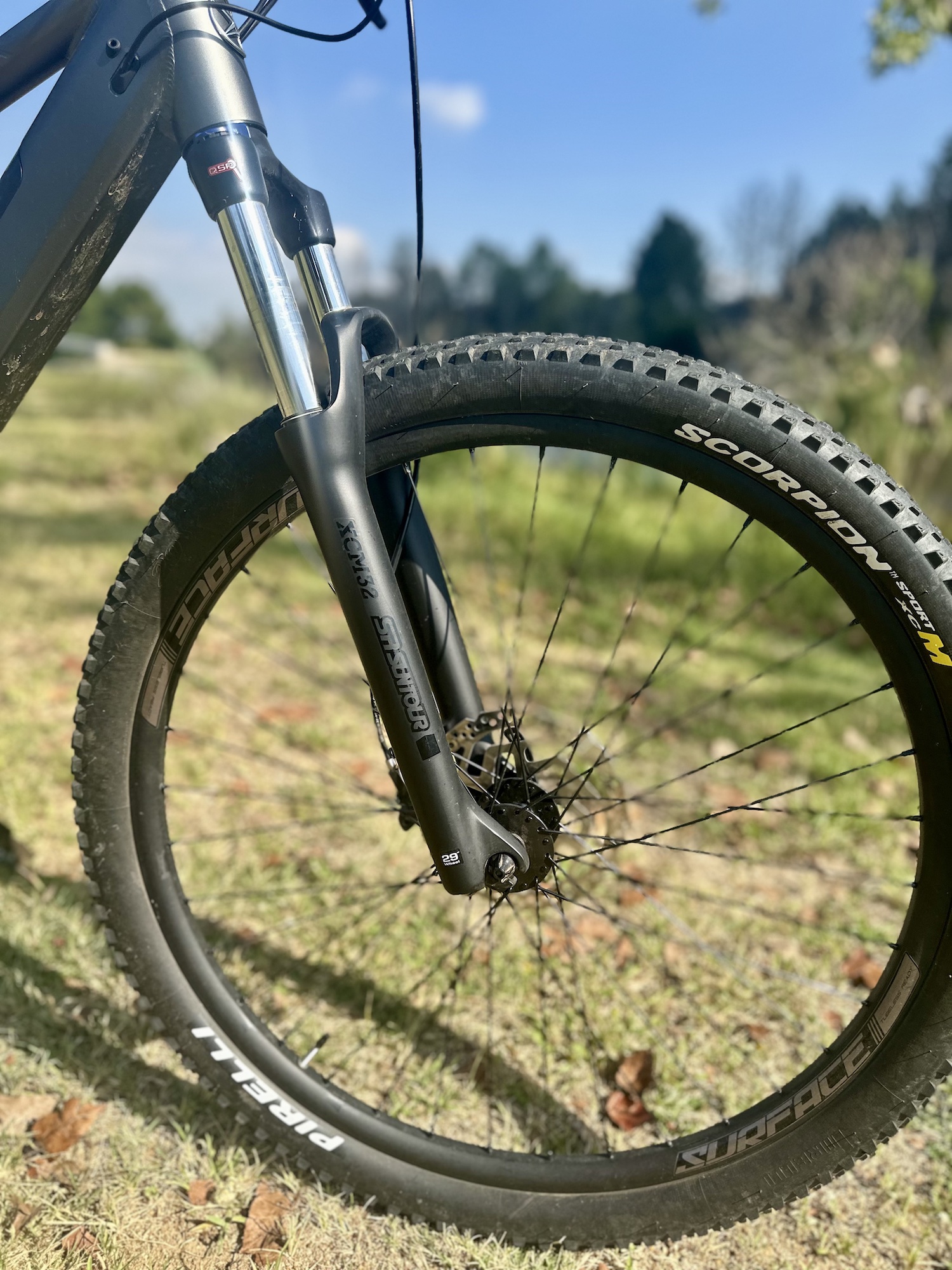
Up front sits a 120mm SR Suntour XCR coil fork. The wheelset comprises Silverback’s Surface-branded rims, paired with a Shimano HB-QB400 front hub (the rear hub houses the motor). Shifting is handled by Shimano’s 1×8 Acera drivetrain, while braking duties are taken care of by Shimano BL-MT200 hydraulic discs with a 180mm rotor up front and 160mm at the rear. The cockpit is entirely Surface alloy components.
Geometry is relatively neutral and: a 67-degree head angle, 74-degree seat angle and fairly long 465mm chainstays.
There is no bottle cage boss on the downtube, but there are two positions for a bottle cage – against the seattube and beneath the toptube. You need to choose which one you want to use because two bottles don’t fit. We chose the seattube option. On the medium frame it only fits a small bottle.
The kickstand proved a talking point among the TREAD crew – a first for most of our testers, except for the old-school rider who last used one on his Raleigh Grifter back in the 1980s.
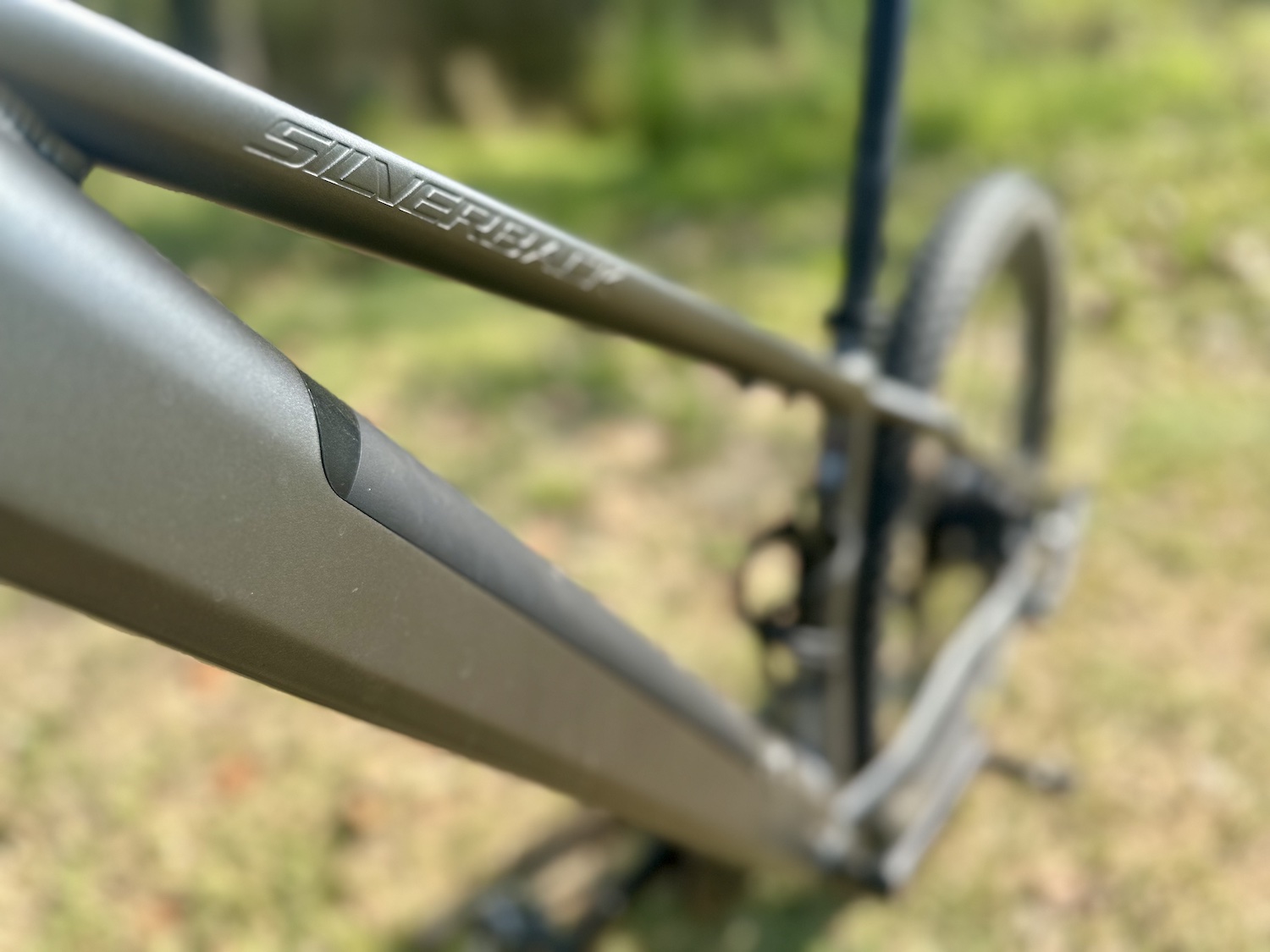
Aesthetically, the Thunder Grey finish is understated and classy. Branding is subtle, embossed into the top tube. The only colour accents are small German flag details on the downtube (“Designed in Germany”) and on the saddle rail. Claimed weight is 22.5kg – average for an eMTB, though slightly heavy for a hardtail.
THE RIDE
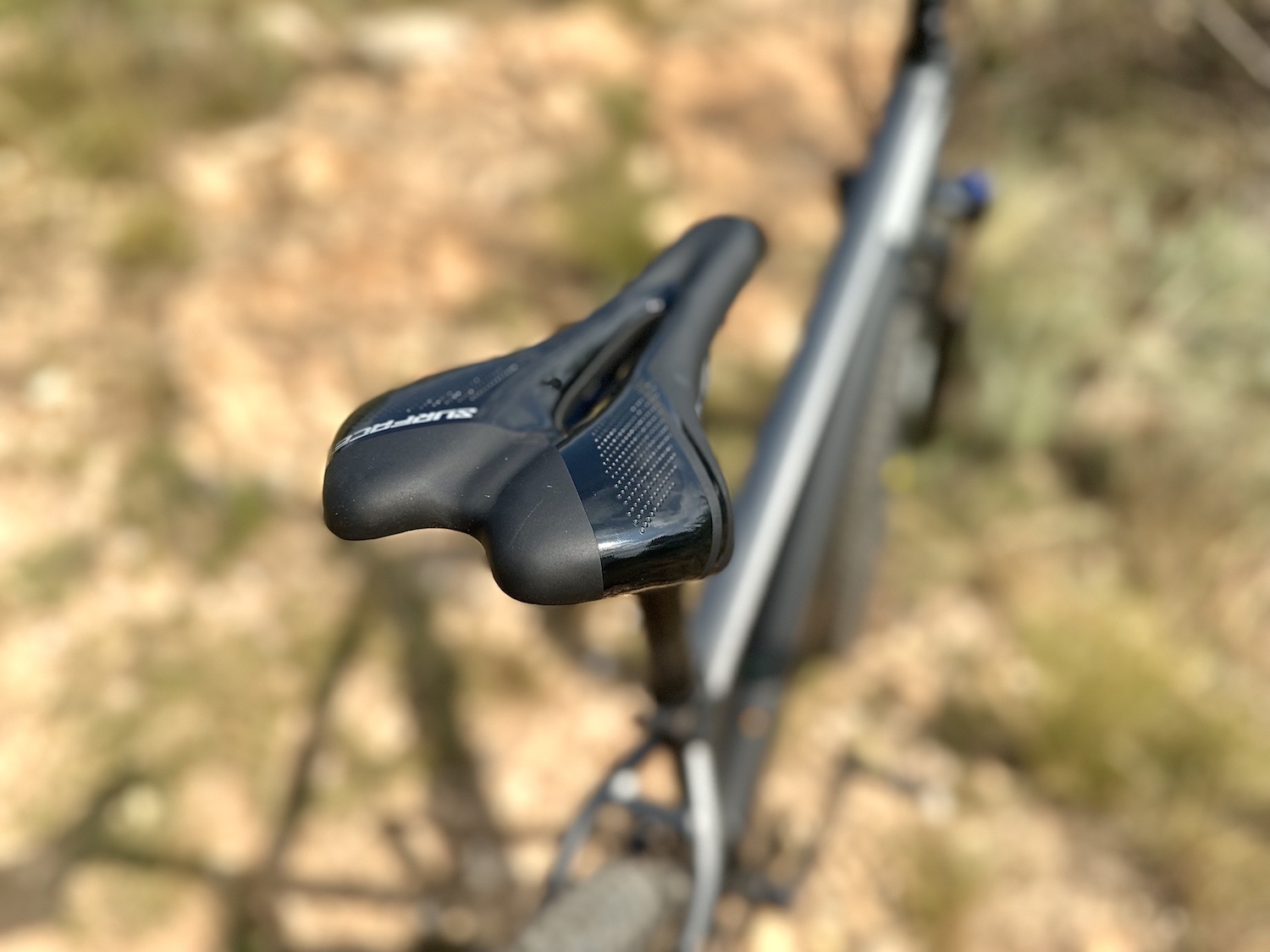
It took a few rides to properly settle into the S-Electro. We swapped the soft stock saddle for a firmer option to eliminate chafing, and the ergonomic grips – broader than what we’re accustomed to – took some adjustment.
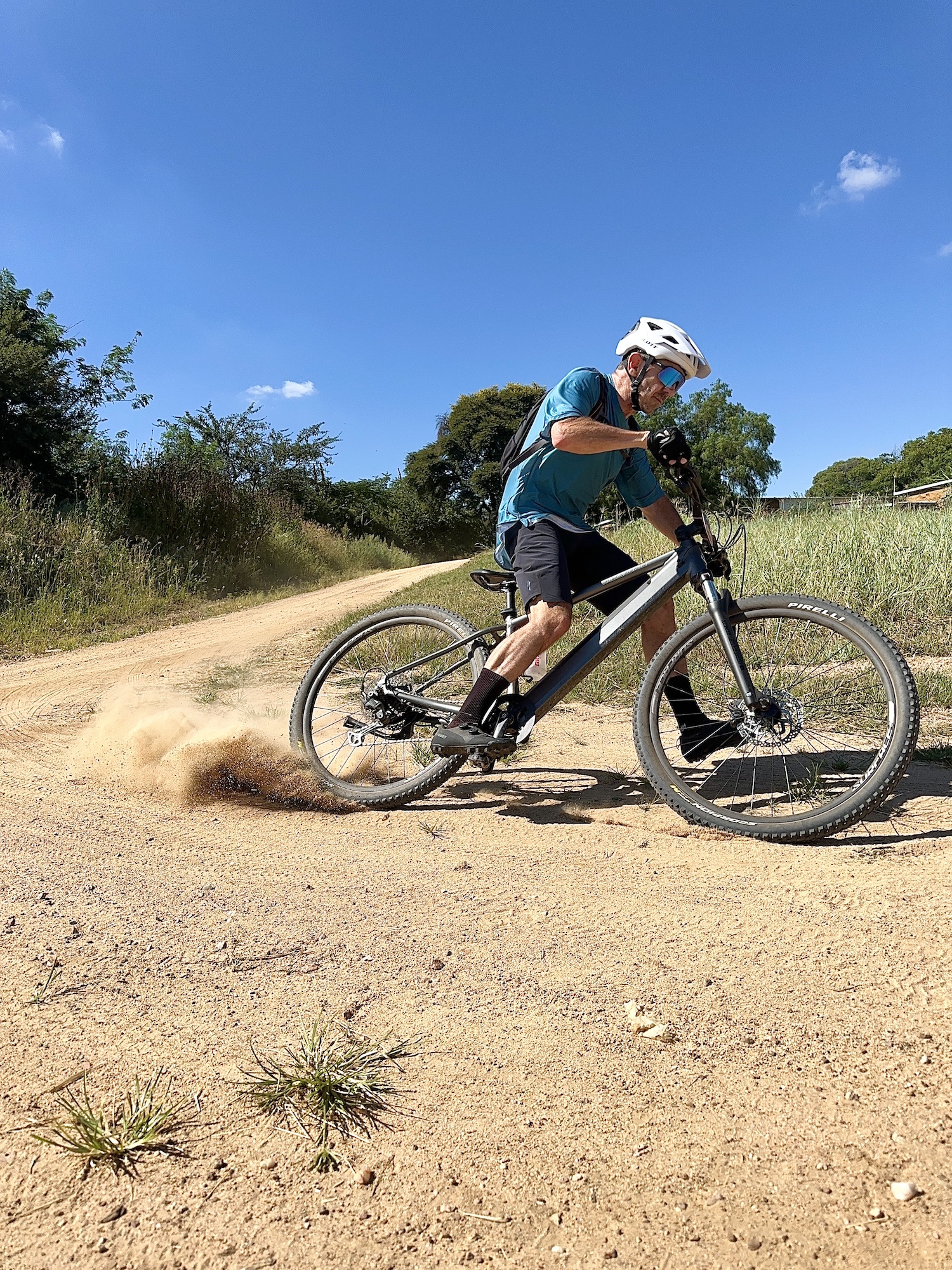
The Medium frame features a relatively tall 140mm headtube, resulting in a more upright riding position. That’s not a drawback – in fact, it suits the intended rider perfectly – but our testers had to consciously shift their weight further forward in corners to maintain front-end bite.
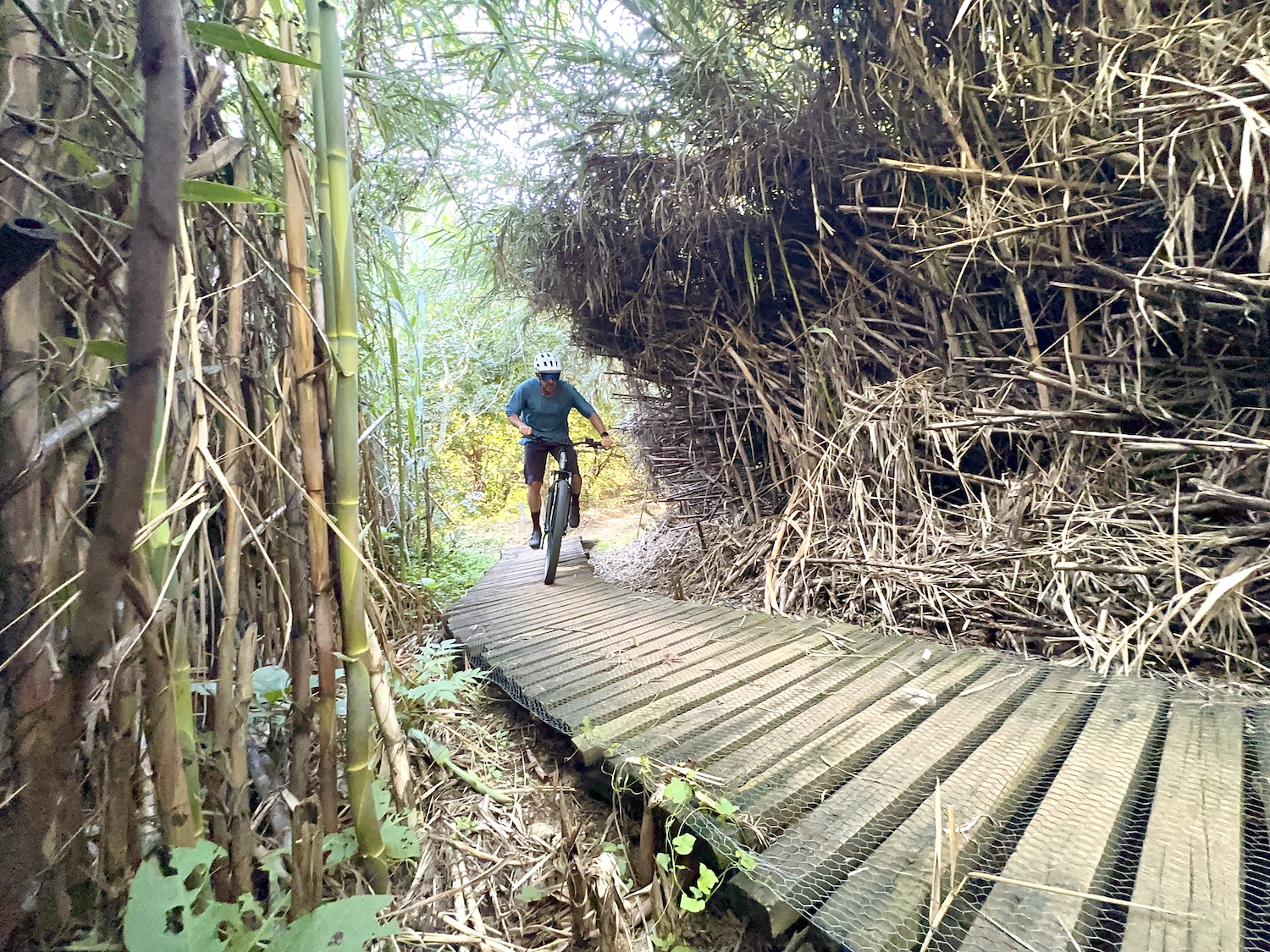
For context: our testers are not conservative riders. Every test ride involved pushing the S-Electro to its limits. On the very first outing, a rider punctured the rear tyre after charging down a rocky descent. Hardtails are unforgiving, and the S-Electro quickly reminded us of that. Fortunately, the wheels are tubeless-ready and the sealant did its job.
Over six weeks of riding, with preload set as soft as possible, the 120mm SR Suntour fork delivered around 60mm of actual travel for our testers (70–75kg). This isn’t a criticism unique to the S-Electro – many budget hardtails and entry-level eBikes are specced similarly. It’s possible the spring rate was simply firmer than ideal for our riders.
That said, the target market for this bike is unlikely to ride highly technical or aggressive terrain. For gravel roads, smooth trails and moderate singletrack, the front-end compliance is sufficient.
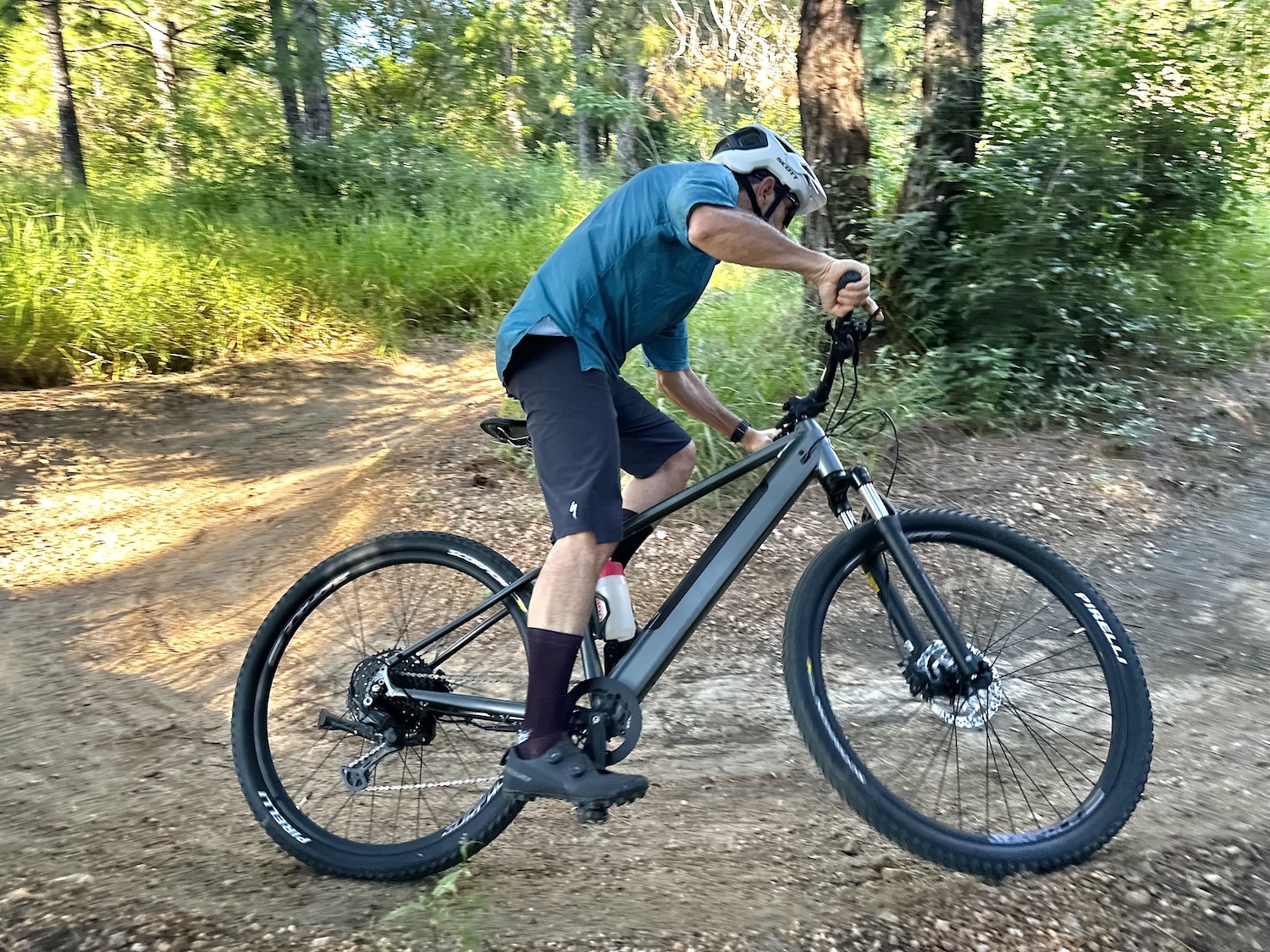
With a 1198mm wheelbase and lengthy 465mm chainstays, the S-Electro feels planted and stable. Combined with the tall stack height, it encourages a more upright riding position – appropriate for newer or less aggressive riders. We found it somewhat slow to react through fast, tight turns, but again, that’s not the environment this bike is designed to dominate.
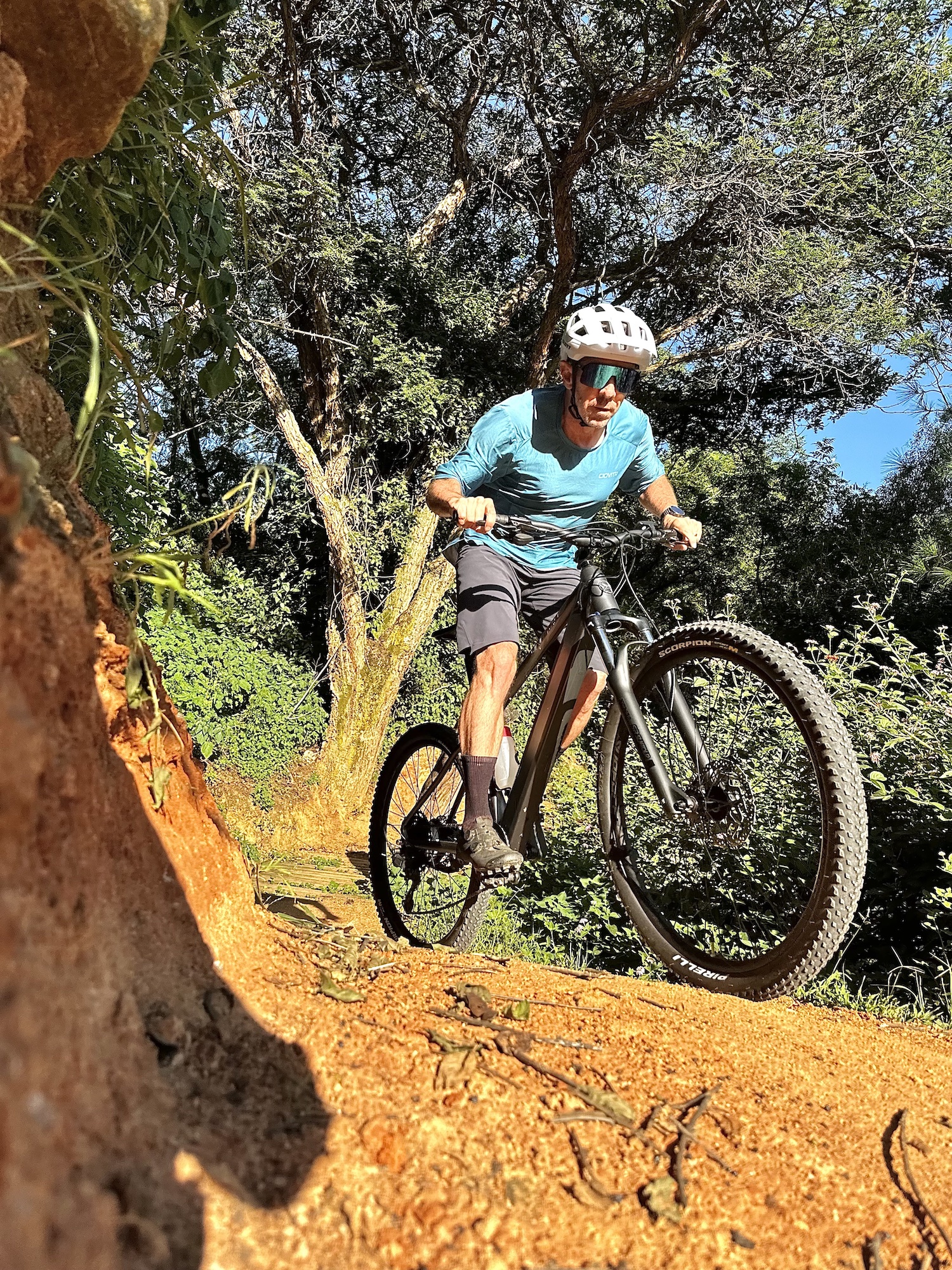
Climbing is always the litmus test for an eBike. The S-Electro offers five assist modes, easily toggled via the handlebar display. The torque sensor ensures smooth, near-instant engagement with minimal lag and virtually no motor noise.
Although originally listed at 25kph, we discovered pedal assistance continues up to 32kph – the legal maximum in South Africa (Europe remains capped at 25kph).
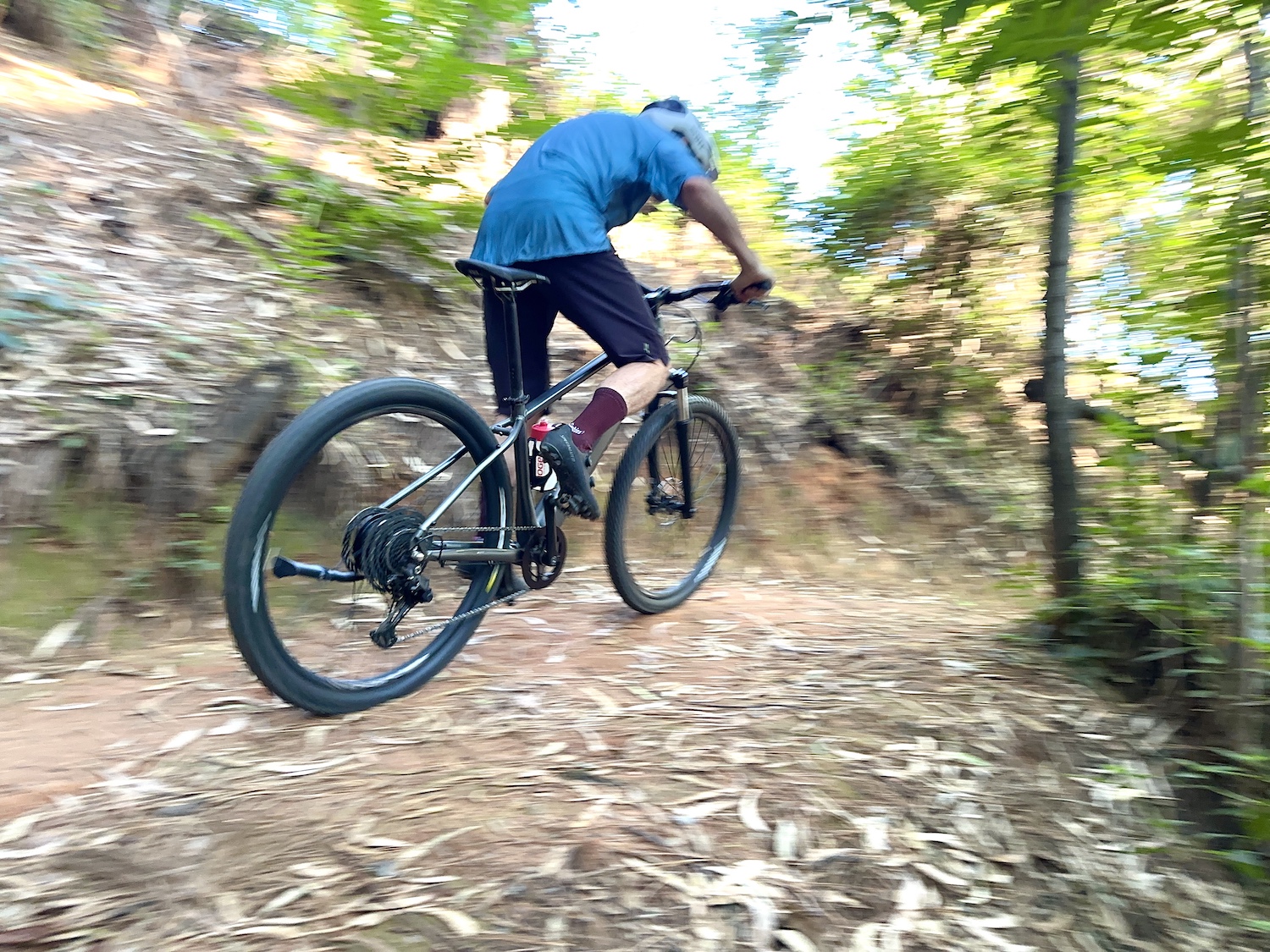
There’s a noticeable step between modes one through four, though the difference between four and five is less pronounced. On all but the steepest, most technical climbs, the S-Electro performed well. It delivers enough support to make long climbs enjoyable without feeling overpowering.
Descending on smoother surfaces and gravel roads, the bike feels relatively stable. On rough, rocky descents it becomes more demanding – but that’s the nature of a hardtail with a coil fork. It’s built for riders who prefer predictable terrain over technical features.
This was our first experience with Pirelli mountain bike tyres. At 2.25 inches wide – narrower than we typically ride – they proved surprisingly grippy when needed and rolled efficiently on hardpack and gravel.
Range testing was informal but encouraging. With riders weighing between 70kg and 75kg, we completed multiple 3–4 hour rides at Gauteng’s moderately hilly trail parks with at least 35% battery remaining. That’s solid for a 504Wh system in real-world conditions.
Charging is handled by a 2A charger, taking approximately three hours to reach 50% and six hours for a full charge.
The kick-stand is removeable, but we left it on to see how well it behaves. We never had any issues with it dropping down while riding and it actually is quite useful on such a heavy bike, especially for those who aren’t too strong in the upper body.
SUMMARY
The Silverback S-Electro is a genuine entry point into the eMTB category – and an honest one at that.
It doesn’t pretend to be a high-performance trail weapon, nor does it need to be. Instead, it offers stable geometry, smooth and quiet pedal assistance, respectable range and reliable Shimano components at a price that significantly lowers the barrier to eBike ownership.
Yes, the coil fork is basic. Yes, the hub motor won’t match the punch of premium mid-drives. And yes, aggressive riders will quickly find its limits. But that’s missing the point.
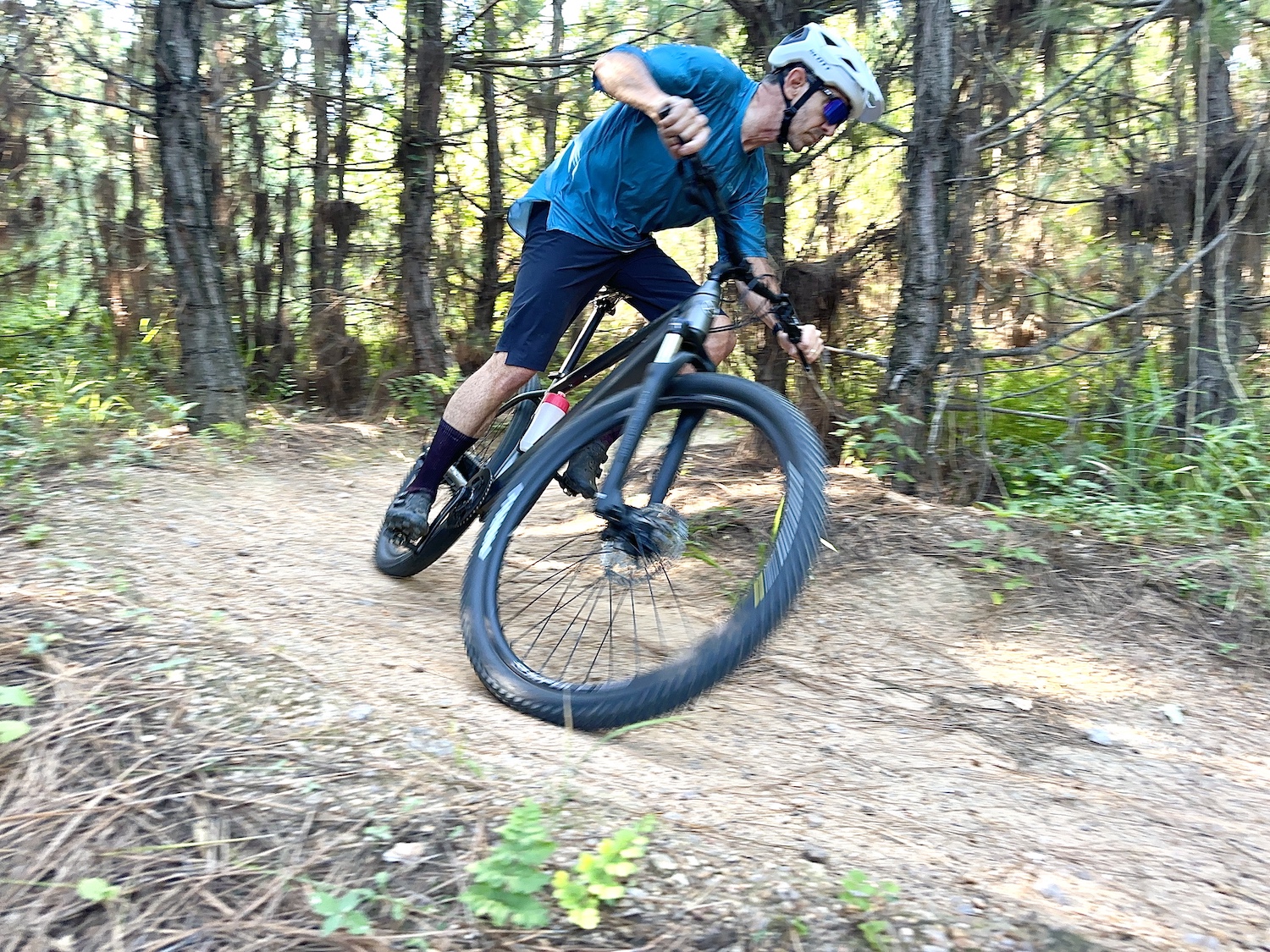
The S-Electro is aimed at riders who want assistance on gravel roads and moderate singletrack – riders who value stability, comfort and affordability over outright performance.
For that rider, the S-Electro makes a compelling case: an accessible, well-thought-out eMTB that proves you don’t have to spend six figures to join the electric revolution.
PRICE: R29 999
Currently available at Cycle Lab and Chris Willemse Cycles.
Note: Price is correct at time of publishing (February 2026) and may be subject to change.

