
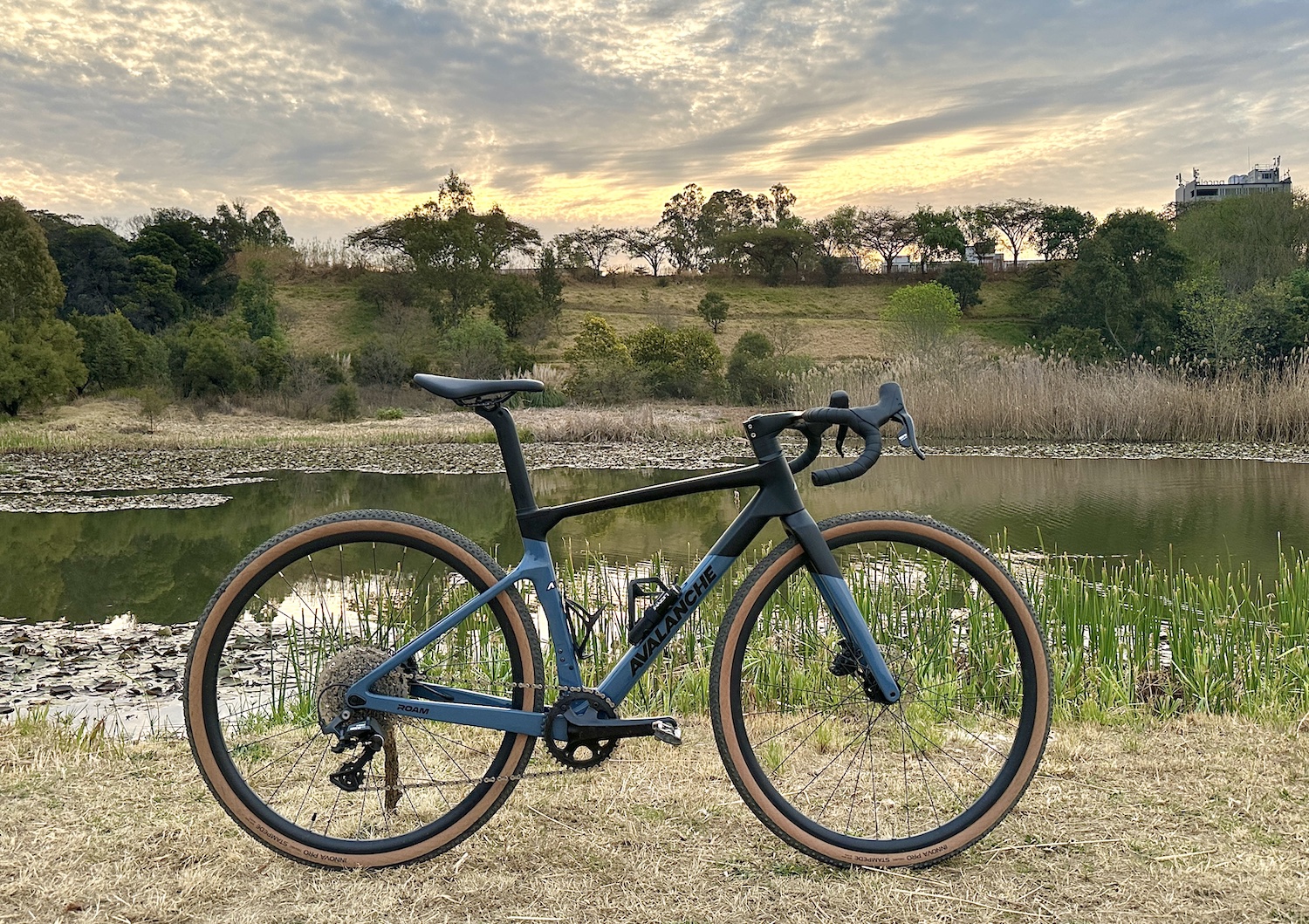
Every so often a bike arrives on the scene that gets the cycling community talking. The Avalanche Roam gravel bike is one of those bikes. Carbon-fibre frame, fork, bars/stem and seatpost with 1×11 drivetrain and hydraulic disc brakes for under R32 000? Amazing value, but how does it ride? We rode it. Here’s what we think…
Let’s first mention that Avalanche is a South African bicycle brand. It was established more than 30 years ago by Dragons Sports, a leading bicycle industry distributor in the country. Dragons Sports was sold couple of years ago and the new owners have poured more investment into the Avalanche brand and it’s showing. Case in point and our only real direct interaction with the brand, is the Roam…
THE BIKE
As the industry and media keep saying, gravel is on the rise. And it sure is. Big brands are making headway with R&D to develop the ideal gravel bike. What is the ideal gravel bike though? Well, it seems as if the whole bicycle industry is still figuring that out. The team behind the Avalanche brand decided that a bike that delivers a lot at an affordable price will be someone’s ideal gravel bike. You can read more about the story behind the Avalanche Roam here.
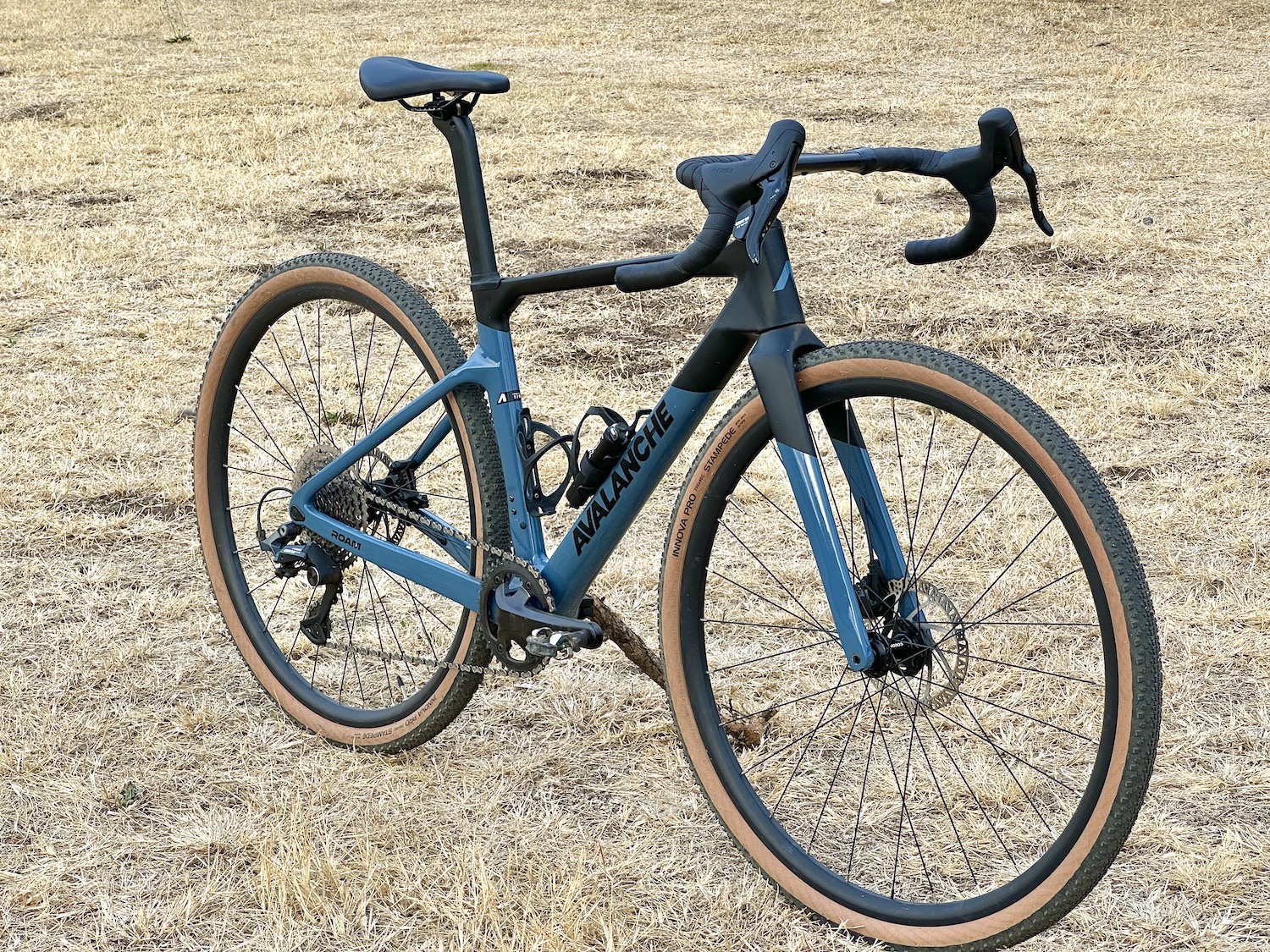
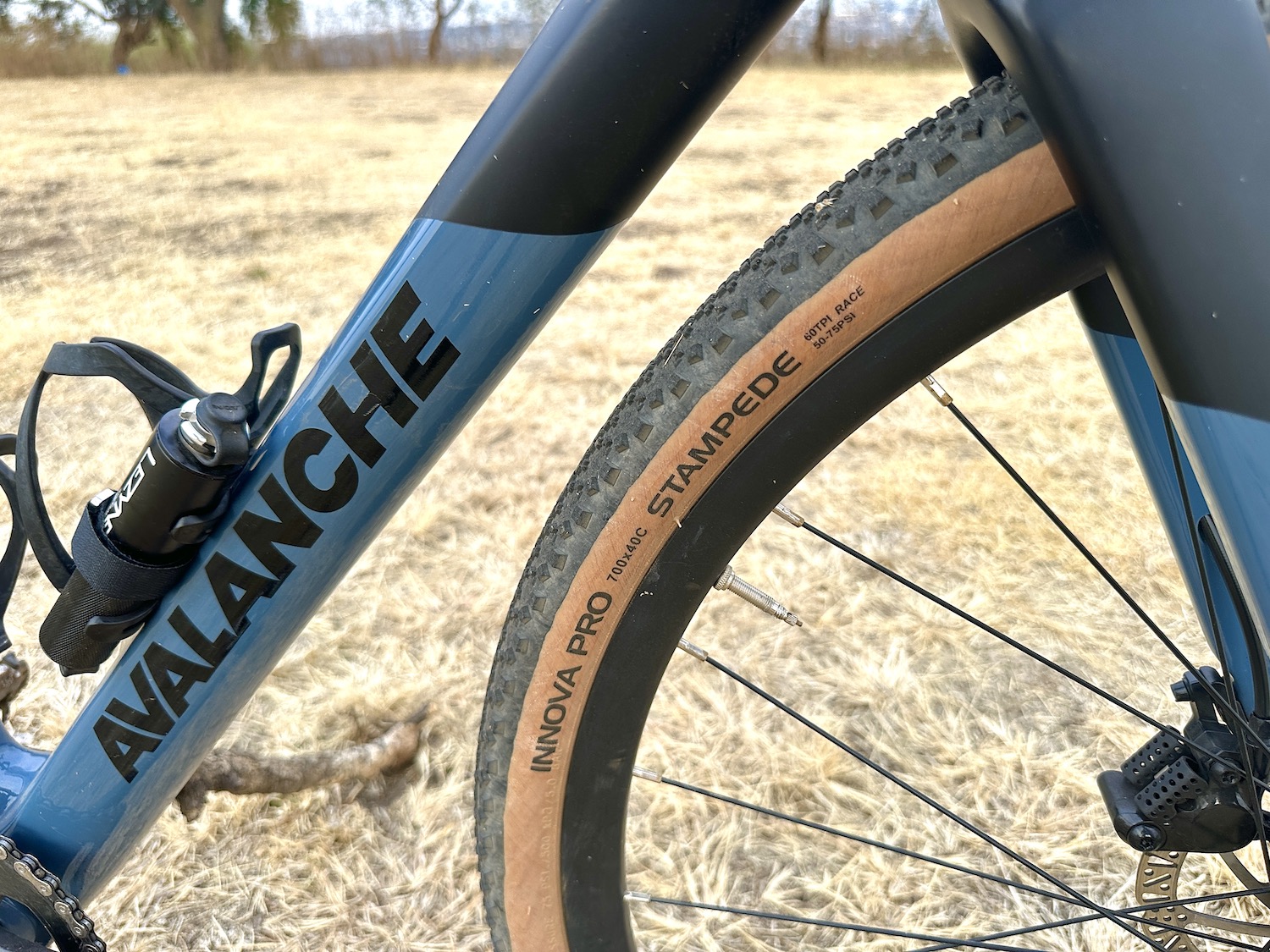
The frame is carbon-fibre, which known for its lightness and stiffness. Big bike brands get their engineers to fine-tune the carbon lay-ups on bikes to try and achieve optimal (light) weight or aero-ness. And some sort of vertical compliance in the case of gravel frames. Avalanche isn’t a big bike brand, but it worked closely with a leading carbon fibre frame manufacturer to fine-tune the Roam’s geometry, tube shapes and other features, such as bottle cage boss placement and storage carrying options.
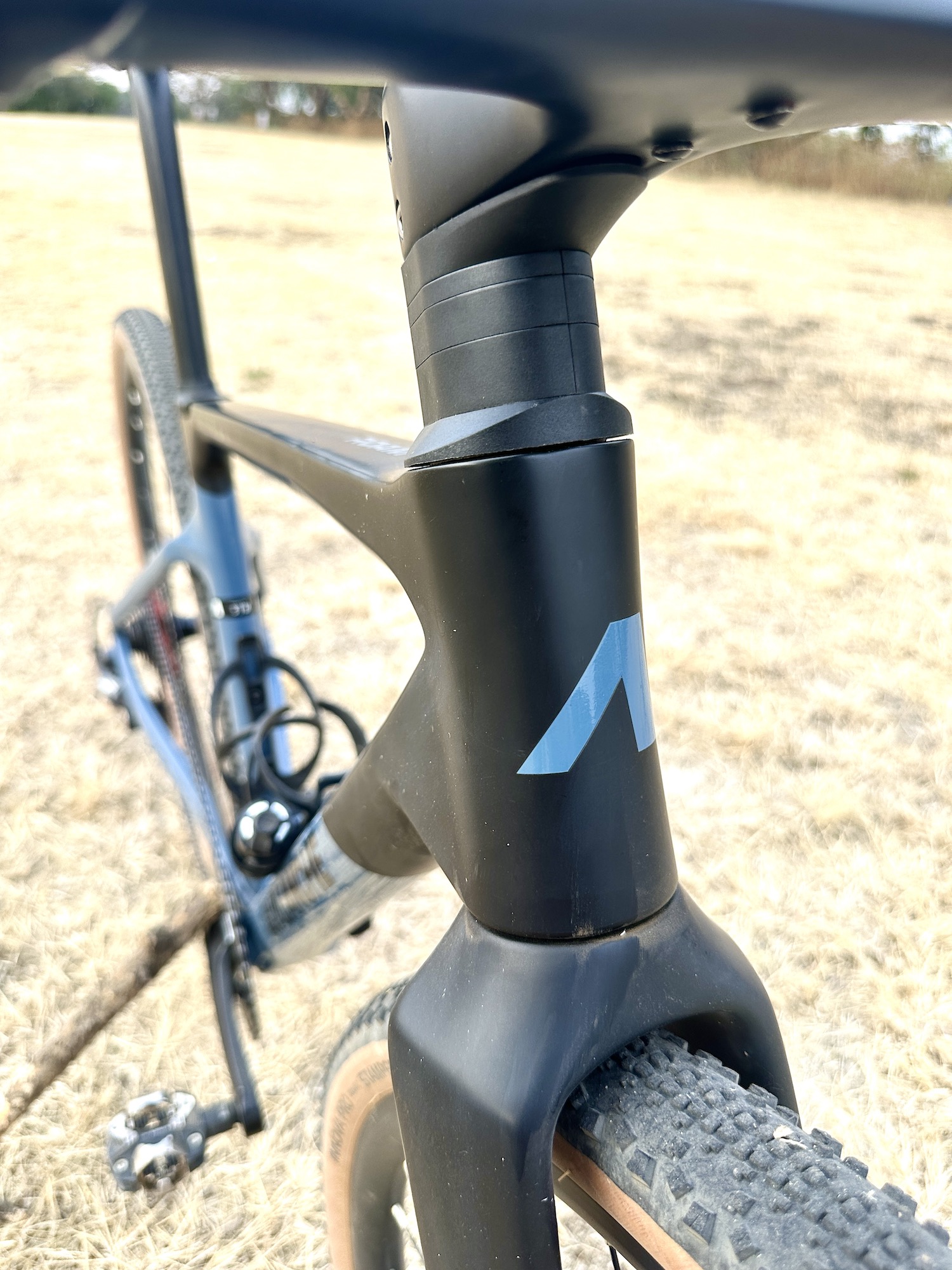
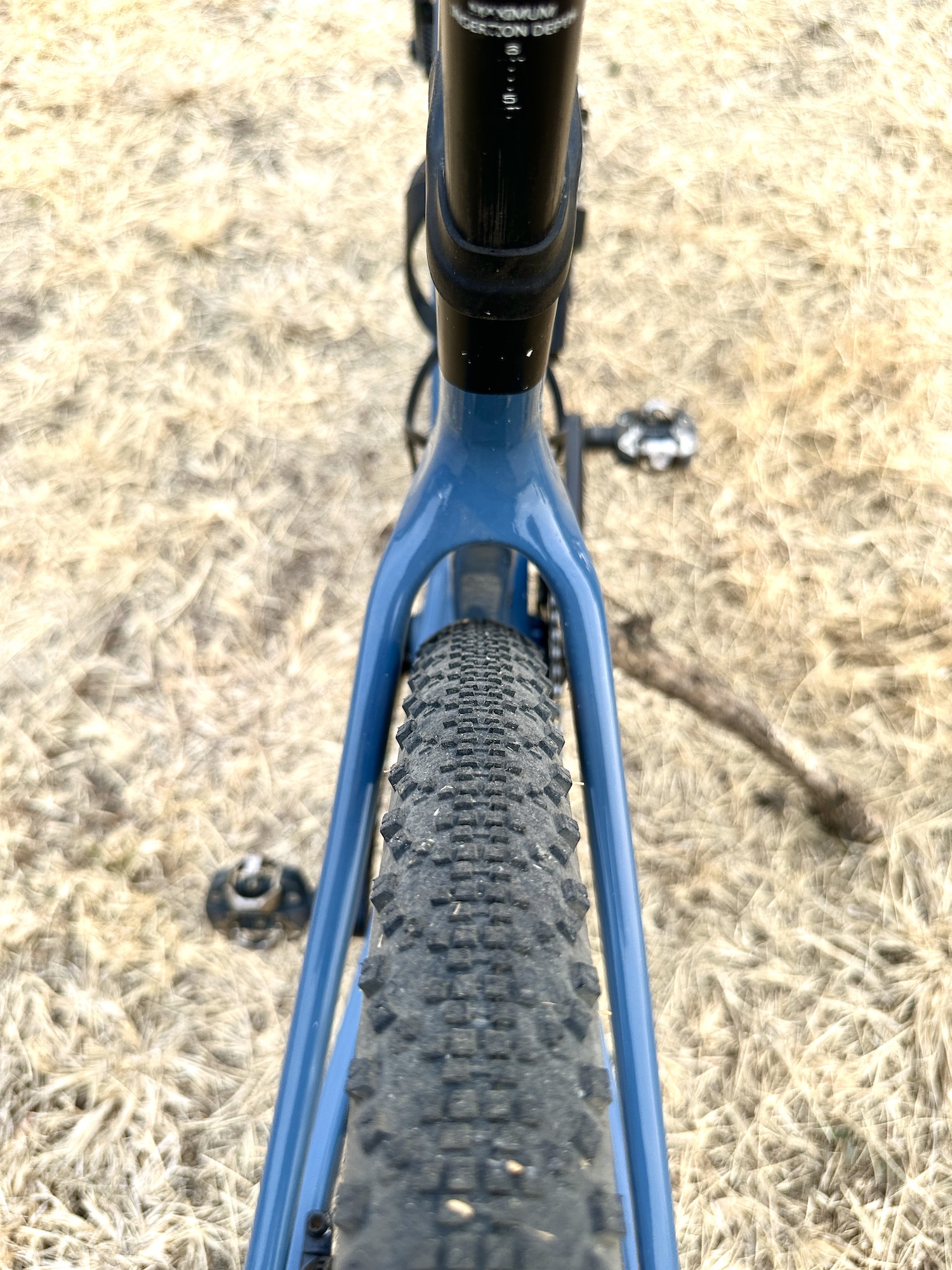
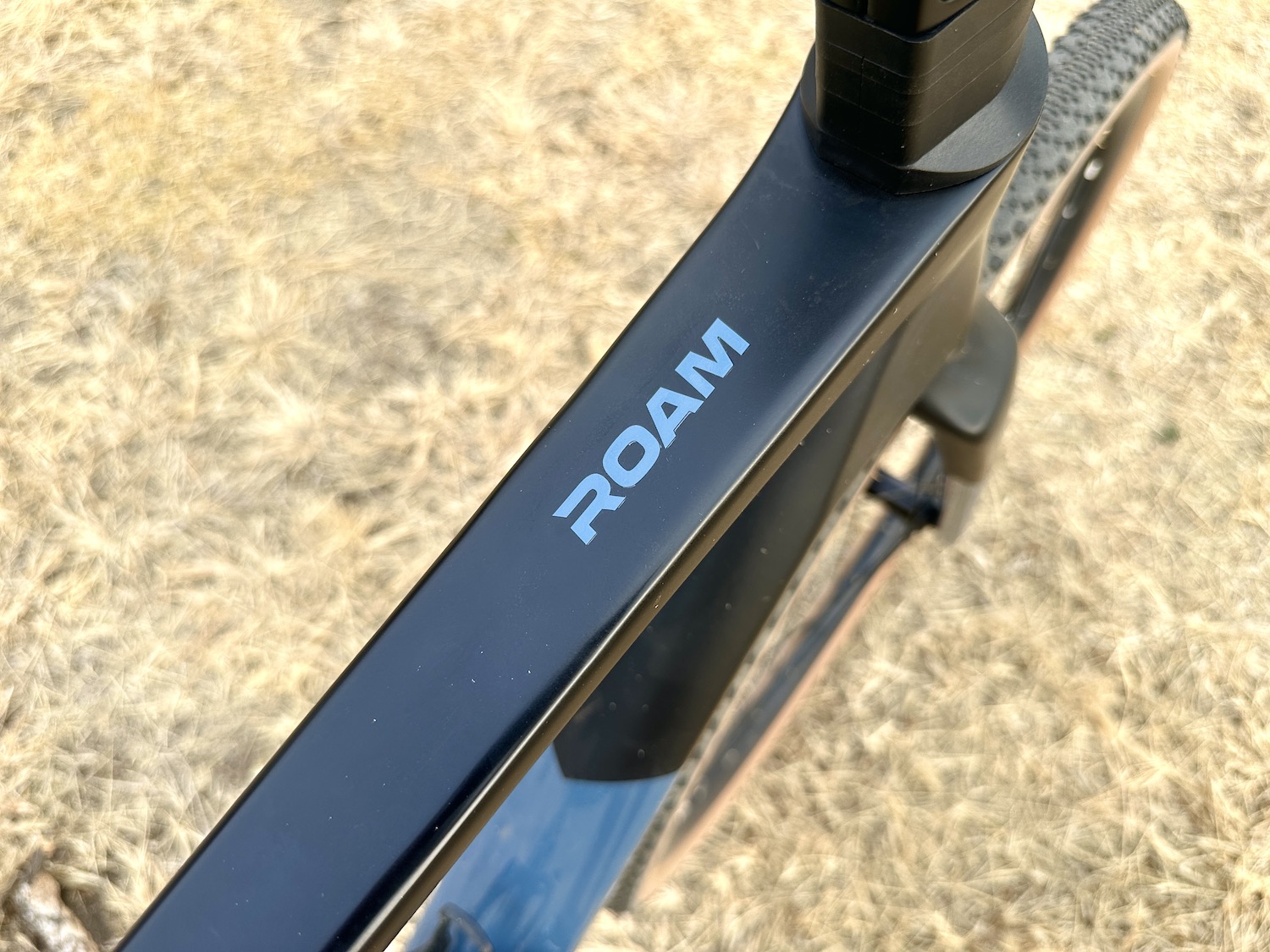
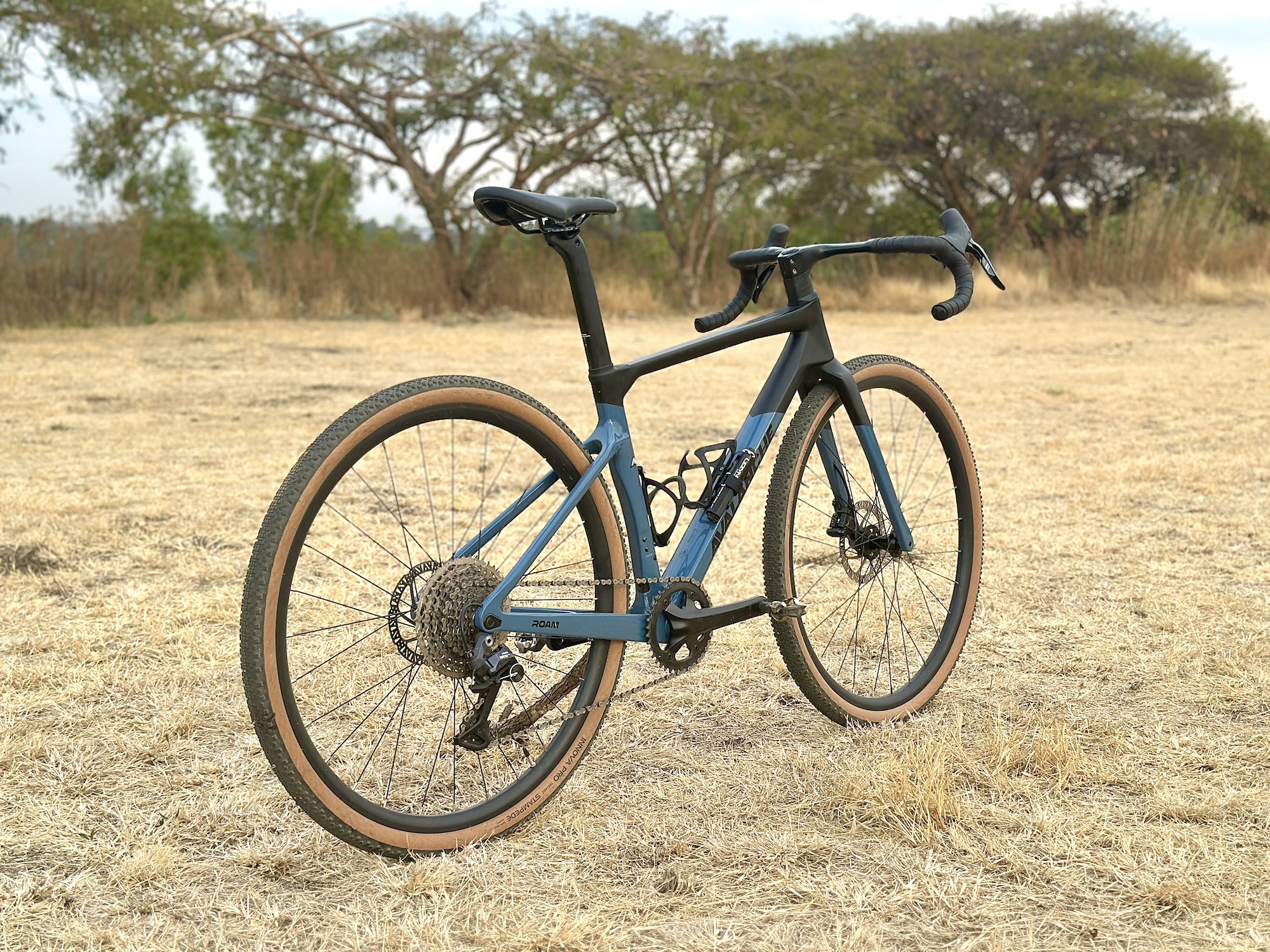
The Roam has a fairly classic main triangle with a very mildly sloping top tube, a tallish headtube and a tight, low rear triangle. The seattube is oval-like in cross section to accommodate the aero-shaped carbon seatpost. The ‘struts’ where the seatstays join the seatpost and where the downtube joins the headtube have been shaped to deliver a strong, smooth looking join. The headtube angle is a slack 69 degrees with a steepish seattube angle of 74 degrees. This changes slightly on the M/L and L/XL models with the headtube angle getting steeper and the seattube angle getting slacker on the bigger frames.
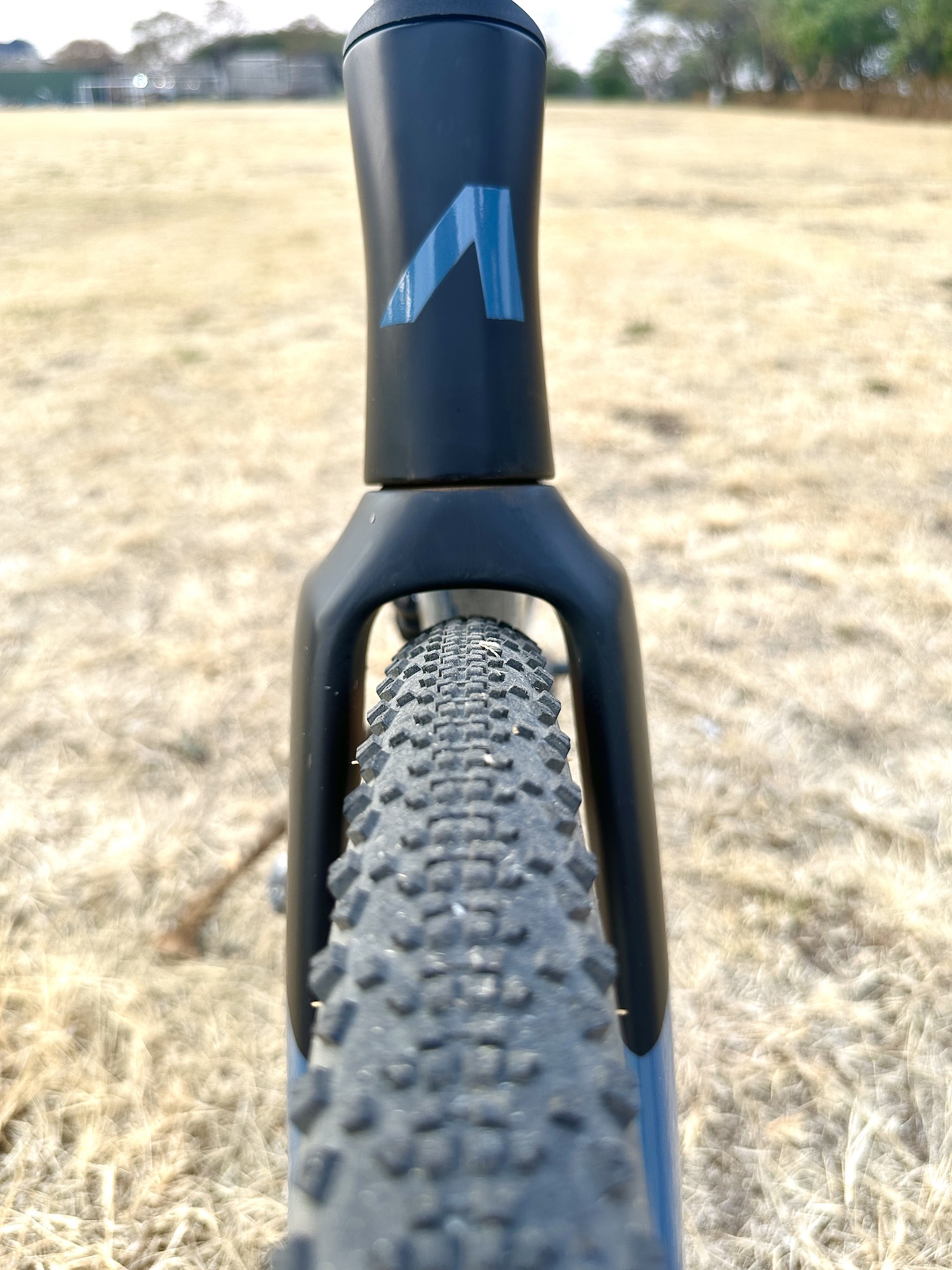
The carbon fork has a carbon steerer tube and is almost straight, with a small bit of rake incorporated.
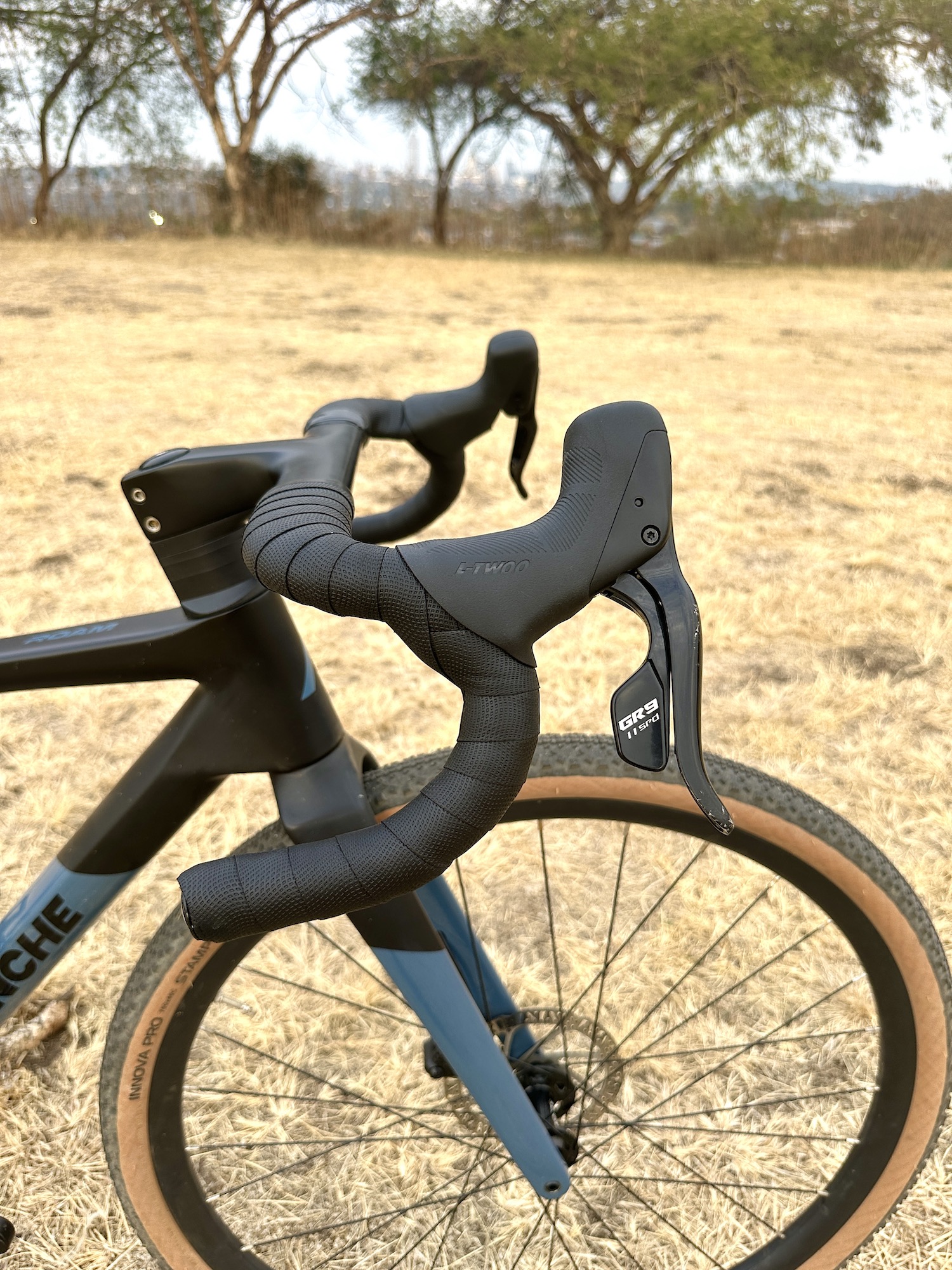
The two-tone colour of the model we tested sees a gloss dusty aqua blue on the bottom half and matte black on the top half. The gloss/matte combination gives it a classy feel. The matte black top half integrates the matte carbon seatpost and bar/stem combo seamlessly. The cable routing is internal for a very clean look and there is a rear derailleur hanger and a BB86 pressfit bottom bracket. Although it comes with a single chainring, provision has been made to fit a front derailleur.
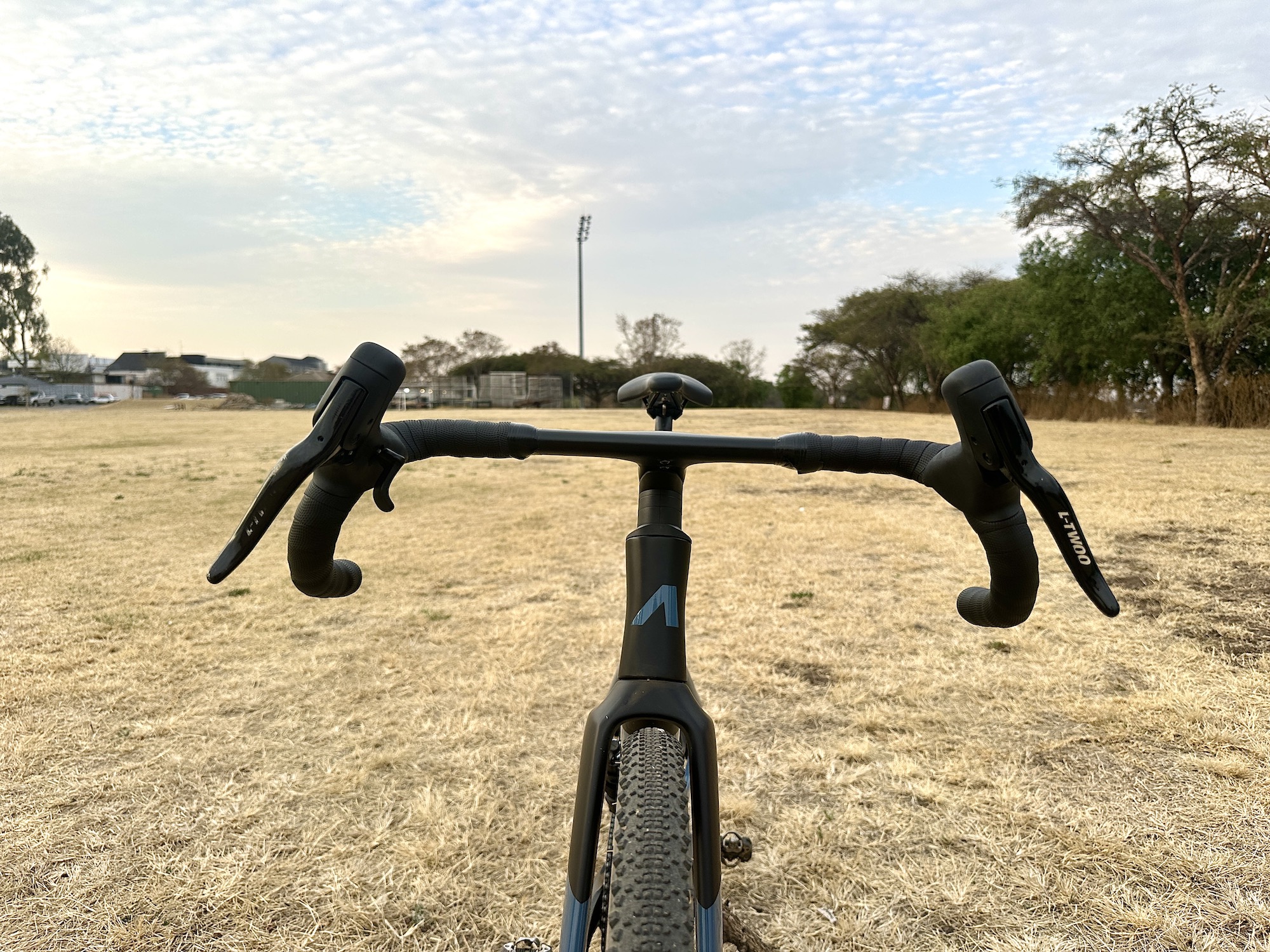
The seatpost has a rubber cover which helps protect against grit and water. To adjust the saddle height, there is an angled Allen bolt beneath the junction of the seatpost and the toptube. The carbon bars are flared and have a flat top.
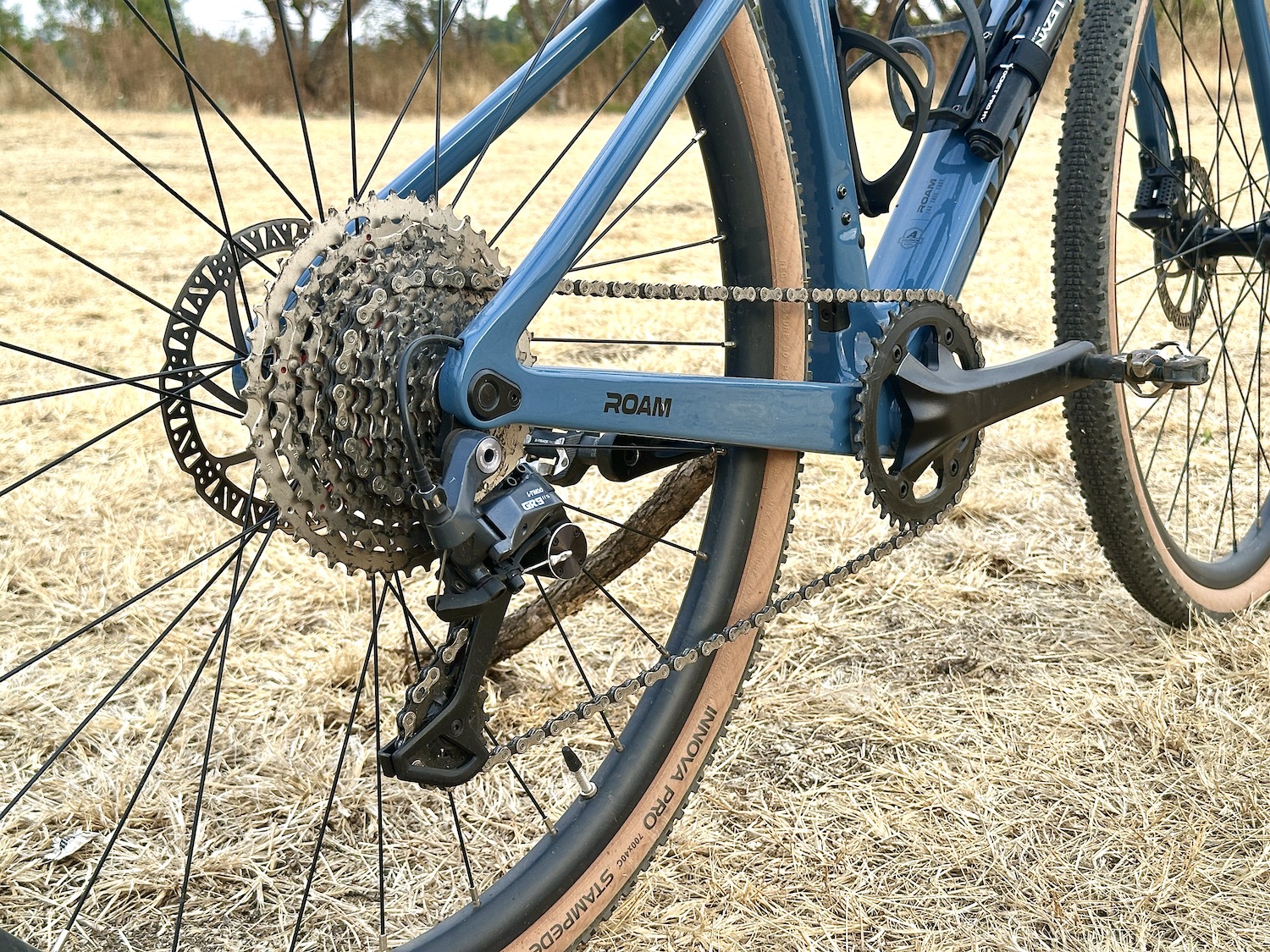
The wheelset is Avalanche 28-spoke alloy with Innova Pro Stampede tubeless tyres.
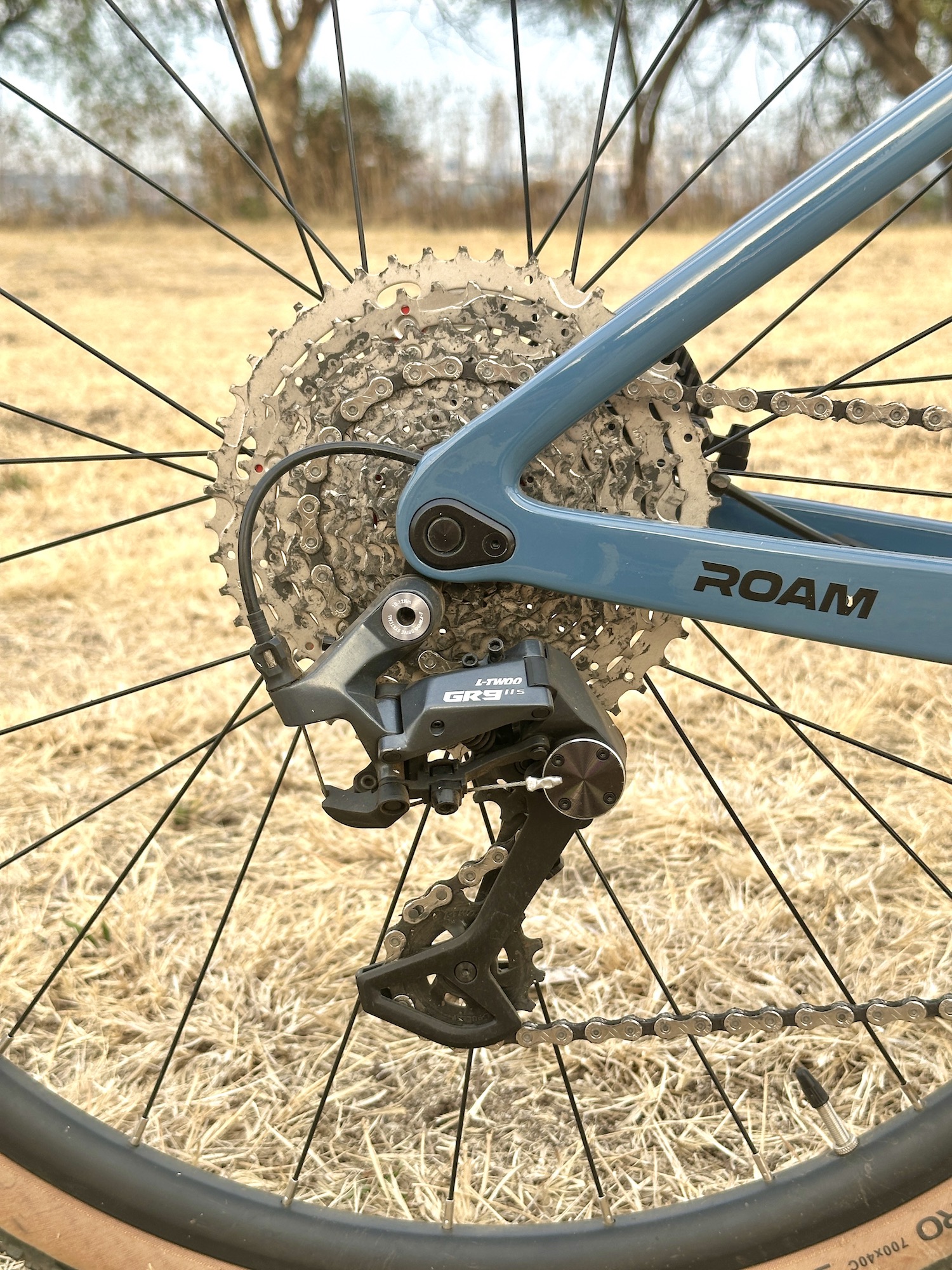
The drivetrain and brakeset is L-TWOO GR9. It’s an 11-speed drivetrain and hydraulic disc brakeset. L-TWOO is a Taiwanese brand that gained some momentum when Covid-19-related manufacturing delays affected SRAM and Shimano. The shifting lever is similar to that of Campagnolo, allowing you to shift from the hoods and the drops.
THE RIDE
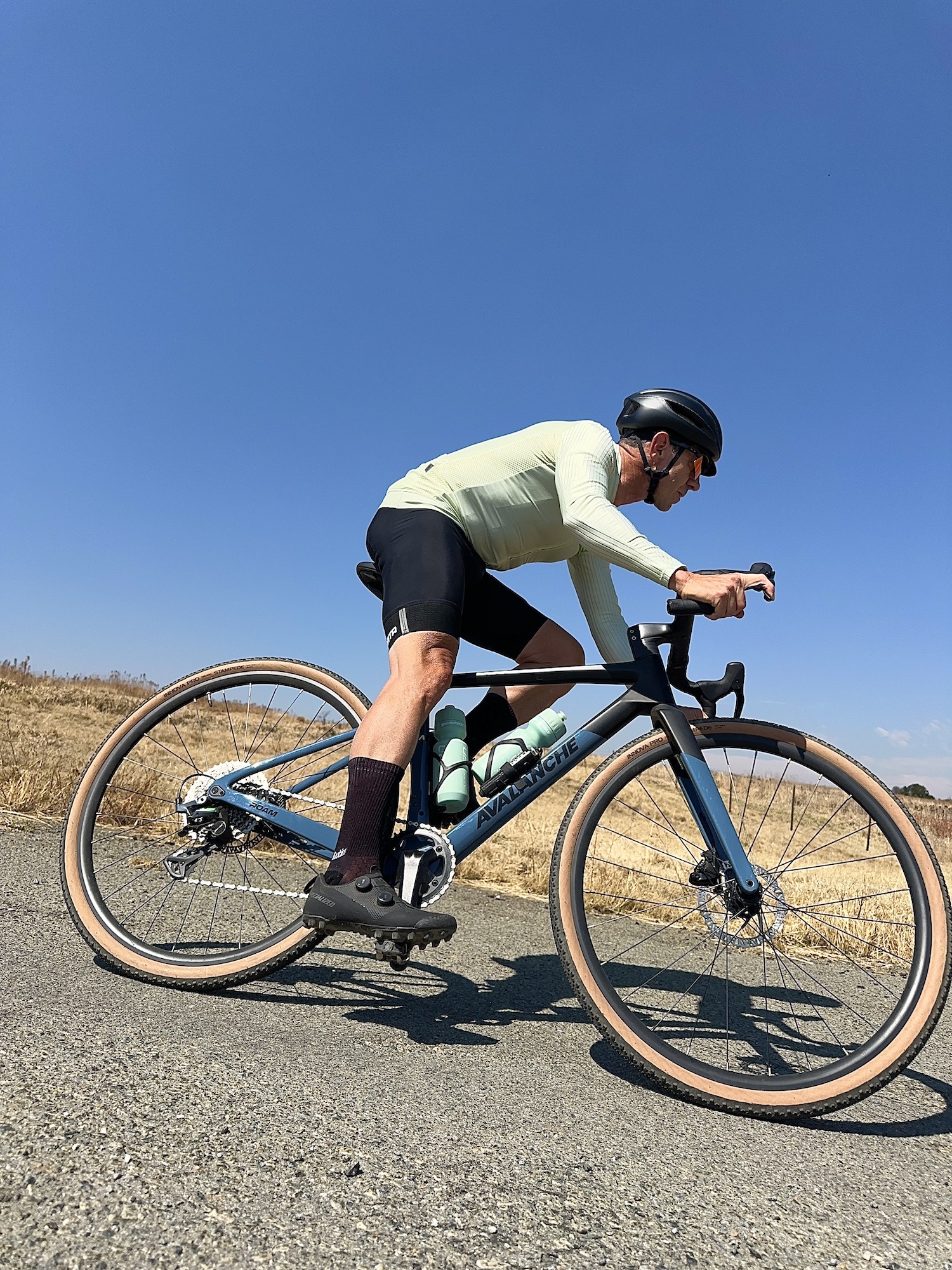
The first thing you notice is how light the Roam is. It feels as light as a carbon bike should feel. Our S/M test model with sealant, pedals and two bottle cages weighed 9.56kg. It also feels very solid when you bounce it. No cable or hose clatter.
The first few powerful pedal strokes gave us the confirmation of the Roam’s stiffness. The power transfer is very much focused on propelling the bike forwards with no noticeable lateral flex. Sprinting hard in the drops also gave a similarly firm feel.
Our three test riders on this bike were 1.68m, 1.72m and 1.76m tall. We just shifted the saddle position forward or back to accommodate each rider and each felt comfortable with the reach. With a one-piece bar/stem, fine-tuning reach can be a challenge. The Avalanche crew anticipated this and have a size curve of bar/stems that Avalanche retailers have access to ensure the Avalanche Roam buyer gets the right reach.
Having said that, the riding position offers a good level of comfort and control. The bars have a great ergonomic feel in all three hand positions. Two of our testers pushed the bike hard on descents and through corners and said that the braking performance was good, but not exceptional. The third test rider is more risk averse and found the braking performance to appropriate.
Gear shifting itself was very good. All testers liked the ease of reach to be able to shift up or down without any extra hand position movements. We noticed a jump by the gears when we hit a rut, rock or root at pace. Likely a downward derailleur movement because it stayed in the same gear. We spoke to the Avalanche team about this and they acknowledged it as something they were aware of.
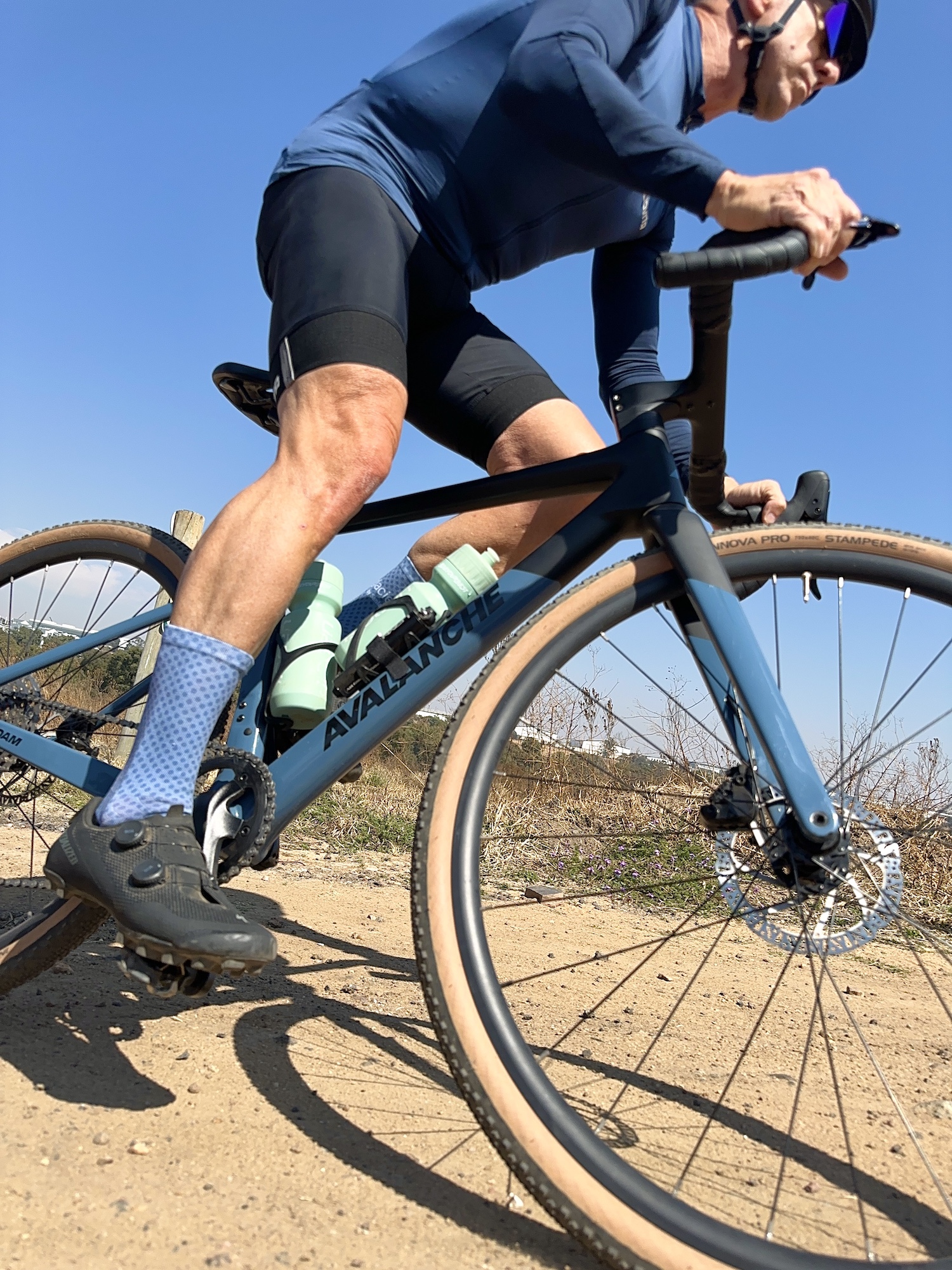
In terms of the 1×11 drivetrain, there was enough range at the top and bottom to ensure comfortable climbing on steep ascents and not spinning out to stay with a bunch. As with any 1x drivetrain though, there are some ratio gaps in between and that really has to be accepted. If you want less gaps, you need to go with a 2x drivetrain…
We tested the Roam during winter in Gauteng, so the surface conditions were dry, sketchy and sometimes sandy.
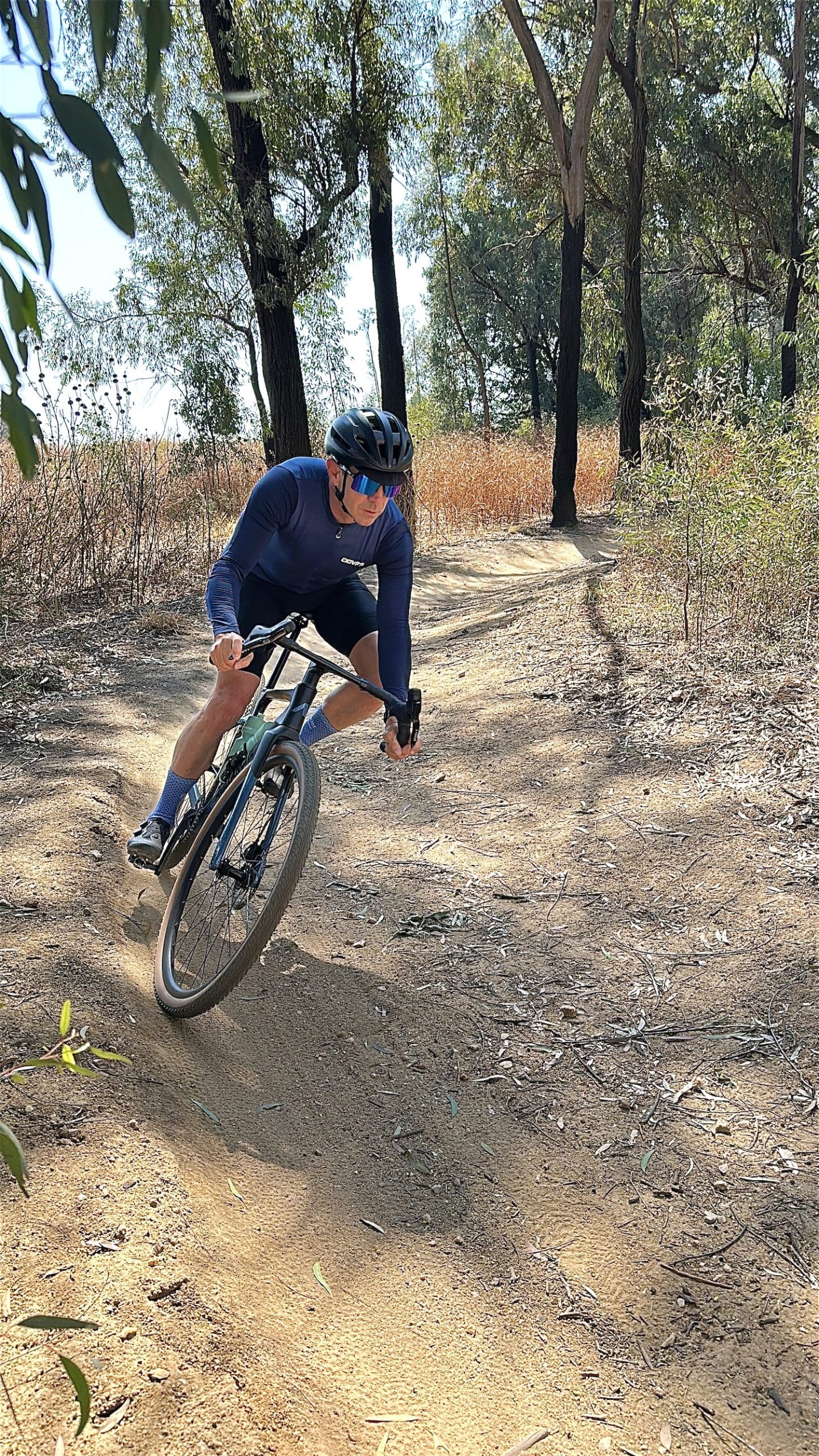
Cornering performance on a gravel bike is dependent on a combination of factors, including surface conditions, frame geometry, fork rake/trail, tyre tread, tyre width, tyre pressure, suspension (or lack of) and rider skill level. Cornering in general on the Roam was balanced and predictable and the 42mm wide Innova Pro Stampede tyres impressed our testers.
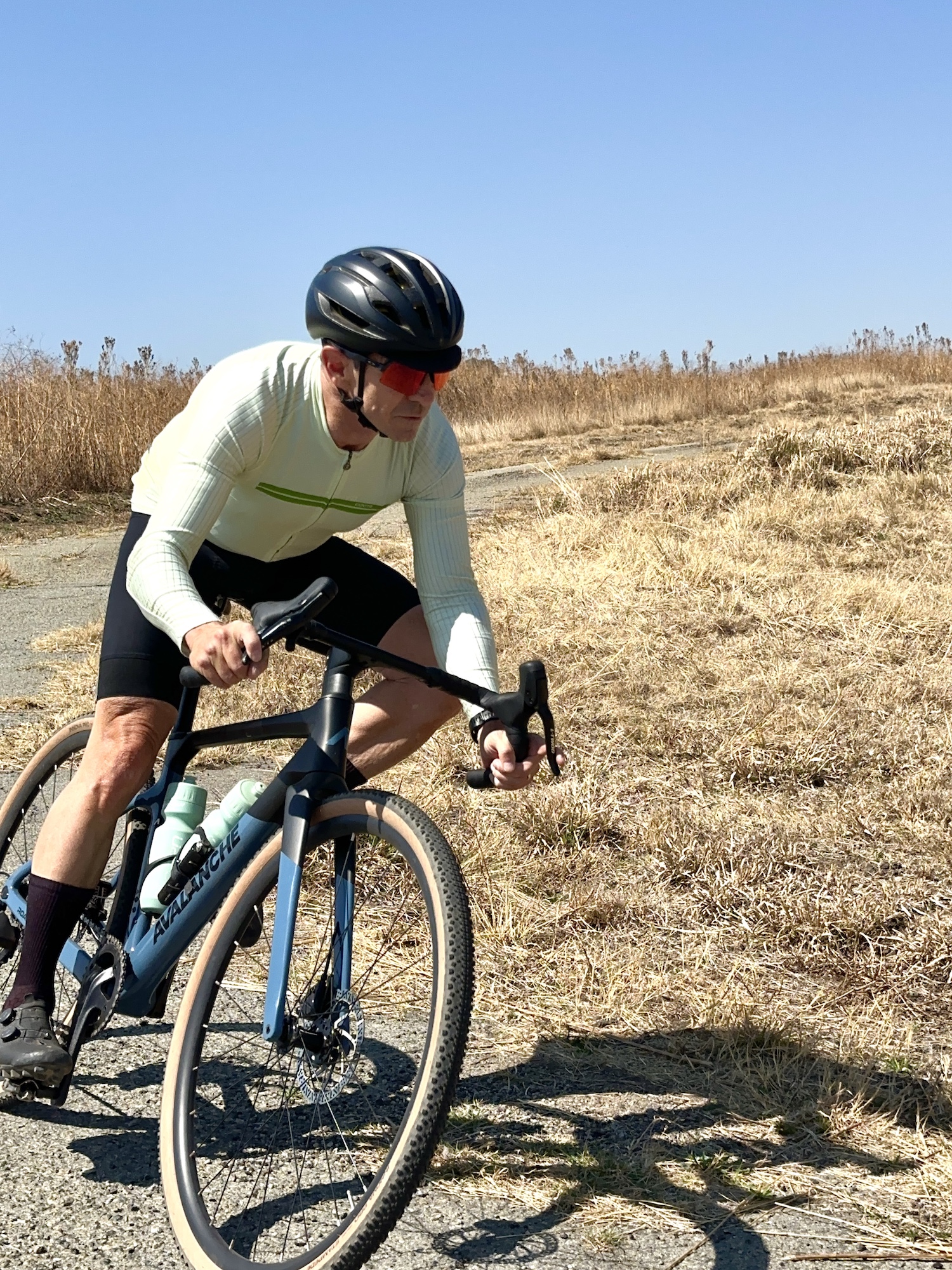
As with most lower-priced gravel bikes, the Avalanche Roam has no special shock absorbing technology. This means that tyre choice and pressure are essential in the pursuit of optimal comfort. We ran the tyre pressures between 1.5-1.8 bar up front and 1.9-2.1 bar at the rear when on predominantly gravel surface test rides. They performed well enough but did deliver a few rim strikes on fast, stoney descents when it was difficult to change lines. Or rather, dangerous to change lines… But the tyres held up and our testers regained their composure. In 357km of test riding, we didn’t experience one puncture.
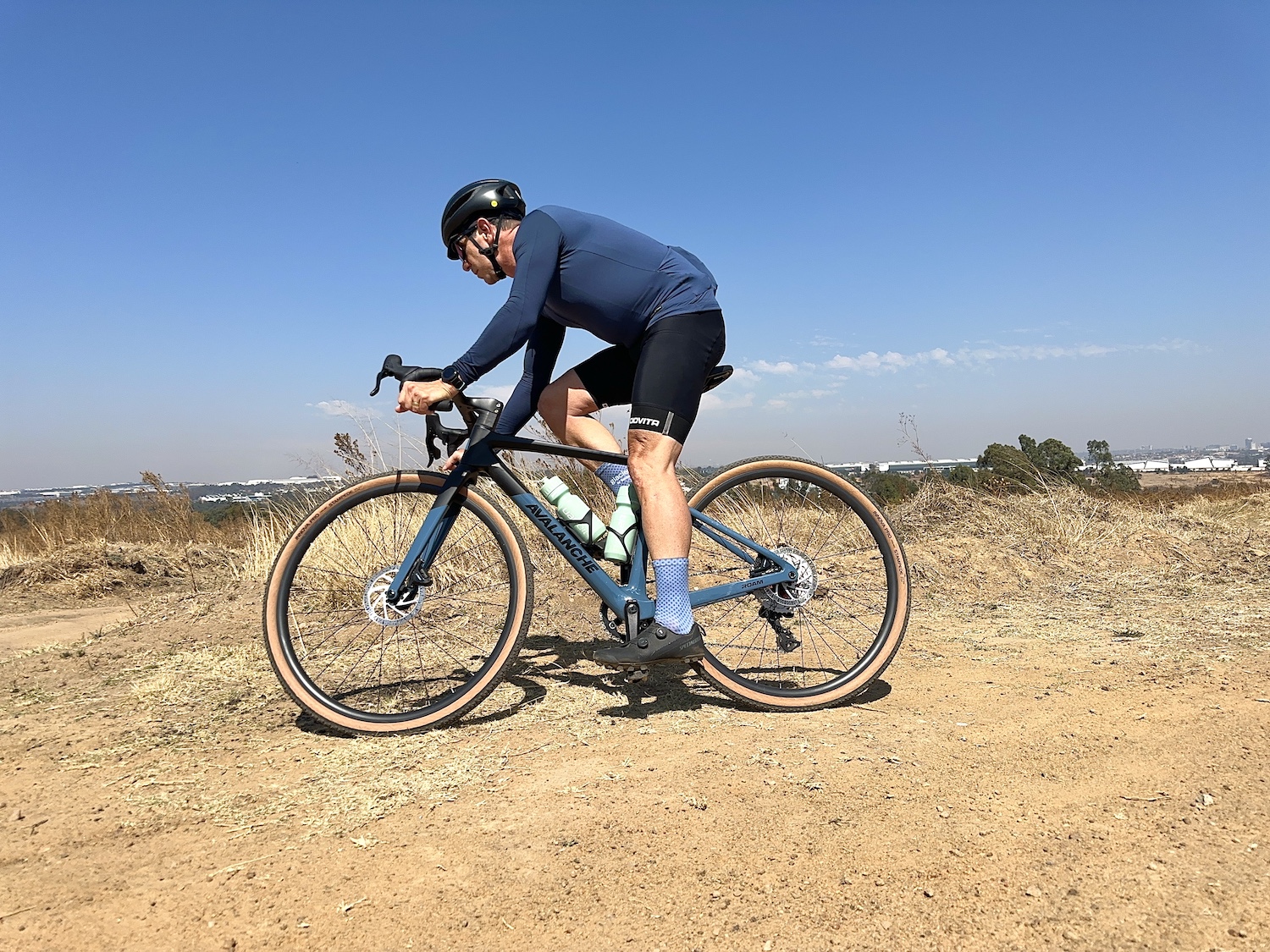
Overall, we were impressed with the Avalanche Roam. Other than the occasional gear jump on a hard hit, our testers said the riding experience was very good. The saddle is a little on the soft side and fine for short rides. Longer rides delivered a bit of chafing that a firmer saddle will eliminate.
There aren’t any other carbon fibre gravel bikes at this price (sub R32 000). Well, we couldn’t find any. For those looking for a responsive, reliable gravel bike that’s race-ready, the Avalanche Roam offers what you want at a very impressive price. The upgradeability of this bike is also worth noting for those who are gravel curious but hesitant to go too big on a first-bike purchase.
COLOUR: Blue/Black (new Loam/Black arriving soon).
SIZES: S/M (tested) | M/L | L/XL
PRICE: R31 490
MORE INFO: Click here.
Note: price is correct as at September 2025.

