The inaugural Nedbank Gravel Burn takes place in South Africa from 26 October to 1 November. It’s the world’s first Gravel Stage Race. Well, the first high-profile, big-prize purse one anyway. What can we expect? Who will most likely win? We make some predictions.
By Sean Badenhorst
Gravel racing is still developing as a discipline. Not everyone around the world agrees yet on what constitutes a Gravel race. But one thing is for certain – a Gravel Race is closer to a Road Race than a Mountain Bike Race.
Gravel roads are made for motor vehicles and roads made for motor vehicles have largely predictable surfaces, corners that can be seen from a distance away and gradients that aren’t too violent. Some Gravel races also incorporate some jeep track and singletrack, but this is generally a small part of the course and usually not too technical.
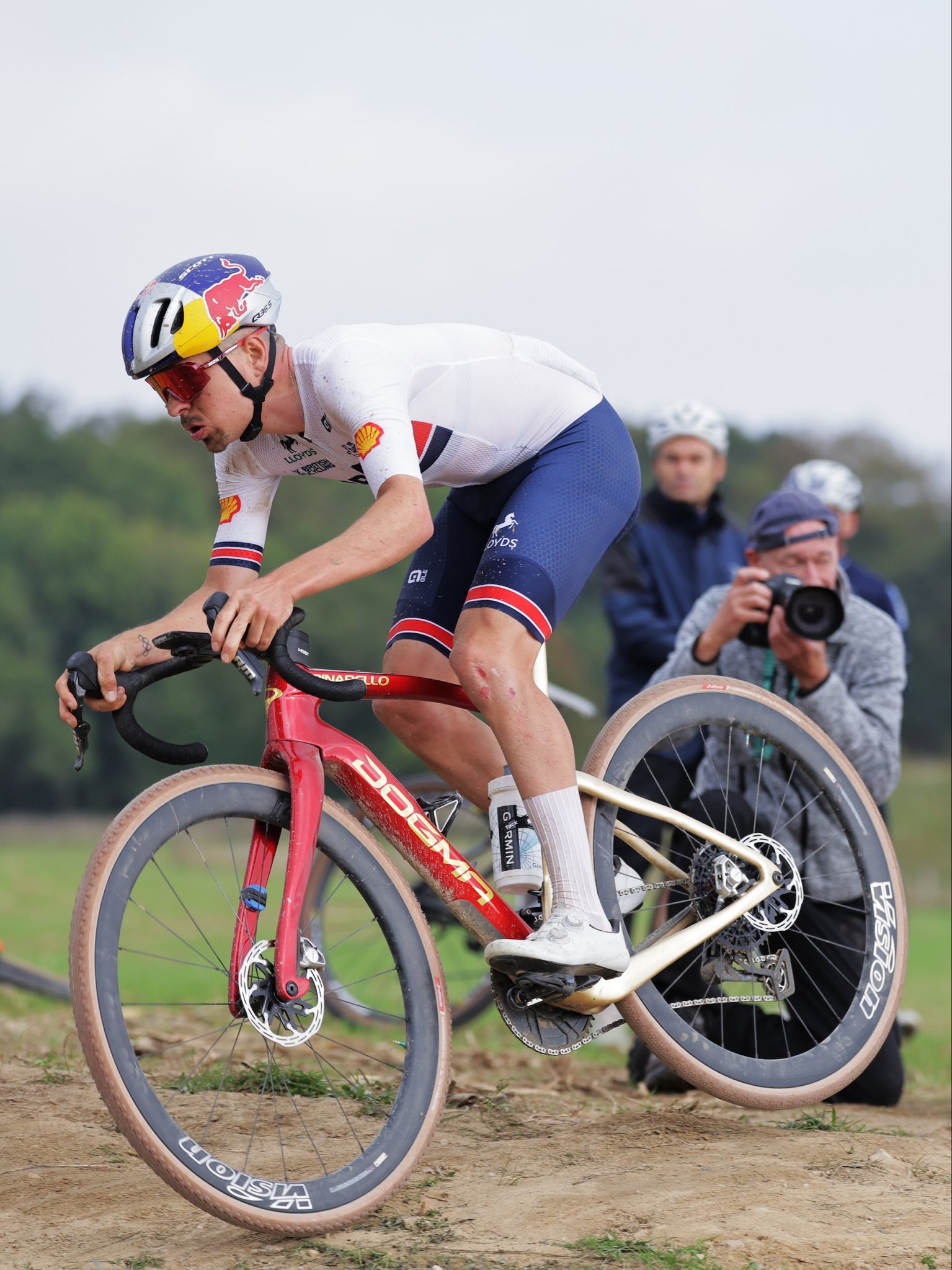
Gravel Bikes more closely resemble Road Bikes than Mountain Bikes. Yes, there are a few exceptions, but in general, they share more similarities with road bikes than full-suspension mountain bikes.
The stages at Nedbank Gravel Burn range in distance from 84km to 144km. The average stage distance is 112km with an average of 1 518m ascent per stage. On relatively good road surfaces, this translates to average speeds of around 35kph for the leaders and probably 23/24kph for the back markers.
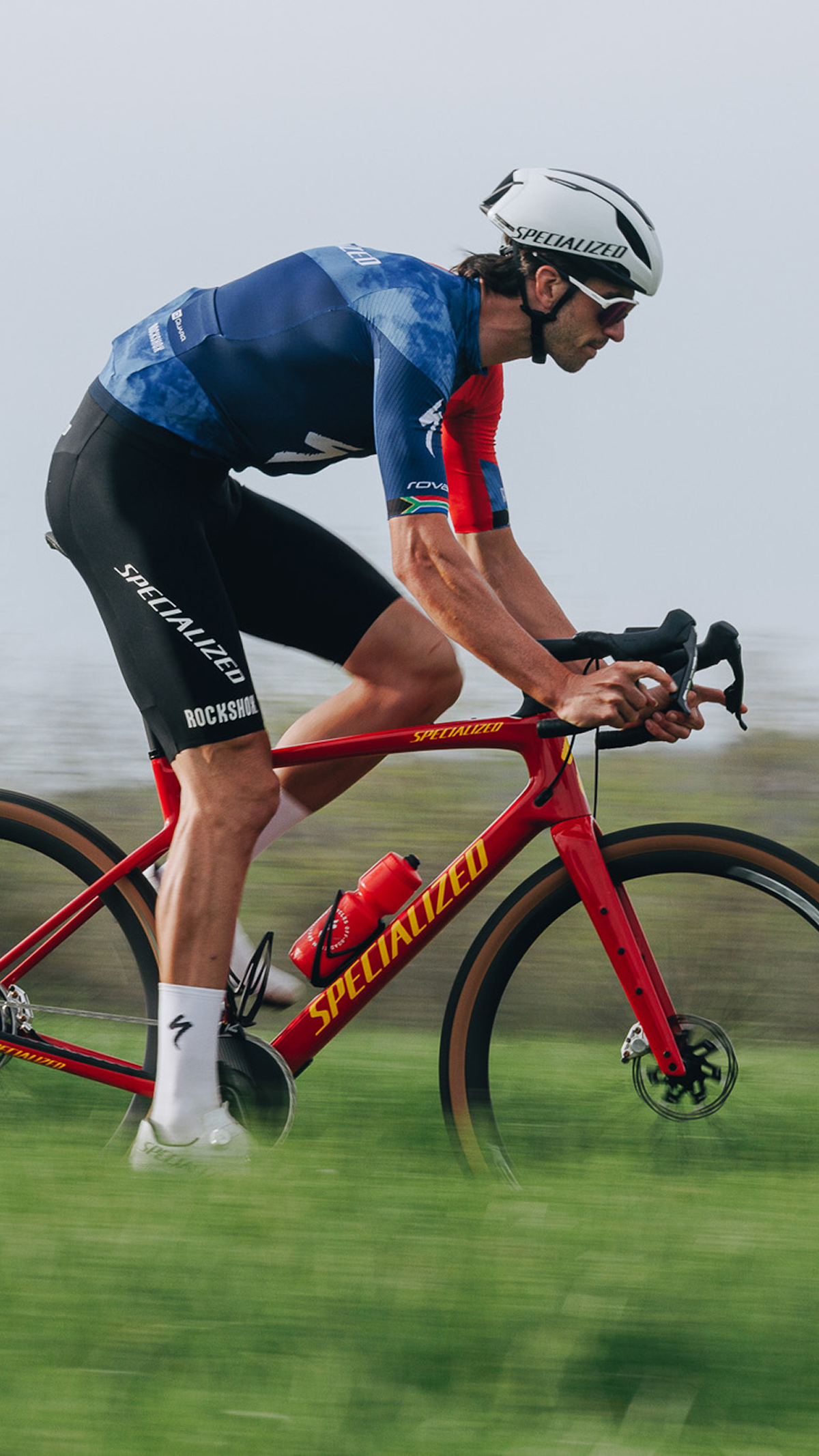
As with road racing, sheltering in bunches and sharing the work will be key to holding a good average speed at Gravel Burn. Stage times are likely to range from 3-4 hours for the leaders, depending on the stage.
All of this means that we can expect daily action that looks more like a road race than a mountain bike race.
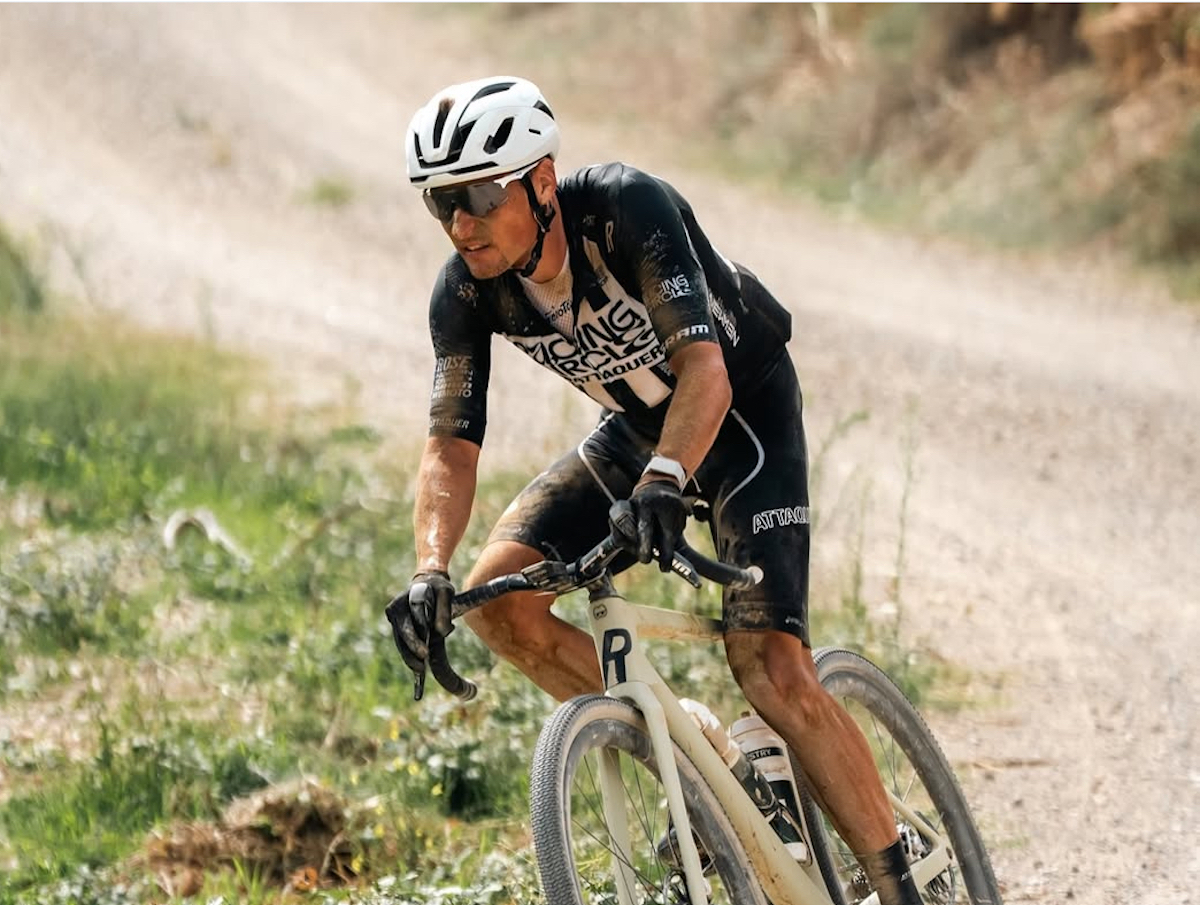
Areas where Gravel Burn differs from a standard road race is that there are no teams. Not officially anyway, so it’s each man/woman for him/herself. And no mechanical support. Each rider must carry his/her own spares and fix his/her own mechanicals. There are neutral tech zones on each stage.
In terms of equipment, riders may only compete on drop-bar bicycles. Yes, you can put a drop bar on a mountain bike, but you’d be foolish to expect to have the same efficiency as a Gravel bike. So, we’re expecting all 500 or so entrants to be on Gravel bikes.
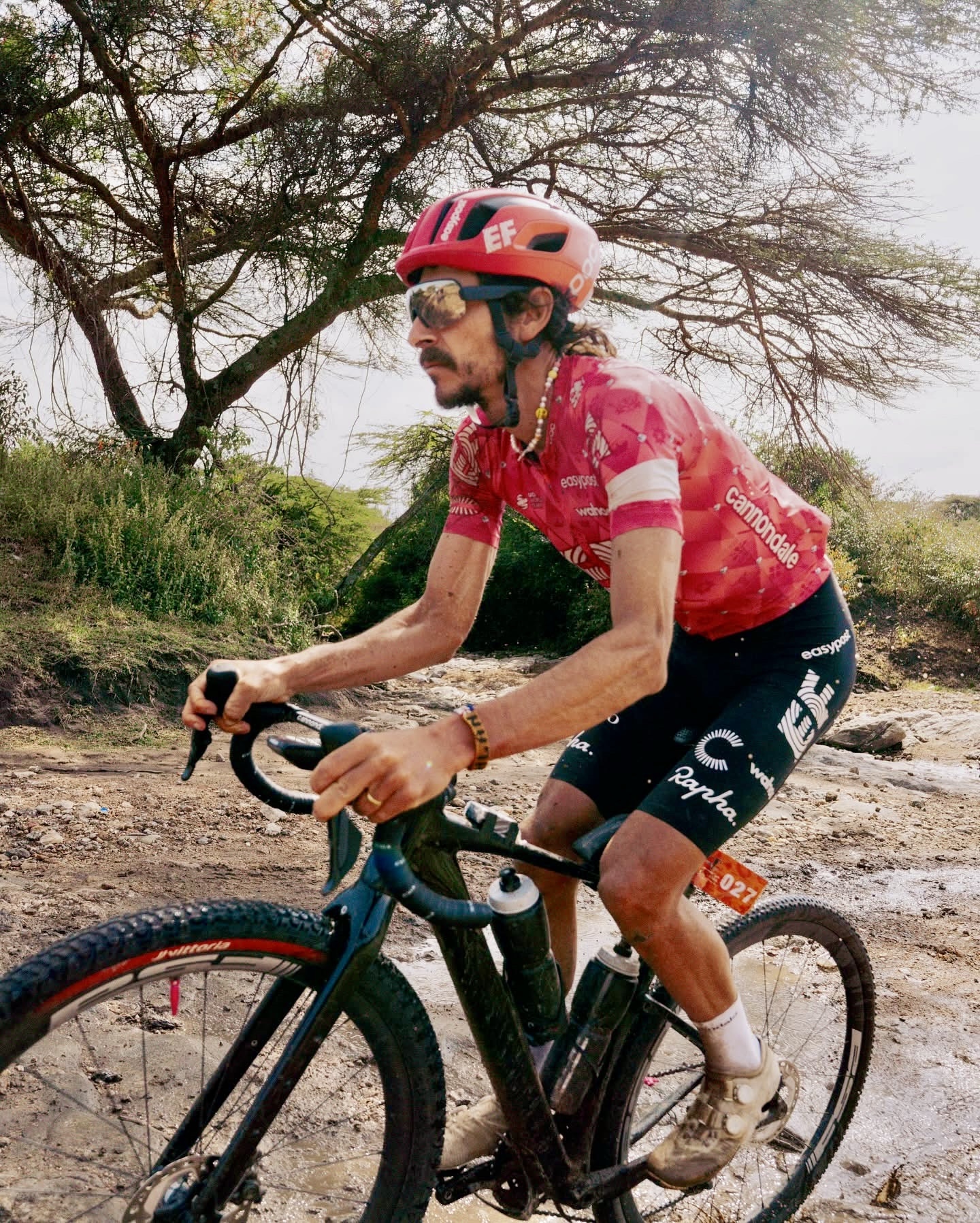
Who is likely to win the first edition of Gravel Burn? It’s damn good question. An incredibly strong field has been attracted to the race. Most of them have achieved success in Gravel races in the USA and Europe. Some have achieved success in the Absa Cape Epic. In a first-of-its-kind event like this and such a strong field, many will arrive with ambition and confidence in shooting for the overall win and a share of the impressive $150 000 (R2.6 million) prize purse.
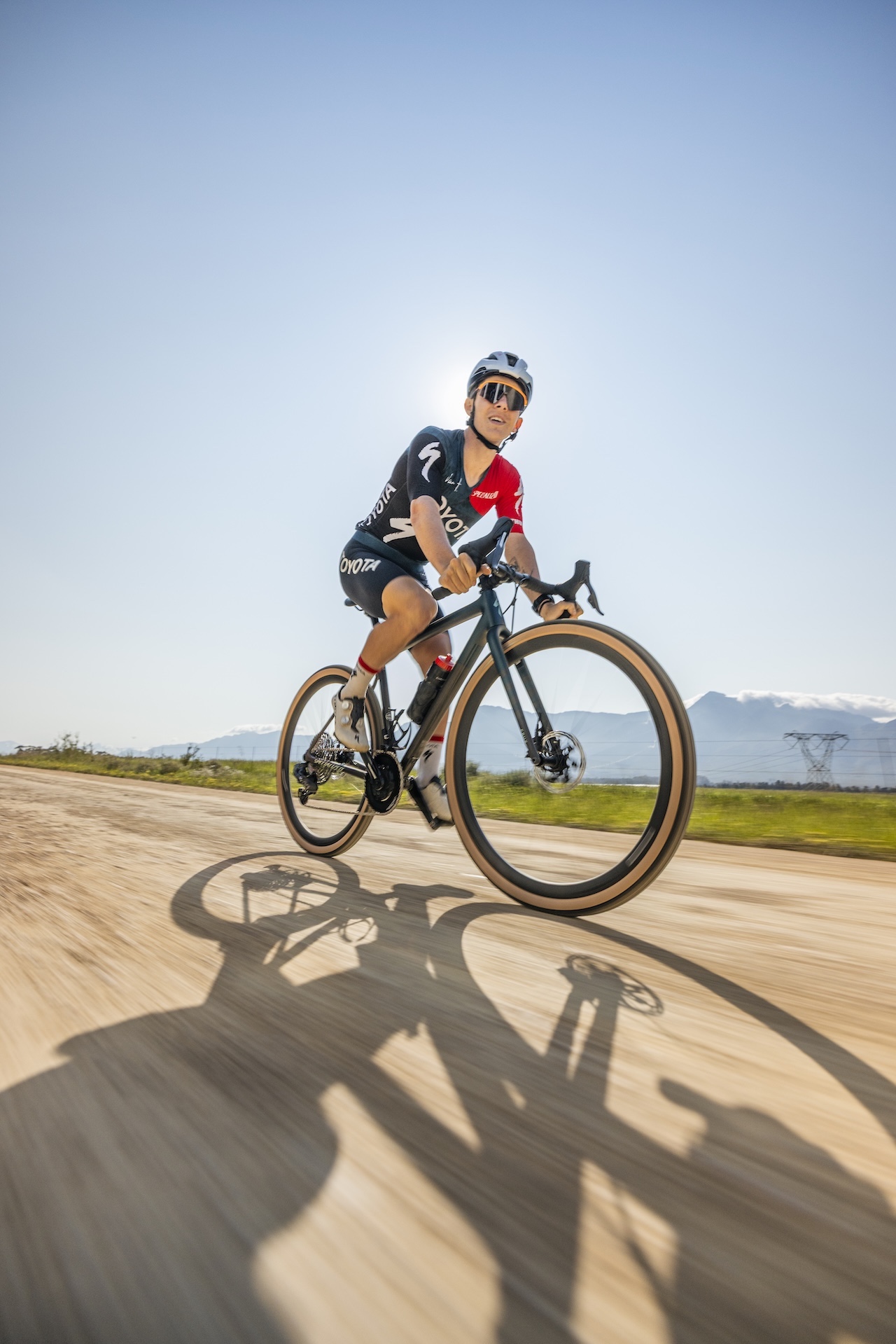
Most of the top names in the field come with impeccable endurance and ultra-endurance ability. Riders that have won races or stood on podiums of events that last between 6 and 12 hours, some longer. But we feel that the race format and relatively short stage distances at Gravel Burn may suit the more punchy, powerful riders.
It’s also a stage race, which requires a different approach, physically and mentally, to super-long single-day races.
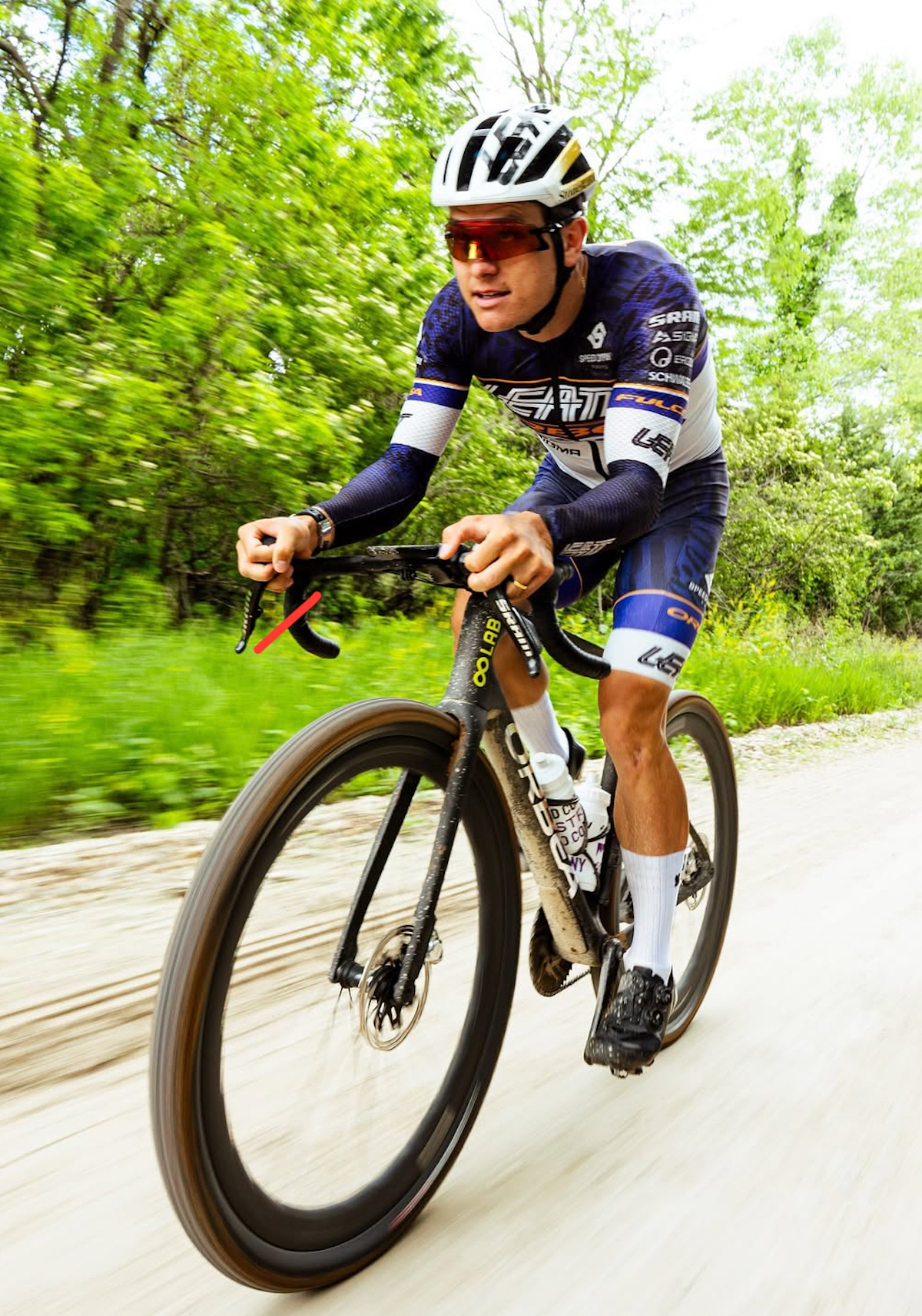
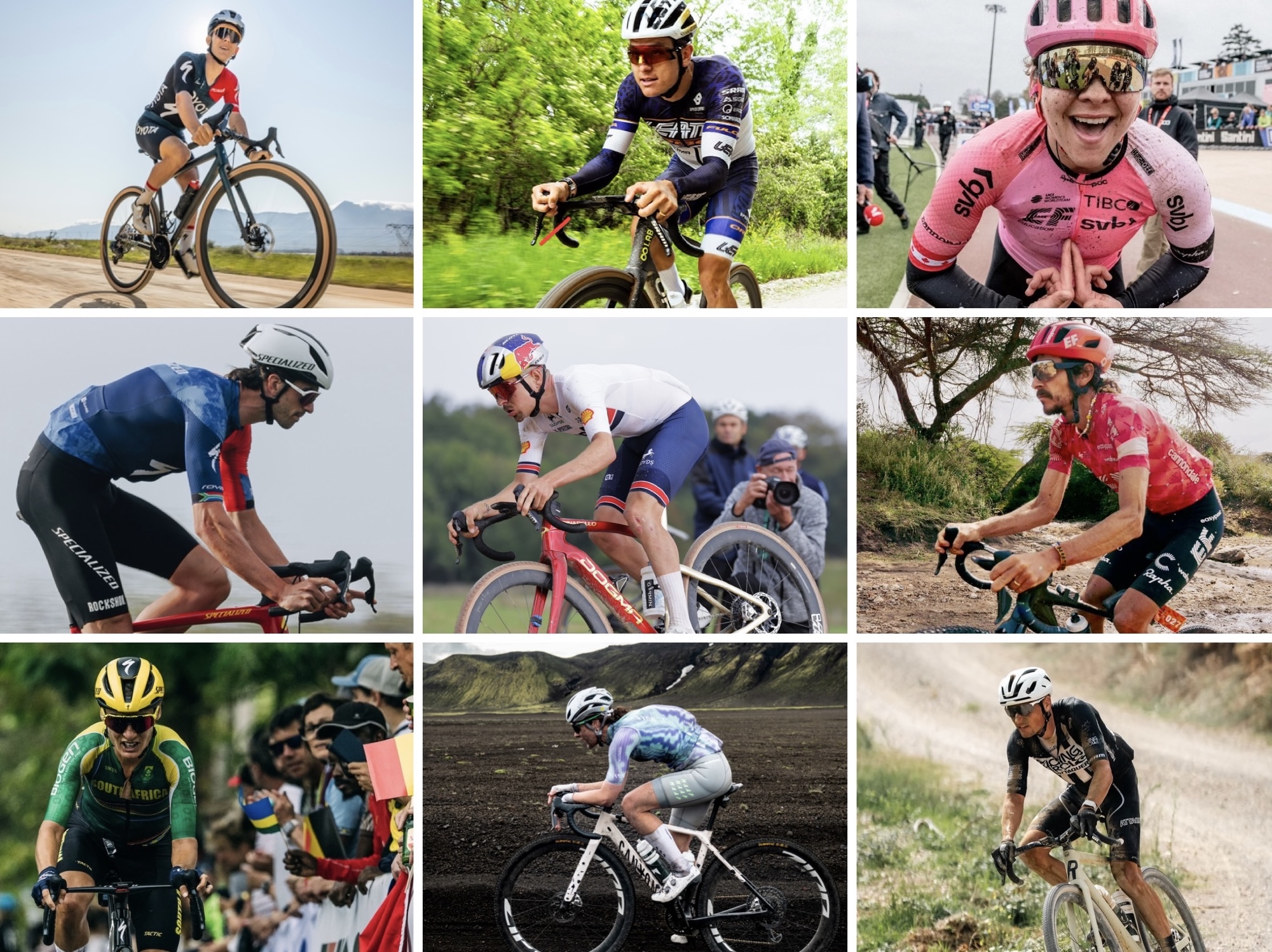
Based on this, we reckon that Britain’s Tom Pidcock, racing for Q36.5 Pro Cycling, will lead the favourites for the men’s win. He’s on good form and recently finished third overall at the Vuelta Espana, sixth at Gravel World Champs and sixth at iLombardia. He’s also by far the strongest rider in his Continental pro road team and therefore not reliant on teammates for his success.
Initially, we thought Pidcock may just be coming to the event to represent his sponsors and cruise with Pinarello owner, Ivan Glasenberg, who is entered in the 65-69 year men’s section, but his team boss, Doug Ryder confirmed otherwise: “Tom I think will go all in, so I would include him as a contender.”
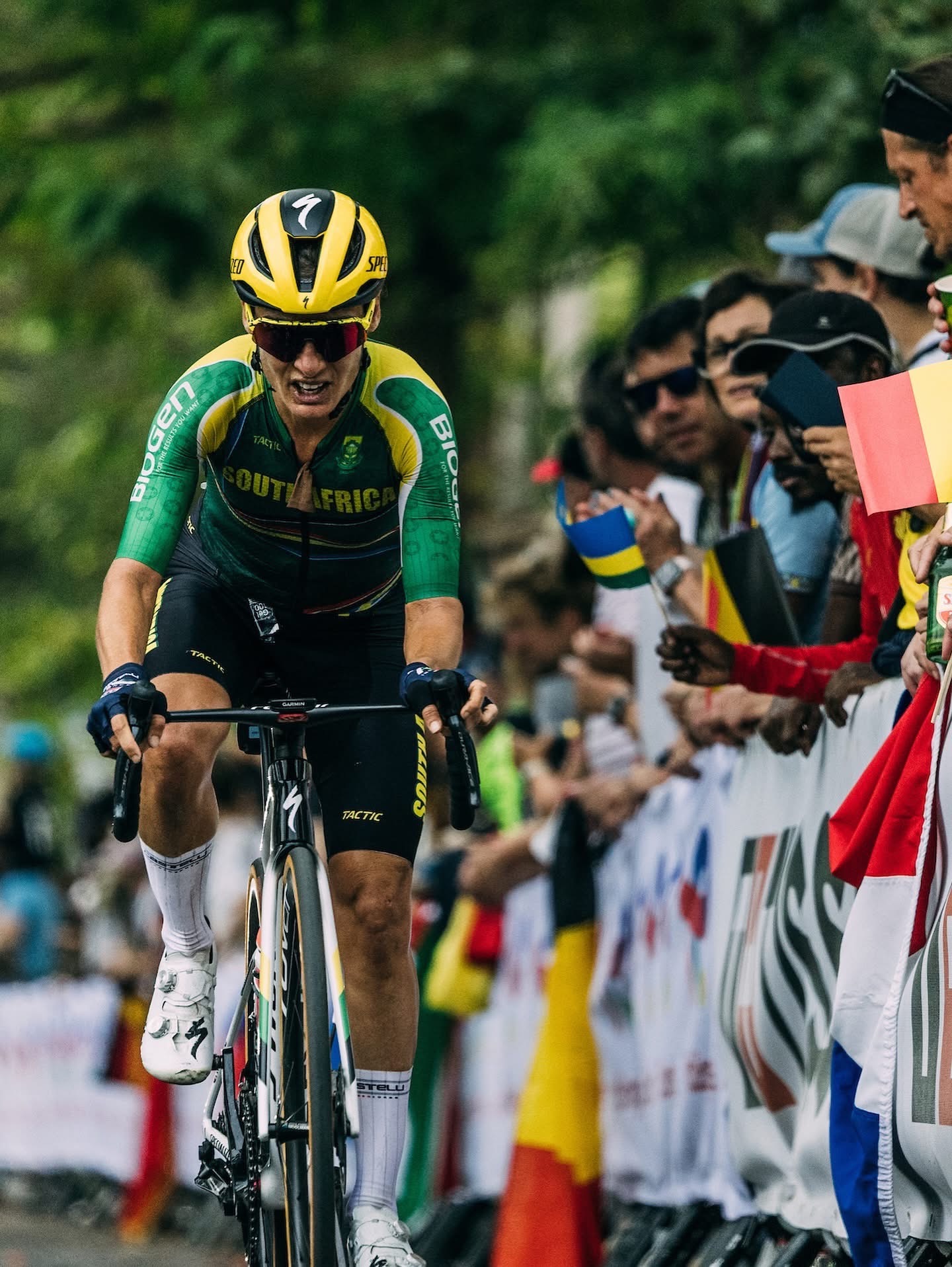
South African Matt Beers just won the Big Sugar gravel race in the USA this past weekend, powering away solo from a strong field and confirming that he too should be considered an overall title contender at the inaugural Gravel Burn. His three Absa Cape Epic victories will also stand him in good stead in terms of knowing how best to recover as well as apply his stage-racing experience.
Others who we reckon may shine at this new event are African MTB Marathon Champion, Travis Stedman, former road pro, Lachlan Morton from Australia, Austrian road-to-gravel convert, Lukas Pöstlberger and 2024 European MTB Marathon Champion, Lukas Baum of Germany.
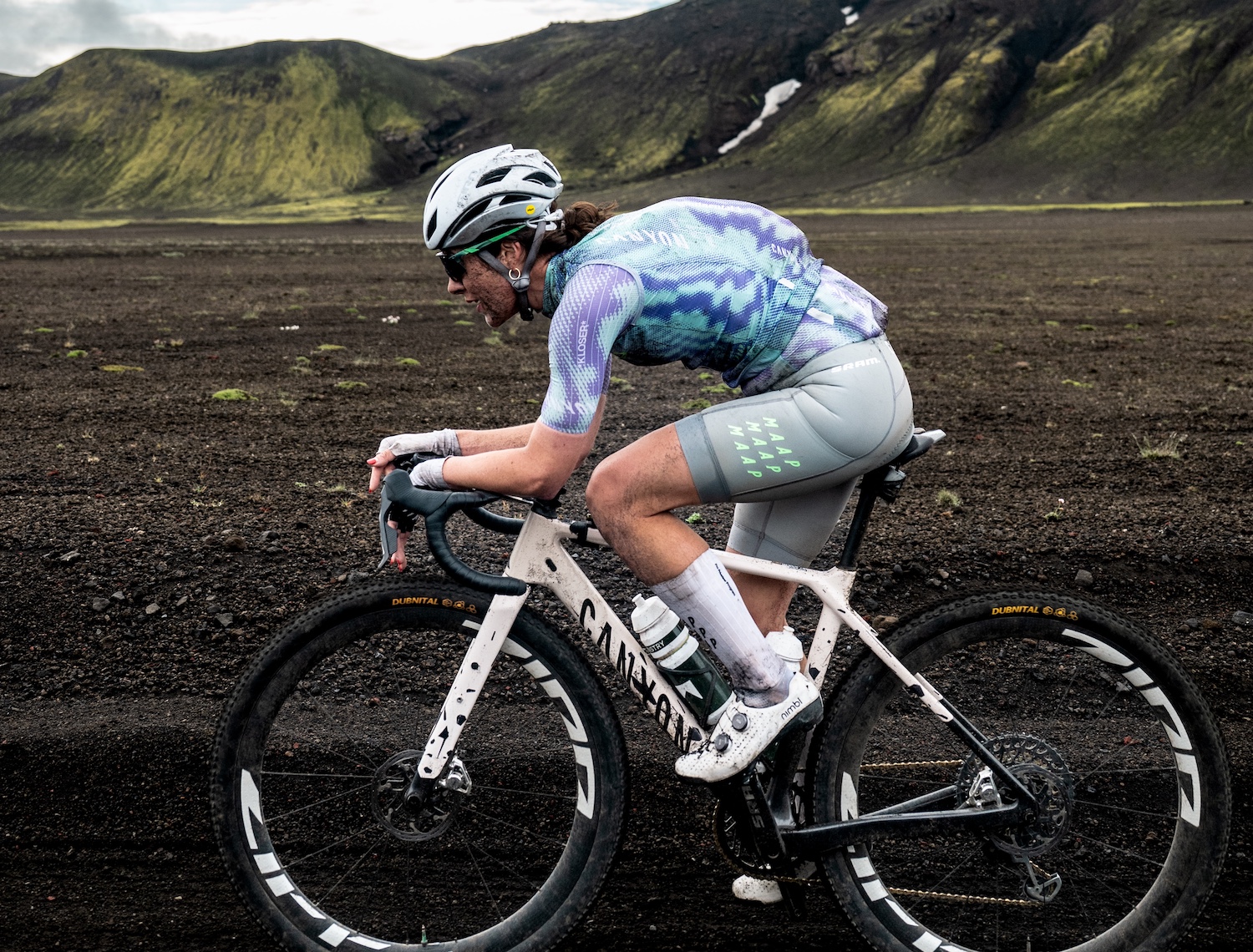
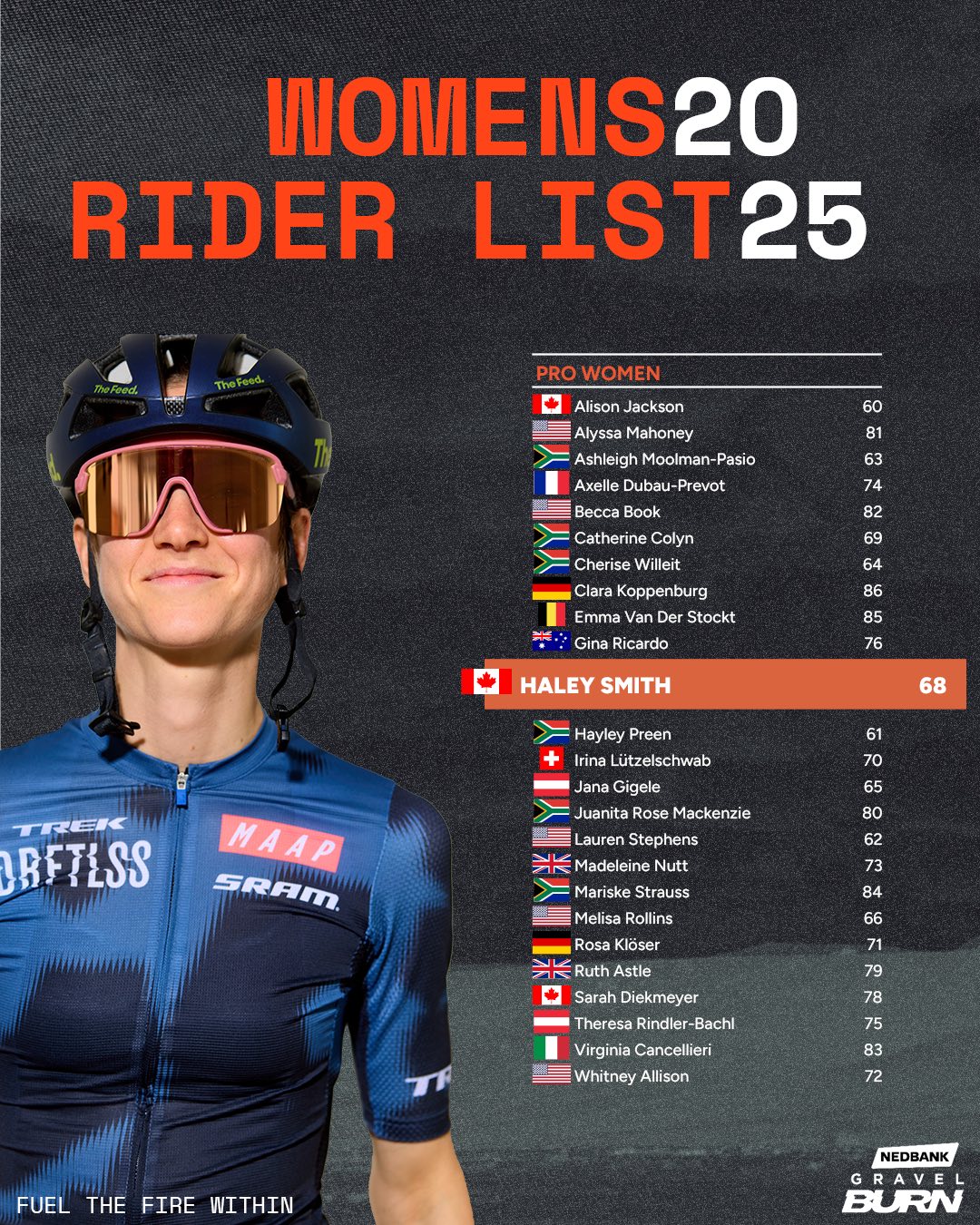
In the women’s field, South African, Ashleigh Moolman Pasio and Canadian Alison Jackson stand out based on their road racing pedigree. Although primarily a Gravel racer, Germany’s Rosa Kloser also brings plenty of pace, but recent health issues affected her at the Gravel World Champs and it remains to be seen if she recovers in time for Gravel Burn. If she does arrive healthy, Kloser will surely be a title contender.

From a media coverage perspective you can expect the following:
A daily stage report and images, a last kilometre video,daily social media and a daily 26min highlights show aired at 9pm each evening on SuperSport and YouTube. An event newsletter will also be sent out each morning.
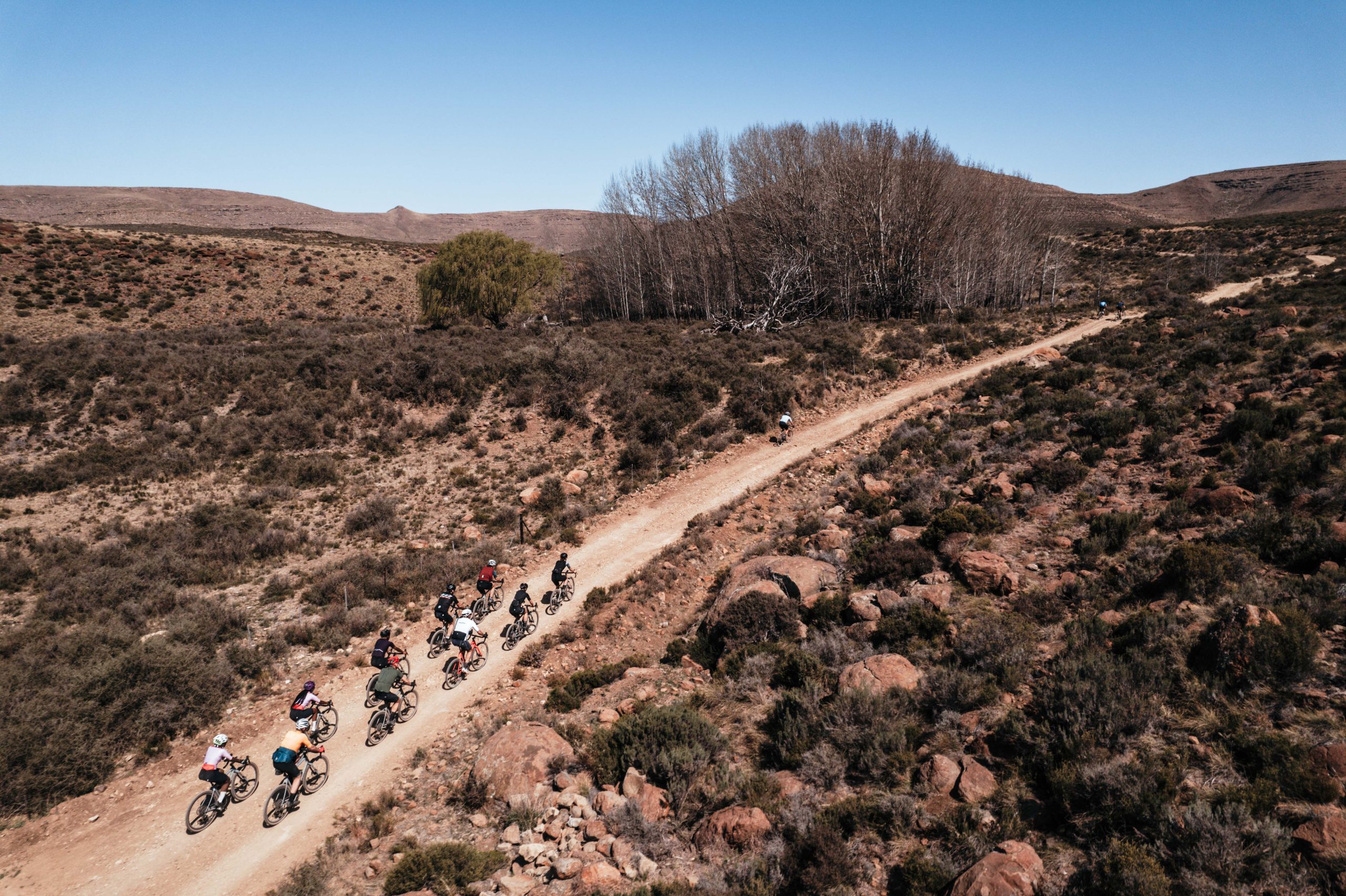
The 2025 Nedbank Gravel Burn stages are:
Stage 1: Knysna-Avontuur – 84km | 2050m
Stage 2: Avontuur-Willowmore – 108km | 1150m
Stage 3: Graaf Reinet-Blaauwater – 90km | 1450m
Stage 4: Blaauwater-Blaauwater – 111km | 1450m
Stage 5: Blaauwater-Merino Farm – 137km | 1580m
Stage 6: Merino Farm-Gwanishi – 144km | 1700m
Stage 7: Gwanishi-Shamwari – 112km | 1250m
For more about the event, visit the Nedbank Gravel Burn website here. https://gravel-burn.com
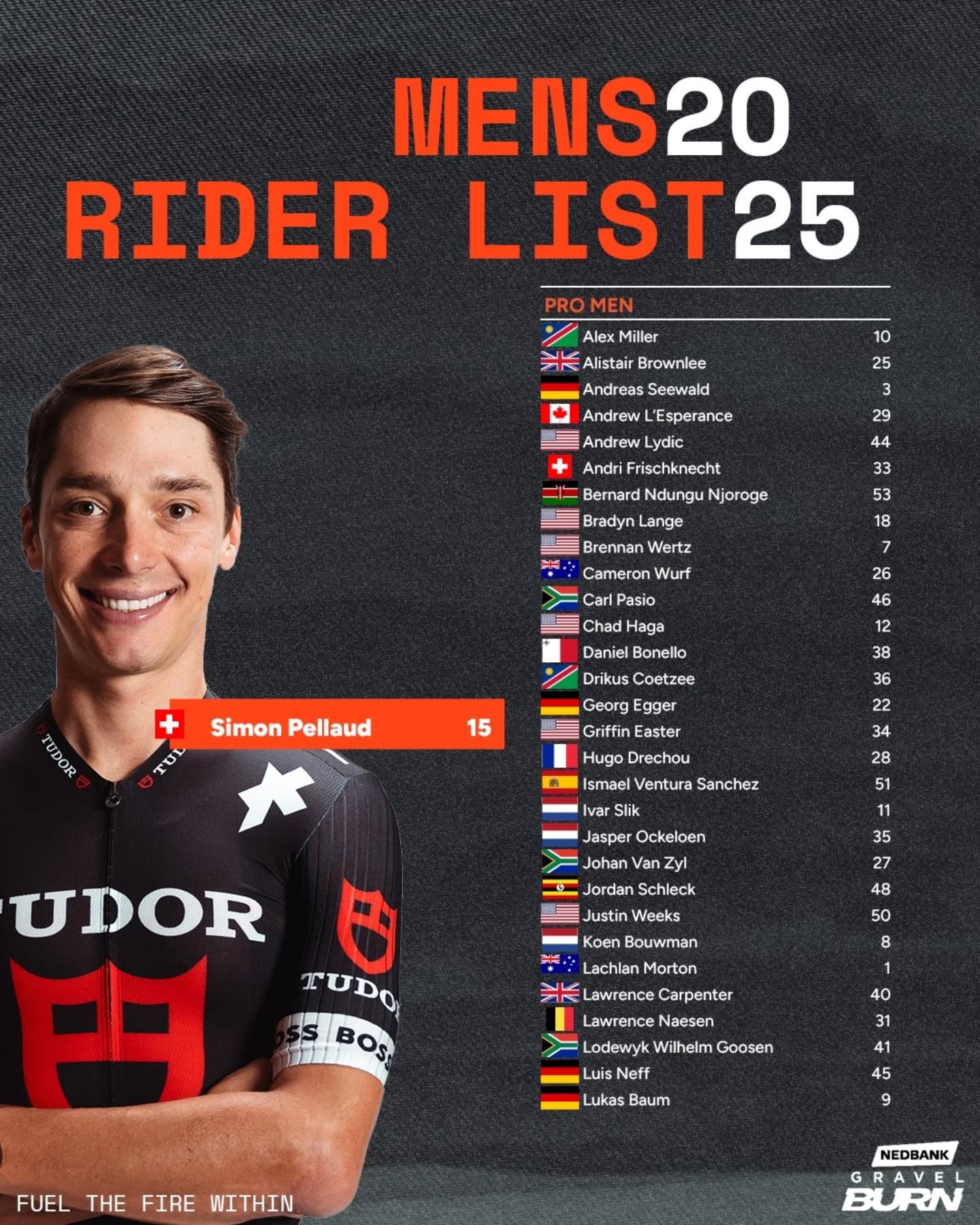
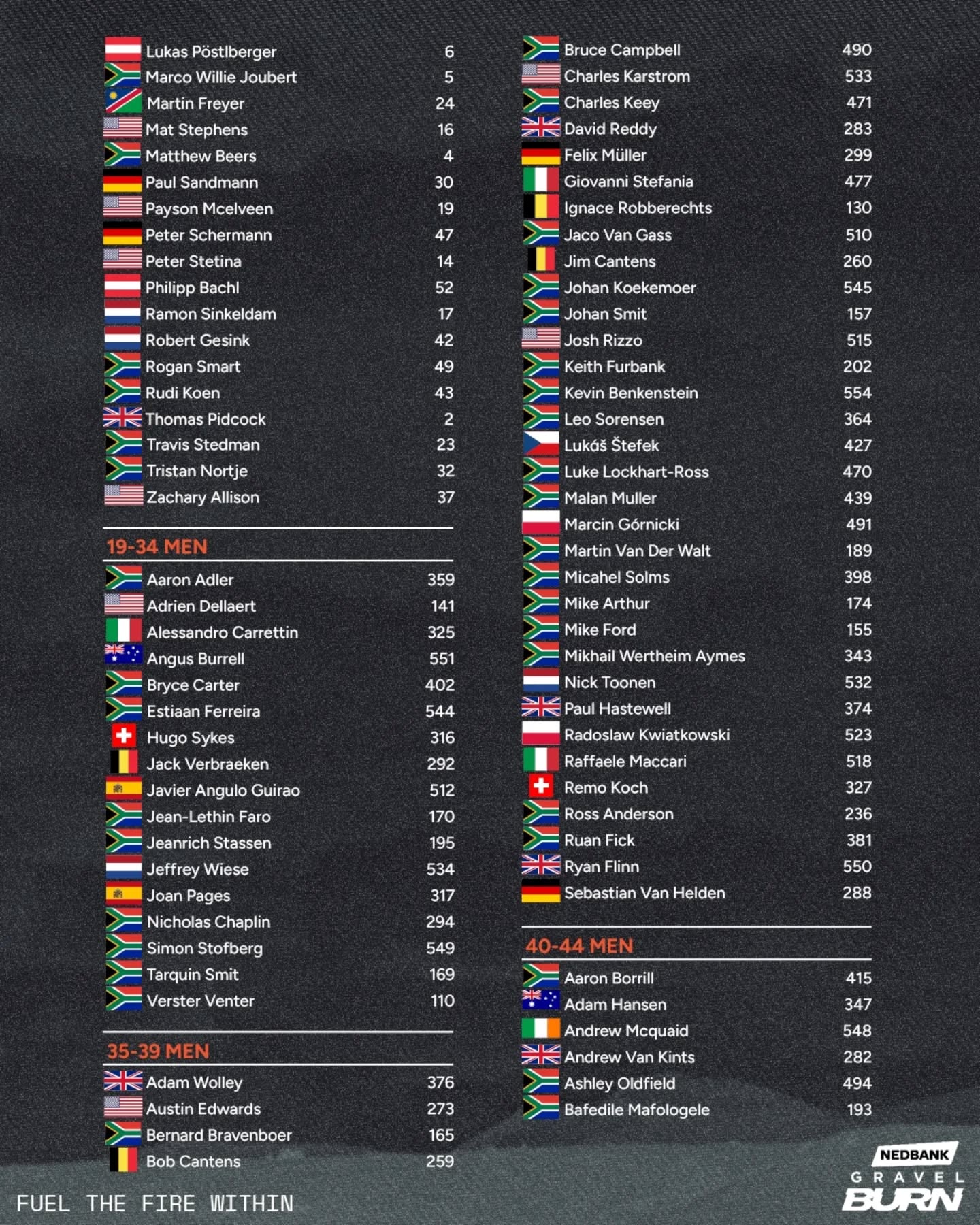
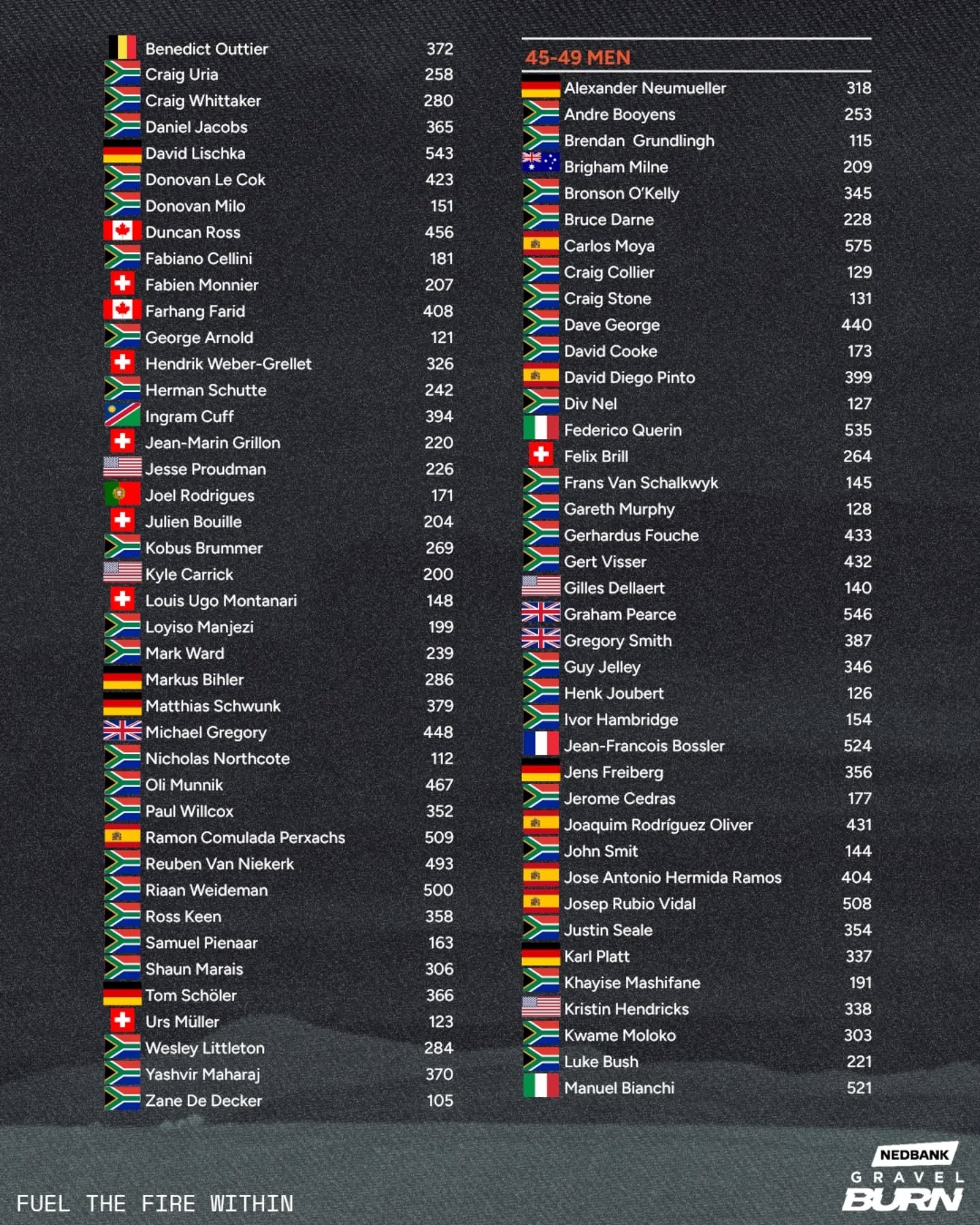
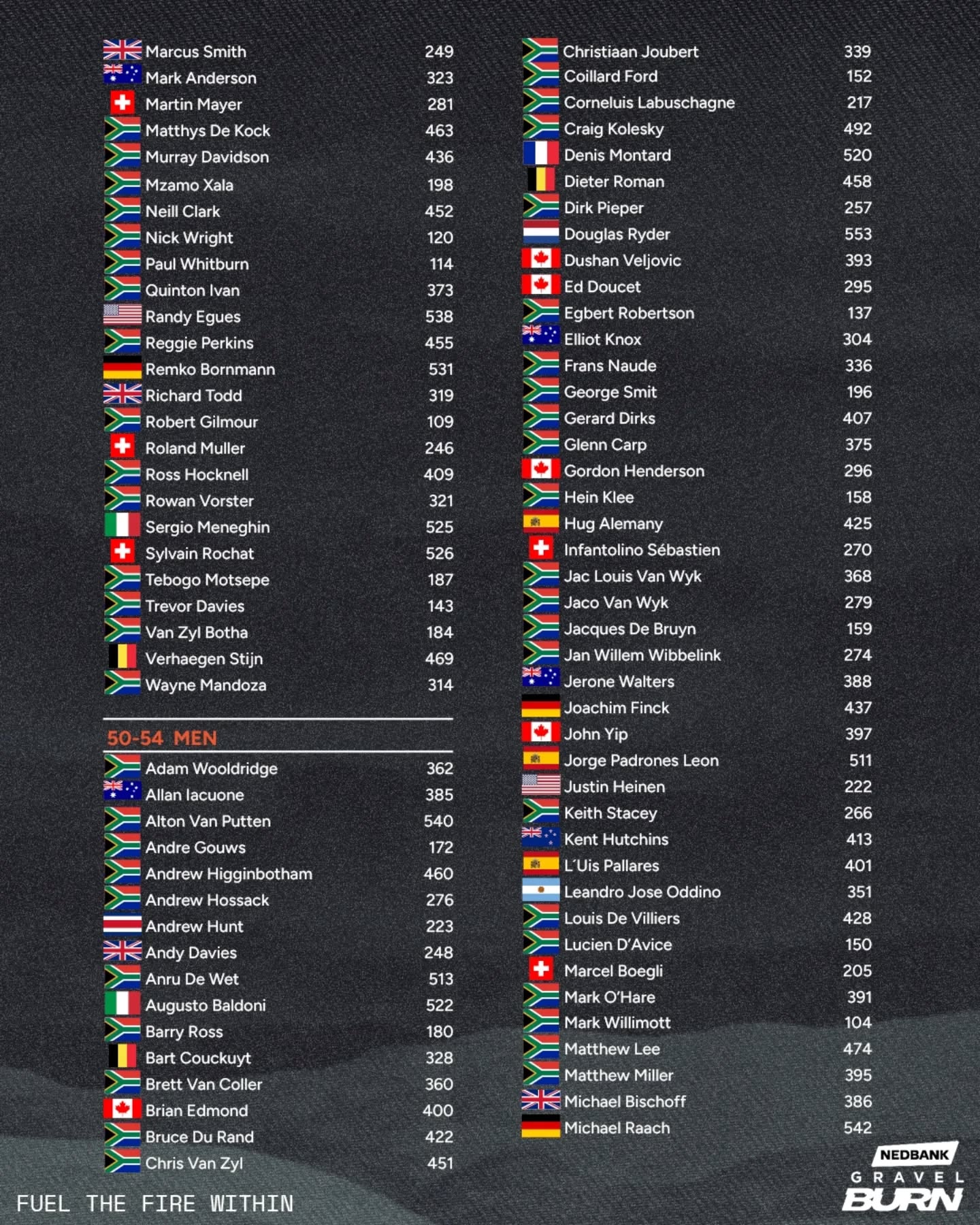
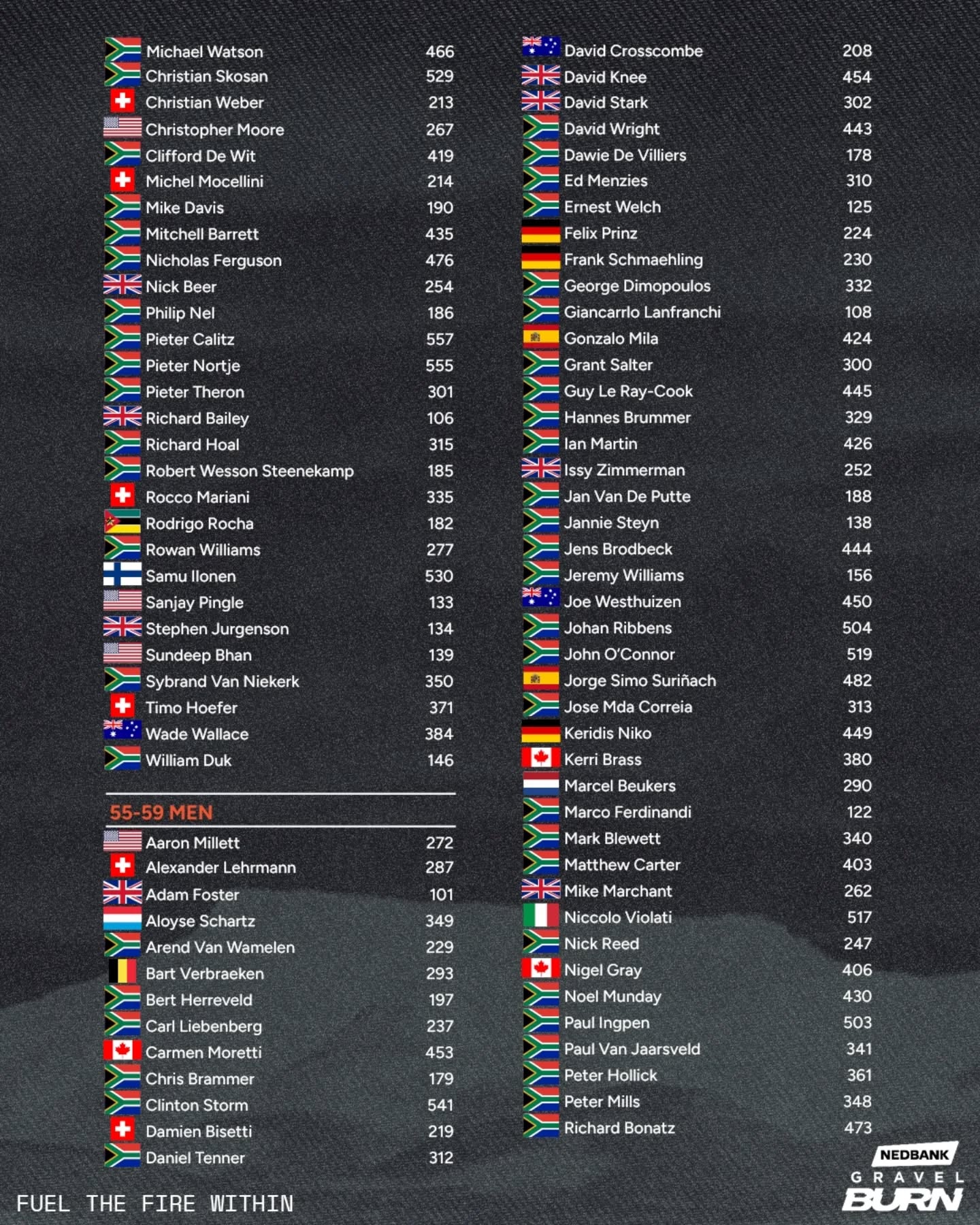
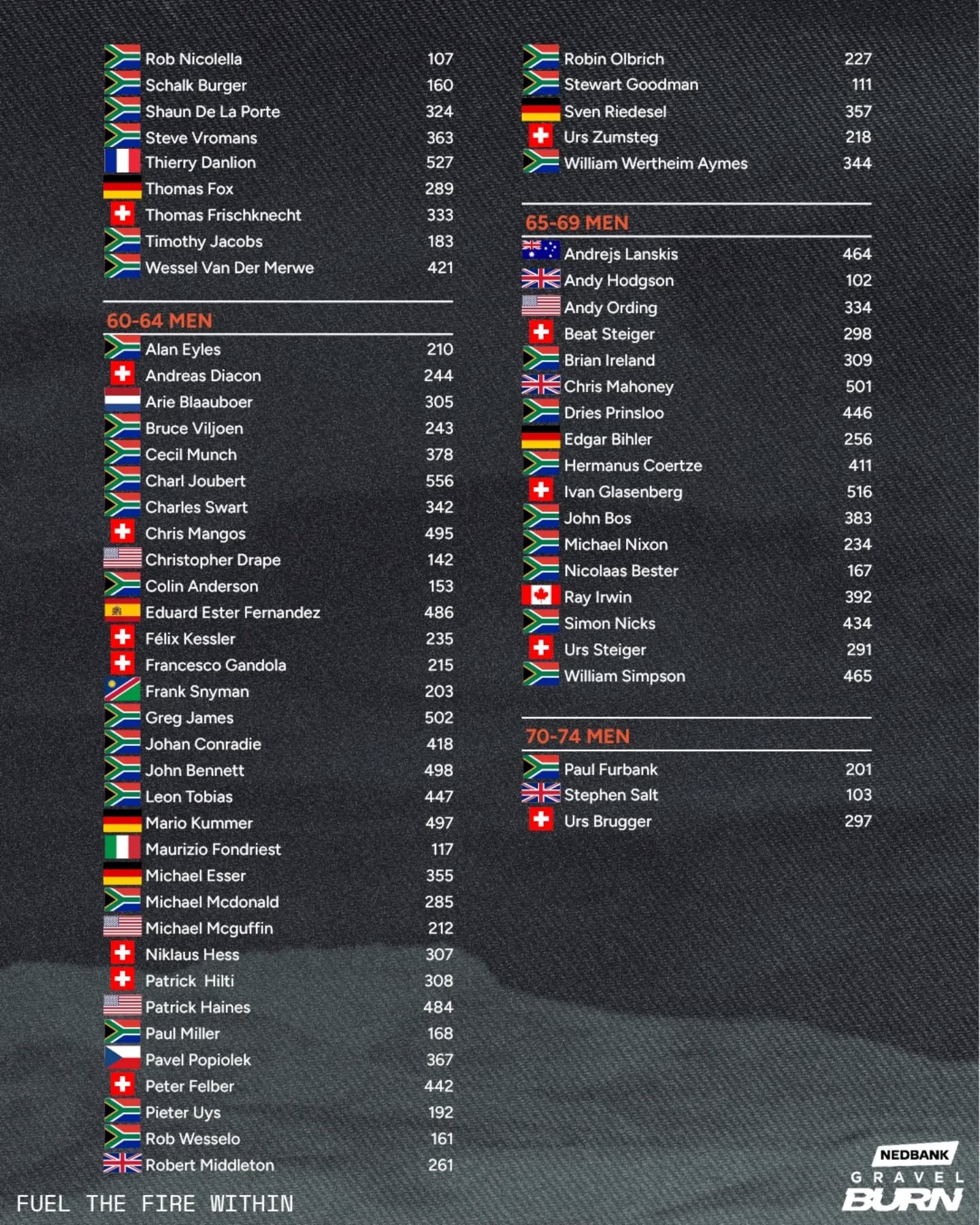
Full men’s entry list
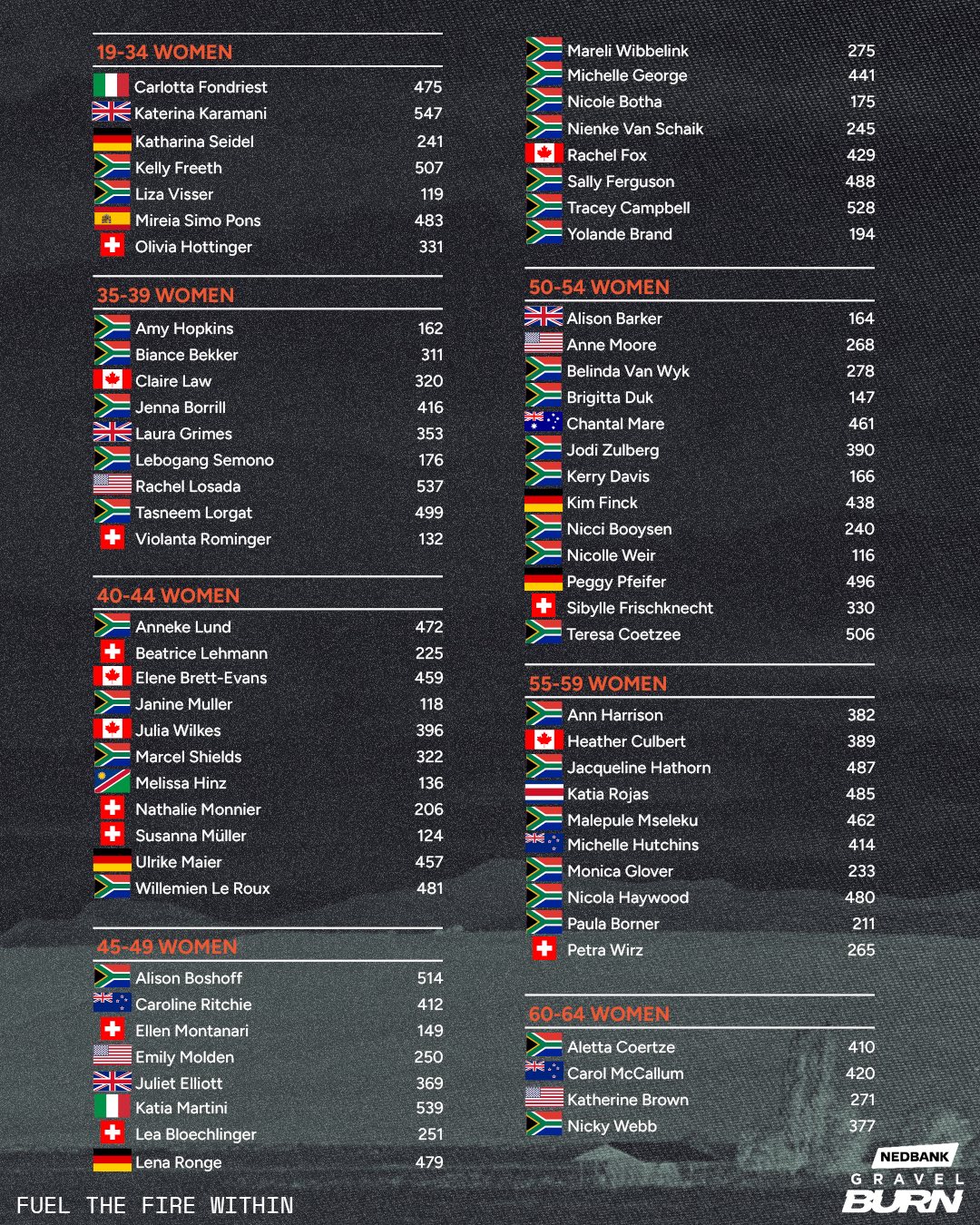
Full women’s entry list