

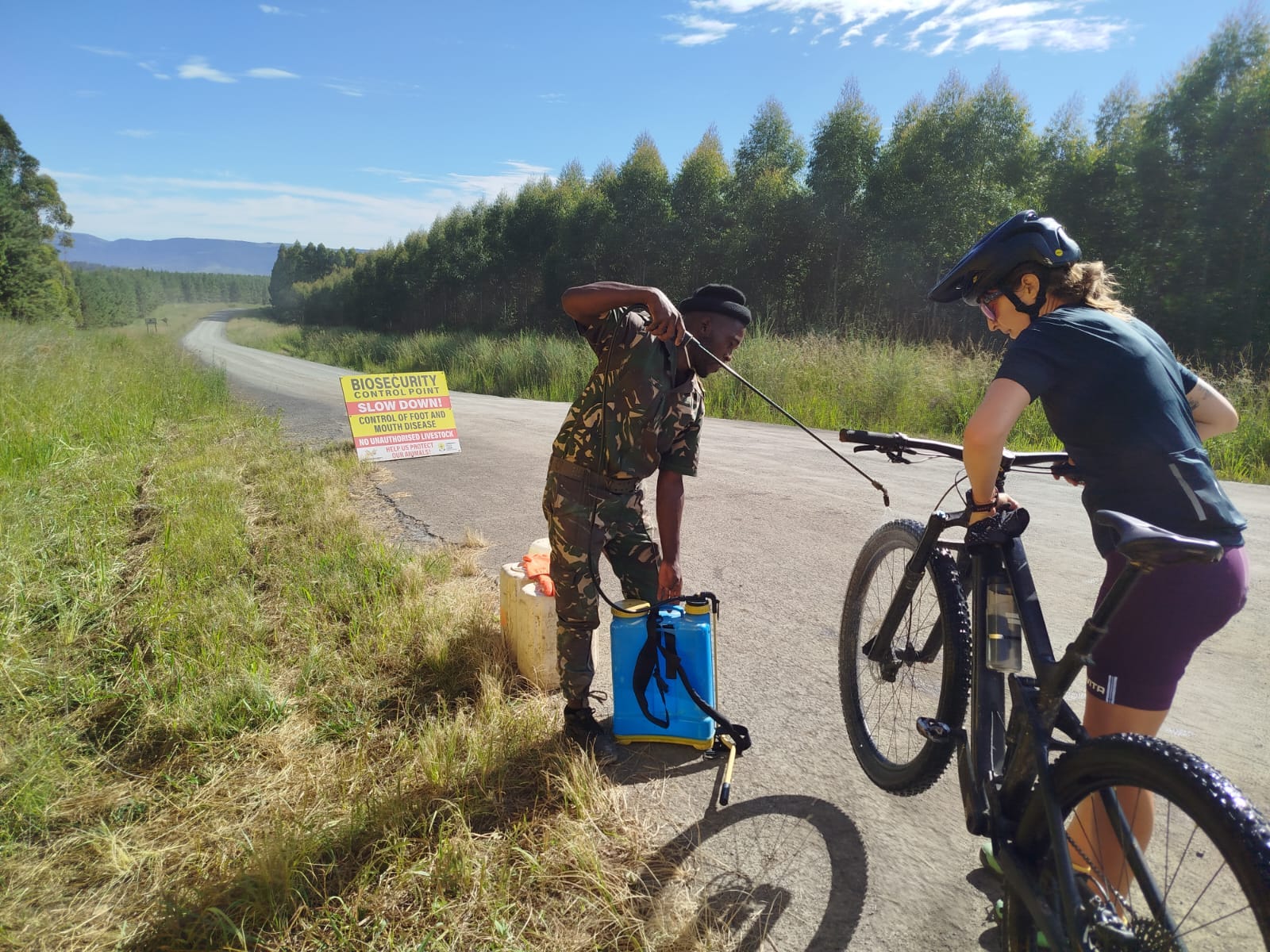
KwaZulu-Natal is home to arguably the most extensive network of high-quality trails in South Africa. Unfortunately, it is also currently at the heart of one of South Africa’s most serious livestock health crises in recent memory – a widespread Foot and Mouth Disease (FMD) outbreak that has been active across multiple regions of the province and beyond. Here’s what mountain bikers need to know.
Paid partnership with Sappi
As a major landowner in KwaZulu-Natal, Sappi has a long-standing commitment to responsible land stewardship and the promotion of sustainable, well-managed recreational access through the Sappi Trails Programme. By supporting mountain biking, trail running and other low-impact outdoor activities, Sappi recognises the value these experiences bring to local communities, tourism and outdoor wellbeing. However, responsible access depends on informed and respectful trail use. Being aware of issues such as FMD – and understanding how recreational activity can unintentionally contribute to its spread — is an essential part of ensuring that trails remain open, safe and sustainable for everyone.
FMD is a highly contagious viral disease that affects cloven-hoofed animals such as cattle, sheep, goats and wild ungulates but poses no risk to humans. Control measures focus on quarantine, vaccination, animal movement restrictions and enhanced surveillance. Despite vaccination campaigns and expanded disease management zones, the epidemic remains active, with hundreds of outbreaks reported and many still unresolved.
For mountain bikers, hikers and other trail enthusiasts, FMD presents a unique challenge: while the virus itself is not a human illness, people can unintentionally act as vectors, carrying virus particles on footwear, clothing, equipment or vehicles, potentially transmitting them between farms and vulnerable livestock. This can have devastating economic and social impacts.
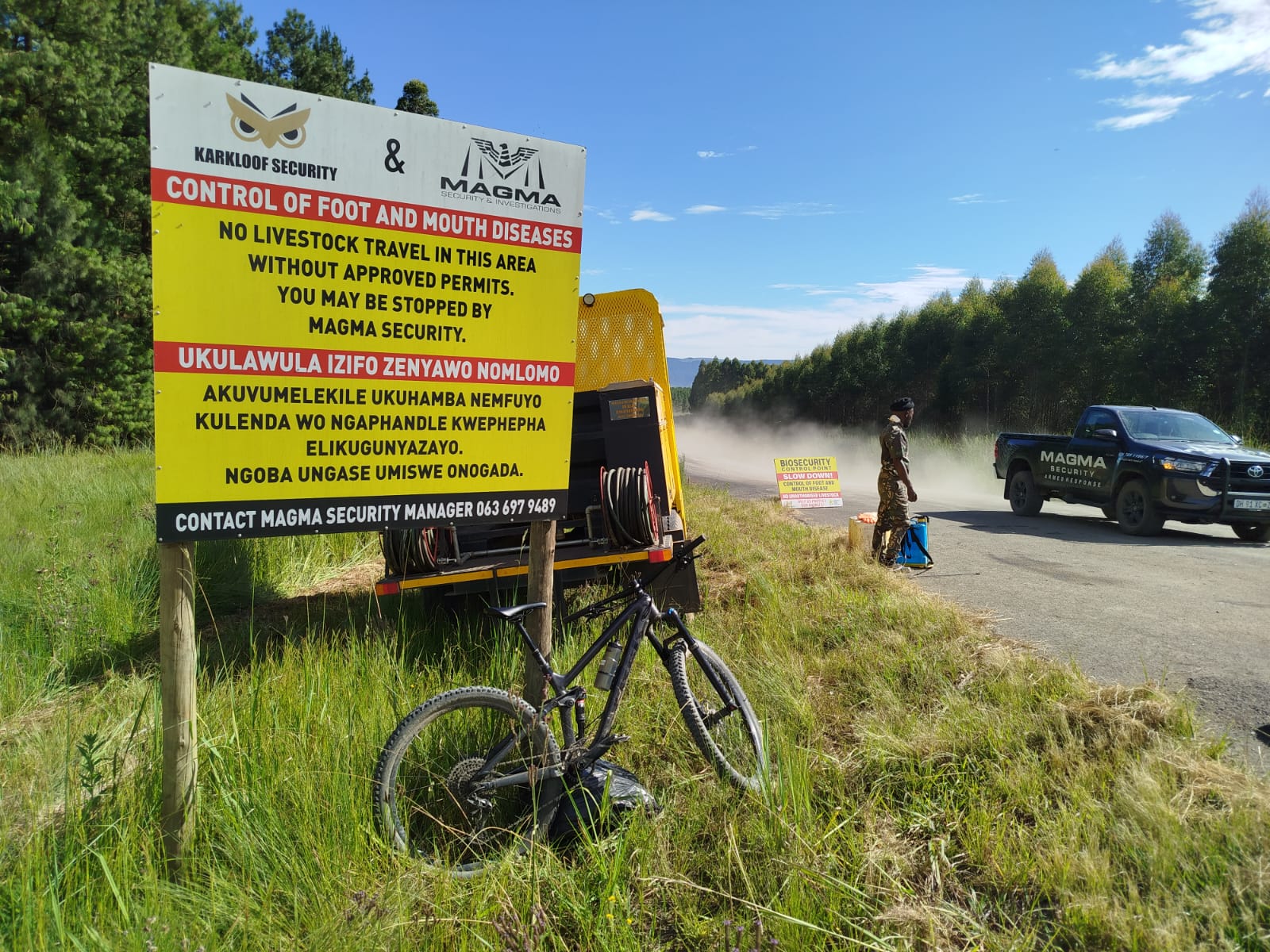
Here are the best practices Sappi recommends for riders to minimise disease spread and be responsible outdoor stewards in affected landscapes:
Know Where You Ride
Before heading out, check local disease status updates. Avoid riding trails that cross farmland or are adjacent to livestock areas within declared FMD control or Disease Management Areas (DMAs). These zones are legally restricted for movement of animals and products, and extra caution is advised for people entering or exiting these regions. If you see spray stations when you are driving to a riding location, stop and use them on your car as well as your shoes and bike tyres.
Clean Your Gear
FMD virus can persist on organic materials like mud, soil and manure – and these easily stick to bike tyres, shoes, socks and clothing. Clean equipment thoroughly before and after riding, paying special attention to tyres, pedals and shoe tread. Removing soil and debris reduces the likelihood of carrying contamination between locations.
Be Footwear Wise
Consider using footwear dedicated solely to trail riding and avoid walking across farmland in the same shoes you use on trails. If your ride involves farms or private lands, brush off and, where possible, wash soles when leaving the area. Even outdoor-to-indoor transition can inadvertently transfer particles.
Minimise Vehicle Contamination
Vehicles that travel across rural areas may pick up contaminated soil or organic matter. At home or in town, clean tyres and undercarriage – especially if you’ve been on muddy or livestock-adjacent trails – before visiting other rural environments.
Respect Restrictions and Biosecurity Signage
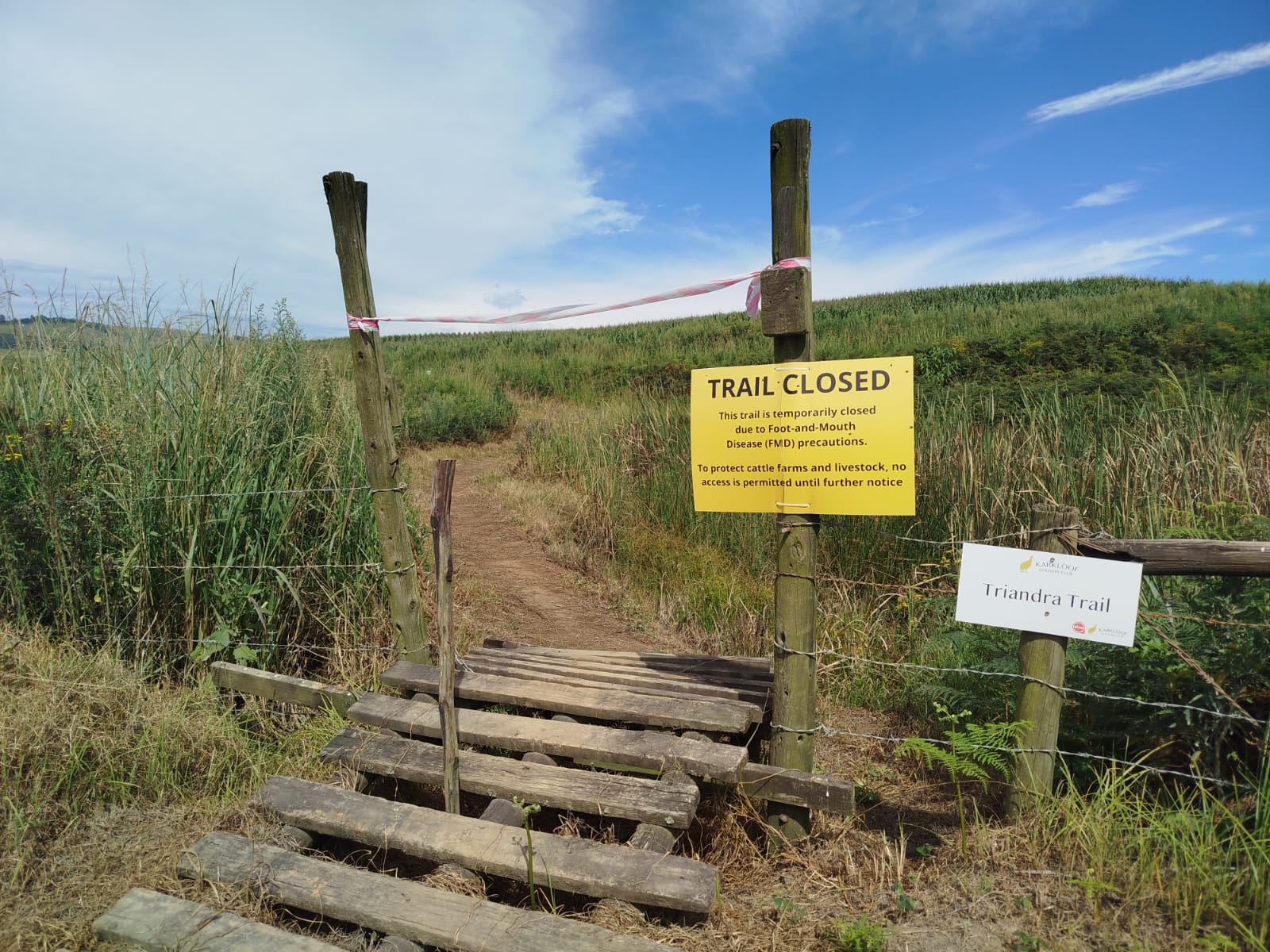
Official biosecurity points or fence postings related to FMD outbreaks should not be ignored. These signs are there to protect both livestock and the broader agricultural economy. If access points into restricted farm lands are closed or advise specific entry procedures, follow them.
Spread Awareness
FMD knowledge helps both riders and rural communities. Share information about FMD precautions with your riding club, friends and other outdoor groups. Responsible recreation benefits both nature lovers and the farmers who steward these landscapes.
Respecting the Land and the People Who Share It
The extensive trail network enjoyed by mountain bikers and trail runners in the Karkloof and greater Howick area exists largely because of the long-standing generosity and cooperation of local farmers and private landowners. Over many years, these landowners have opened their farms to recreational users, allowing trails to be built and maintained across working agricultural landscapes.
During times of heightened disease risk, such as the current FMD outbreak, temporary trail closures are not taken lightly – they are essential measures to protect livestock, farm operations, and the livelihoods of farmers and their staff. Sappi urges riders and runners to respect all closures and access restrictions. Doing so helps preserve trust, safeguards rural economies, and ensures that these valued trail networks can continue well into the future.

