

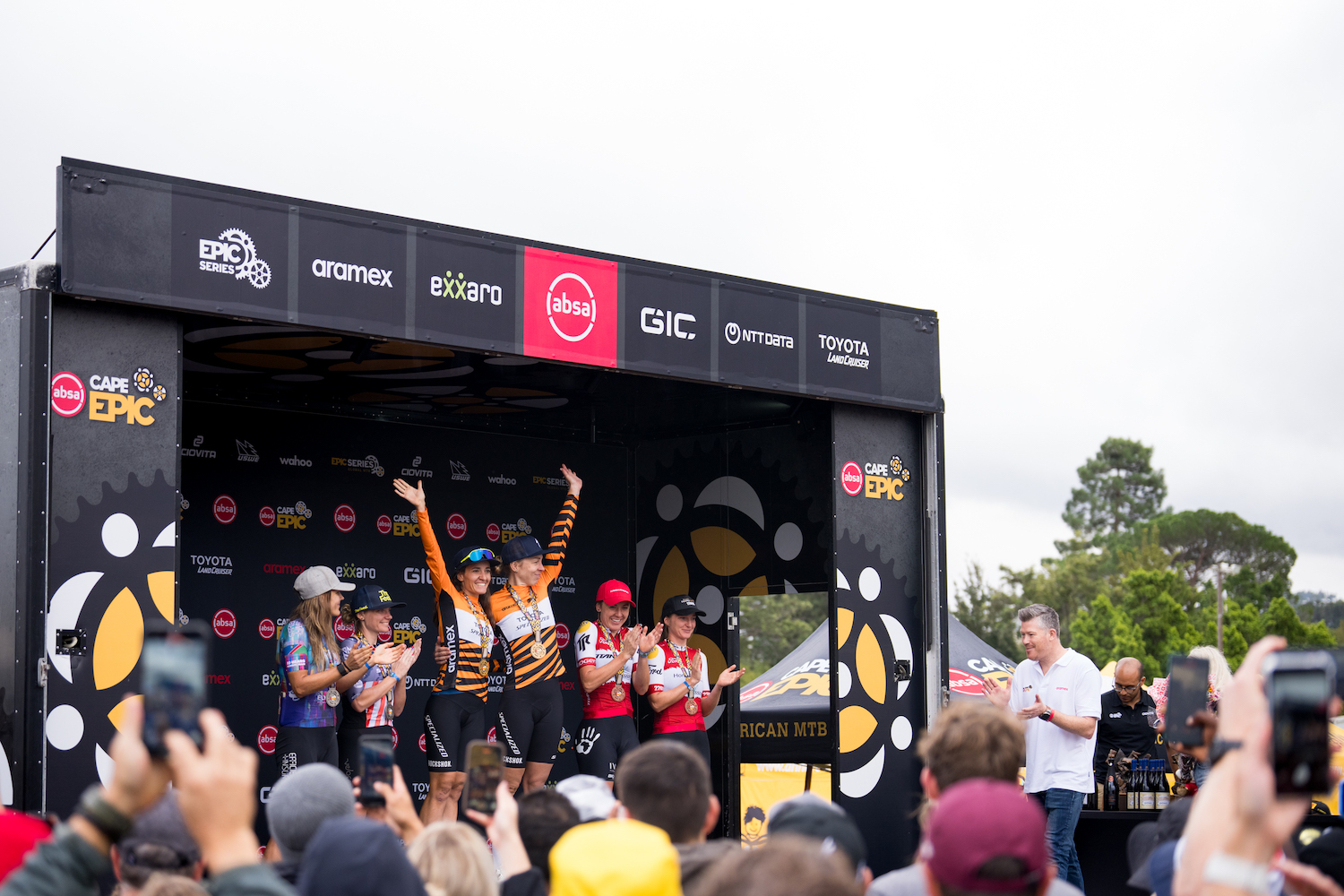
The Absa Cape Epic has long positioned itself as the global benchmark for marathon mountain bike stage racing. It is a race that prides itself on innovation, on pushing boundaries, and on setting trends that ripple far beyond South Africa’s borders. True to form, the announcement that the UCI Women’s category will race shortened stages at the 2026 edition has sparked conversation across the sport.
By Joanne Badenhorst
The stated objective is clear: sharper, closer, more exciting racing. By reducing daily stage distances for Elite Women, the organisers hope to compress time gaps, encourage more tactical racing, and ultimately enhance the spectacle for both spectators and media. On paper, that logic makes sense. Tighter racing generally delivers better storytelling, more dramatic finishes, and greater visibility.
But as with most well-intended interventions, the reality is more nuanced.
THE UPSIDE: CLOSER RACING, MORE VISIBILITY
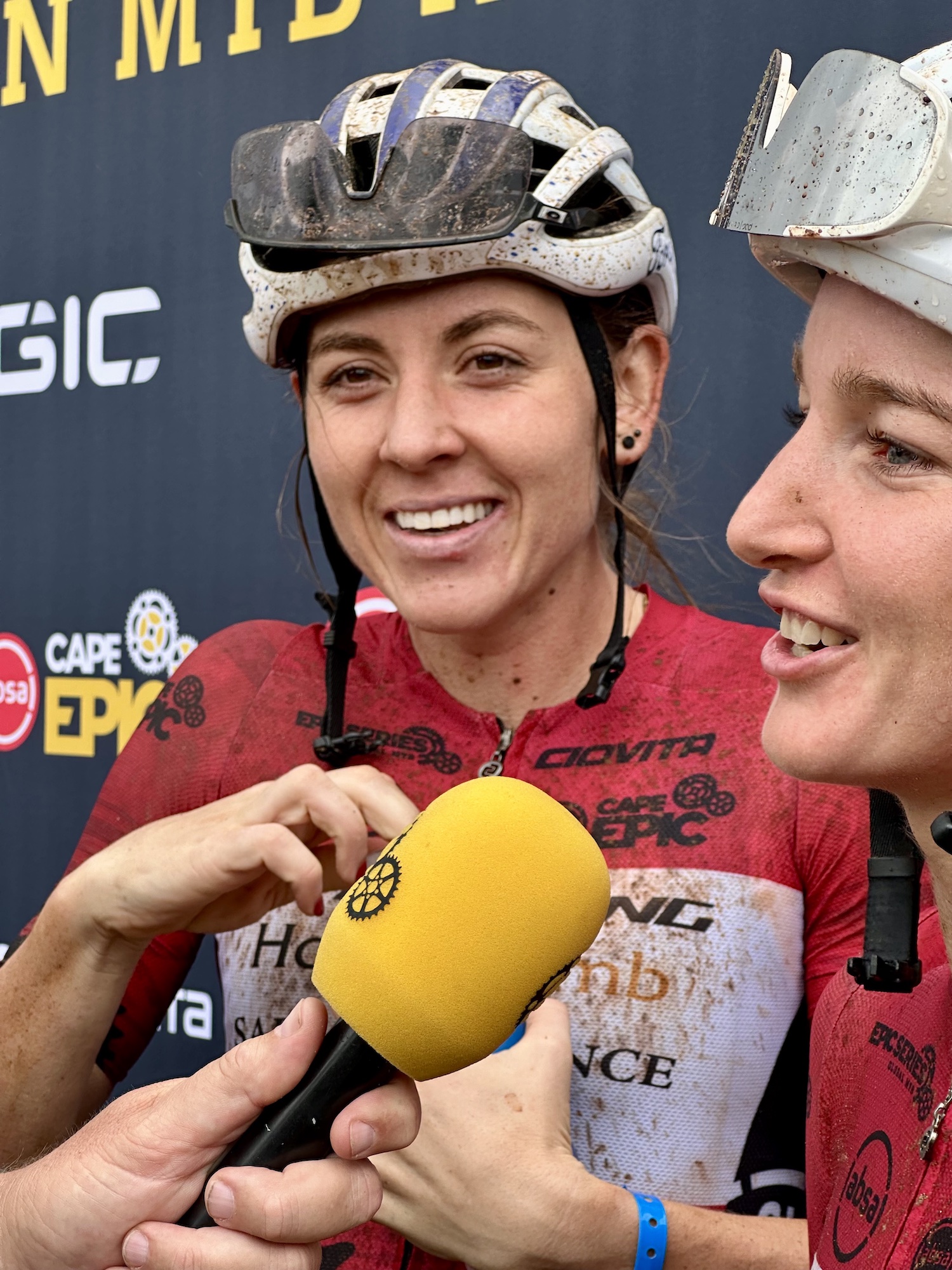
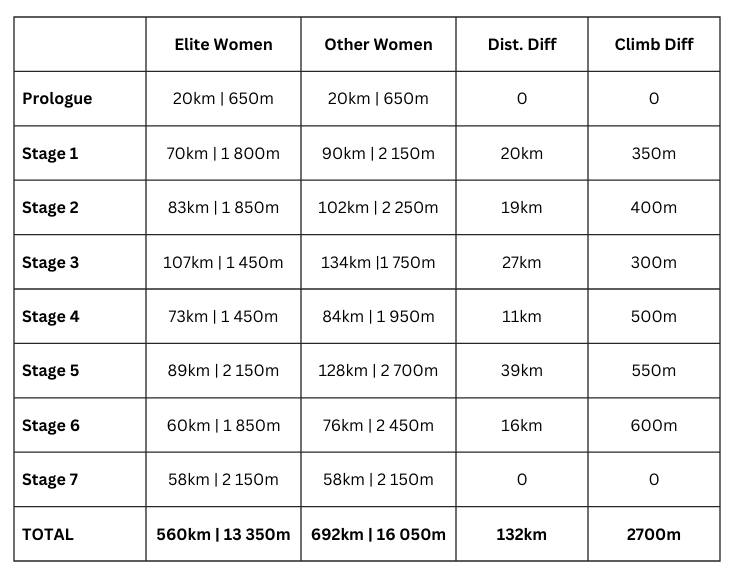
There are undeniable positives. Over the past five editions of the race (2021–2025), Elite Women’s total race times have been, on average, 23.2% longer than those of the men. For 2026, the women will race an overall distance that is 19.08% shorter, with 16.83% less climbing. That adjustment theoretically brings finishing times closer together, reducing the risk of the race being effectively “decided” too early.
In an era where attention is fragmented and media resources are stretched, closer racing is easier to cover and easier to sell. From a broadcast and social media perspective, it could lead to more compelling daily narratives, more visible battles for stage wins, and a clearer focus on the women’s race as a standalone sporting contest rather than an afterthought.
The move also aligns, at least philosophically, with trends elsewhere in elite cycling. The Tour de France Femmes has its own format and distances, and in Olympic-style mountain biking, XCO and XCC women race shorter events than men. These formats work and they work well.
However, there is an important distinction.
THE CORE QUESTION: WHY HERE, AND WHY THIS WAY?
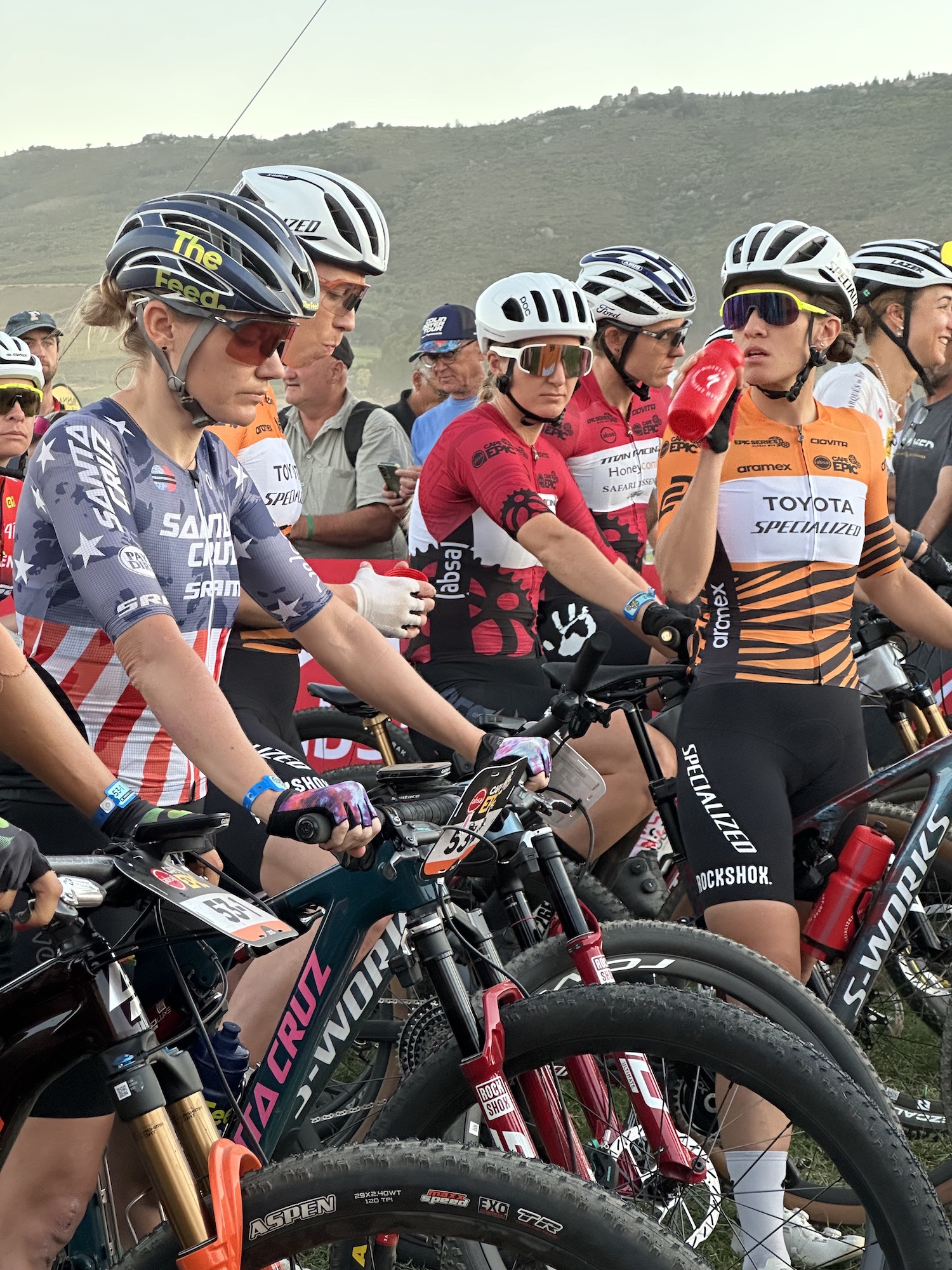
Our initial reaction was simple: why?
Why make the race easier, from a physical and capability perspective, for the very riders who are the fittest, strongest, and most professional women in the field? This is the Cape Epic. Its identity is rooted in being brutally hard. The suffering is part of the currency. The prestige comes from surviving eight days of unrelenting terrain, exposure to the elements, distance, and fatigue.
There is also a glaring inconsistency. While Elite Women will race shortened stages, every other women’s category: Masters, Grand Masters, Great Grand Masters, Amateur and Mixed, will remain within the original race structure and distances. These are riders with less support, fewer resources, and often far less racing experience than the UCI Elite field.
Why make the race shorter only for the Elite Women and not all the female competitors? If the concern is rider safety and congestion on course, that logic does not extend evenly across the women’s field.
No one disputes that having riders in survival mode ahead of riders in full race mode is a recipe for disaster, especially on singletrack of which there’s a high volume in the modern race.
But this argument opens a long-standing contradiction. For 22 years, slower men’s teams have routinely been on course ahead of racing women. That congestion has been accepted as part of the race fabric although it did improve when the Elite Women got a separate start from 2016. What will happen if Elite Men are hindered by Elite Women now that the race has been adjusted to achieve a time parity perspective?
MEDIA REALITIES: SPLIT COURSES, SPLIT ATTENTION
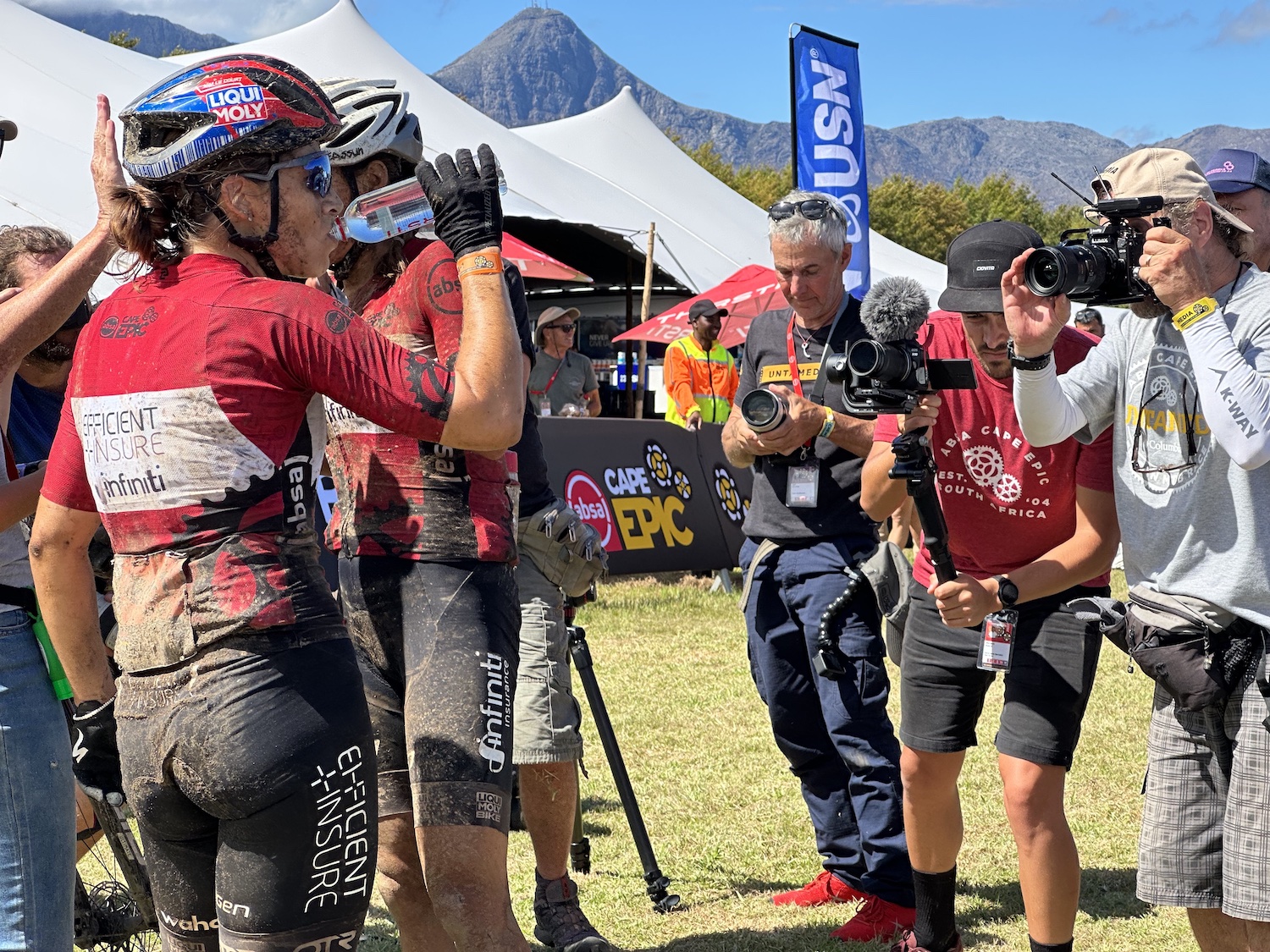
There is also the practical reality of media coverage. Shortened women’s stages will result in Elite Men and Women finishing closer together, but that does not automatically equal better coverage. In fact, it may create chaos.
Most media teams at the Cape Epic are small. Very few have the luxury of dedicated men’s and women’s crews. Separate start venues, divergent routes, and overlapping finishes stretch already thin resources even further. Something will give and historically, when that happens, women’s coverage is the first to suffer.
The comparison to the Tour de France Femmes and UCI XCO/XCC only goes so far. Those events work because men’s and women’s races are completely separated, by week, by day, or by start time. That separation allows each race to breathe, to be covered properly, and to stand on its own merit. The Cape Epic’s shared-course, shared-infrastructure model makes this far more complex.
A WAIT-AND-SEE MOMENT
To be clear, this is not a rejection of progress, nor a denial that women’s racing deserves tailored solutions rather than copy-and-paste equality. The women’s category has made significant strides at the Cape Epic:
- 2011: UCI status awarded to the women’s race
- 2014: Equal prize money introduced
- 2016: Separate start for UCI women
- 2023: Introduction of Masters, Grand Masters, Great Grand Masters and Amateur Women’s categories
Each of these changes strengthened the women’s race. The question is whether this latest move will do the same.
For now, we’re reserving judgement. The 2026 Absa Cape Epic will provide the answers on course, in the media, and in the experience of the riders themselves. If the racing is tighter, the storytelling stronger, and the women’s race more visible than ever, then the gamble will have paid off.
If not, the conversation will need to continue. Because at this level, innovation should never be change for the sake of change, it should make the Absa Cape Epic better for everyone.
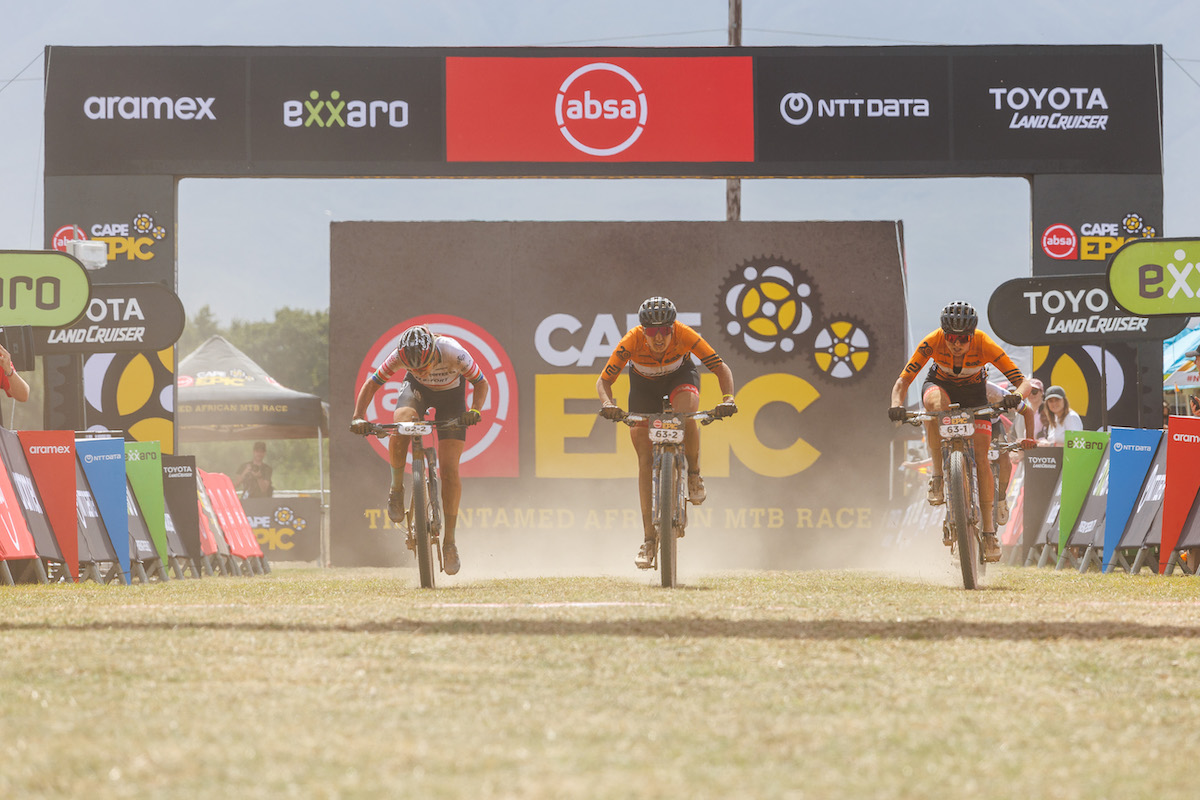
Introduction image: Final UCI Women’s GC podium at the 2025 Absa Cape Epic. | Photo: AC Media
Joanne Badenhorst is the co-founder of TREAD Media and TREAD Femme editor. As a media member, she has covered 16 editions of the Absa Cape Epic in total, seven of those in person. She has also served as head of Cycling South Africa MTB Women’s Commission for two years and is the founder of Cycle Lab Active Women’s mountain biking community.

